- Engagement Rings
- Wedding Bands
Shop by style
- Classic
- Diamond Cut
- Two Colour
- Diamond Set
- Shaped
- Vintage
- Gemstone Bands
Shop by metal
- Gemstones
- Ready To WearFine jewelleryMade to be worn.
Made to last.Diamond jewellery for every day and every occasion.Shop all jewellery →Fine jewellery
Diamond earringsPendantsBraceletsRingsShop allShop by occasion
Gifts under £1,000AnniversaryBirthdayBridal jewelleryAvailable sooner
Ready to dispatchNew arrivalsBestsellersBook an appointmentFine Jewellery
- About UsMade in LondonCrafted by people you can meet.Discover the people, workshop and personal service behind every Kinzy London piece.Meet KinzyRead our story →
About Kinzy
About KinzyOur storyClient storiesMeet your sales associateCraft & care
Our workshopDesign processLifetime Atelier CareOur guaranteesMade in our London workshopCertified diamondsLifetime carePersonal guidance - Education
Learn with Kinzy Diamond guideUnderstand the details that matter→Fit & setting guideChoose comfort and proportion→Behind the craftHow your jewellery is made→Expert guidance, clearly explained.
Practical diamond, gemstone and ring guidance to help you make a confident decision.
Explore all guides →
 Round
Round Oval
Oval Heart
Heart Marquise
 Cushion
 Pear
Pear Emerald
 Asscher
 Radiant
28 September 2026
What Is a Gallery Rail—and Why Can It Matter for Centre-Stone Security?
An engagement ring gallery rail is a band of metal that connects parts of a claw setting around the centre stone. Seen from the side, it often runs close to the diamond’s girdle, linking the claws so they work as a more coherent framework rather than as isolated uprights.
That can contribute support, but a rail is not a security badge. Its height, thickness, connections, metal, stone seats and setting quality determine what it actually does. Some sound designs use a visible rail; other sound settings achieve support through different architecture.
Where Is the Gallery Rail?
Turn a claw-set ring sideways. The shank rises into shoulders or supports, the diamond sits in the head, and a narrow horizontal element may travel between the claws. That element is commonly called the gallery rail or gallery wire.
It may follow a circle around a round diamond, an oval path around an elongated stone or a shape adapted to corners. In a three-stone ring, each basket may have its own rail or the structures may connect. Kinzy’s settings guide helps locate the broader head, basket and claw arrangement.
What Job Can the Rail Perform?
Its principal structural role is to connect claws laterally. Imagine four tall posts without anything joining them: each can move more independently. A properly placed rail can help keep their relationship and provide another route through which the head carries forces.
The rail can also help define where claws rise and support the geometry around the stone. It may frame the girdle visually, create the lower boundary of an open gallery or carry a small decorative detail.
None of that means “rail present equals stone safe”. The diamond still needs correctly cut seats and appropriate contact, and every joint needs sound execution.
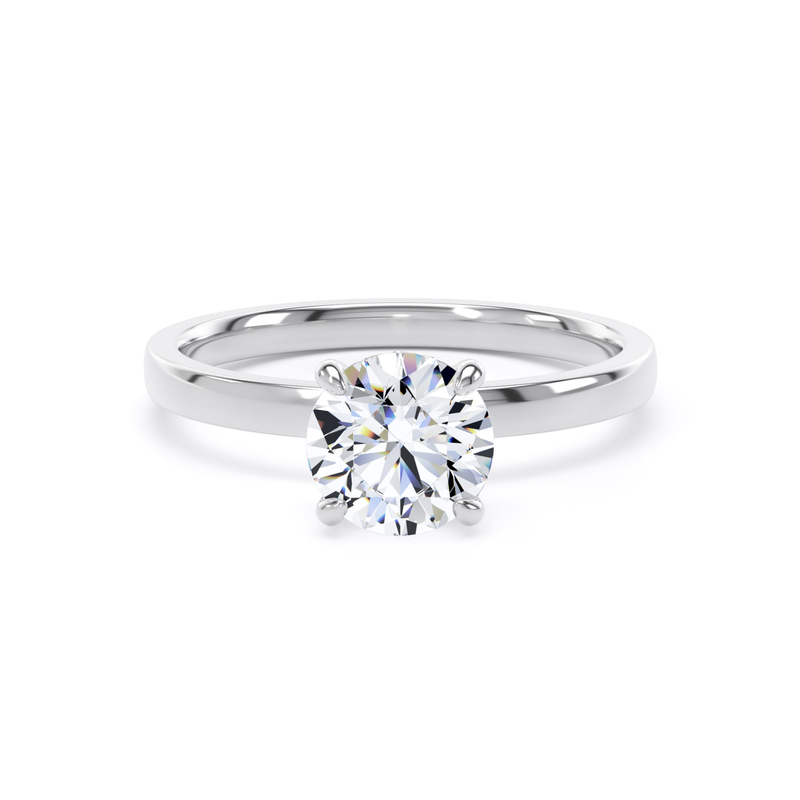
Why Position Matters
A rail too low may offer less useful support to the upper claw structure. A rail too high can cover more of the diamond’s side, crowd the girdle or alter the intended outline. The correct location depends on diamond depth, girdle, claw angle and overall head.
This is why “add a gallery rail” is not a complete bespoke instruction. The selected stone’s measurements should inform the setting. Use Kinzy’s certification guide to understand recorded measurements, then let the setter evaluate the physical stone.
Why Thickness Matters
An extremely fine rail can look elegant in CAD but leave little material for sound connections or long-term wear. An overly heavy rail may dominate the side view and reduce cleaning access. Proportion is a balance, not a race towards invisibility.
Ask how the CAD representation relates to the finished, polished metal. Kinzy’s design process includes CAD approval, while the final bench stages described through handcrafted jewellery translate that model into a wearable piece.
The Rail Supports Claws; It Does Not Replace Them
A rail connects and braces, while the claw tips retain the stone at specific contact points. If a claw is worn, lifted or damaged, the existence of a rail does not make continued wear sensible. Stop wearing the ring and arrange an inspection.
Similarly, tip styling—whether pointed or rounded—does not explain the rail’s performance. The visual finish and underlying structure should be approved as two connected but separate decisions.
What Bench Guidance Can—and Cannot—Tell You
Bench guidance shows why claw contact and gallery support must be considered together. It is a reference point, not a substitute for assessing the exact stone, alloy and setting.
GIA’s benchmarks address professional workmanship and particular examples. Your ring still needs assessment for its shape, size, alloy and design.
Can a Ring Work Without a Visible Gallery Rail?
Yes. Some settings use a bezel, semi-bezel, closed wall, integrated basket or another support system. Some smaller or stylistically spare heads may connect components differently. The absence of a clearly visible horizontal ring does not prove a design is unsafe.
Ask the designer to identify the load-bearing elements. Kinzy’s bespoke versus made-to-order guide explains why a custom design needs a defined approval route rather than comparison by one feature alone.
How the Rail Changes the Side View
A fine rail creates a horizon beneath the diamond. It can make the setting feel architectural and finished, particularly in an open basket. A diamond-set rail or hidden halo adds sparkle, but it becomes a different visual and maintenance decision.
A plain rail may recede in white metal or appear as a deliberate warm line in yellow gold. Read Kinzy’s platinum and gold comparison before choosing metal solely to hide the structure.
A Diamond-Set Rail Is More Than Decoration
Setting small diamonds into the rail removes and reshapes metal in an element that may also provide support. It also adds tiny settings that need cleaning and inspection. Ask the designer to show which portions remain structural, how the accent stones are retained and whether the added sparkle changes wedding-band contact. A plain gallery rail and a hidden halo should not be treated as interchangeable labels.
Does a Rail Block Light?
Any metal near a stone changes side visibility, but a correctly proportioned rail does not automatically make a diamond dull. Face-up brightness depends strongly on cut quality and cleanliness. Claims that removing a rail always adds sparkle ignore the way a cut diamond returns light.
Judge the centre diamond face-up and the rail from the side. If the rail is visually heavy, discuss its proportions; do not remove a structural element merely to chase an unsupported light claim.
Cleaning Around a Gallery Rail
The spaces above and below a rail can collect soap, lotion and debris. Use warm water, suitable mild soap and a soft brush only where appropriate for the stone and treatment. Do not force a pin or hard tool into the gallery.
GIA’s care guidance explains why ultrasonic and steam methods are unsuitable for some gemstones and treatments. Kinzy’s care guide covers everyday handling, while lifetime atelier care sets out the current service path for Kinzy creations.
Wedding-Band Clearance
The gallery rail’s lowest projection can affect how close a straight wedding band sits. A rail entirely above the band path may allow clearance; a low or outward-projecting structure can create a gap. The shoulders and basket also matter.
Compare the complete side profile using Kinzy’s setting-height guide. When the time comes, review wedding-band designs and use the live band builder as a starting brief.
A Gallery-Rail Approval Checklist
- Ask the designer to identify the rail on the side drawing.
- Confirm whether it is structural, decorative or both.
- Review its height relative to the diamond’s girdle.
- Check the visual thickness at realistic scale.
- Ask how it connects to every claw.
- Confirm whether it affects cleaning access.
- Review wedding-band clearance from the side.
- Do not request extreme thinness without discussing structure.
- Keep a copy of the final approved CAD and specification.
- Plan inspection and care after collection.
Understand the Setting Before Approval
The useful question is how the rail relates to the chosen stone and the rest of the head. A Kinzy consultation connects the diamond, CAD and setting plan before manufacture.
Explore the Kinzy experience, learn what to bring from the sales-associate page and view the Hatton Garden showroom before arranging your appointment.
Built Around the Centre Stone
A gallery rail should be proportioned around the exact diamond and integrated with the claws and basket. Kinzy reviews that structure from every angle before manufacture.
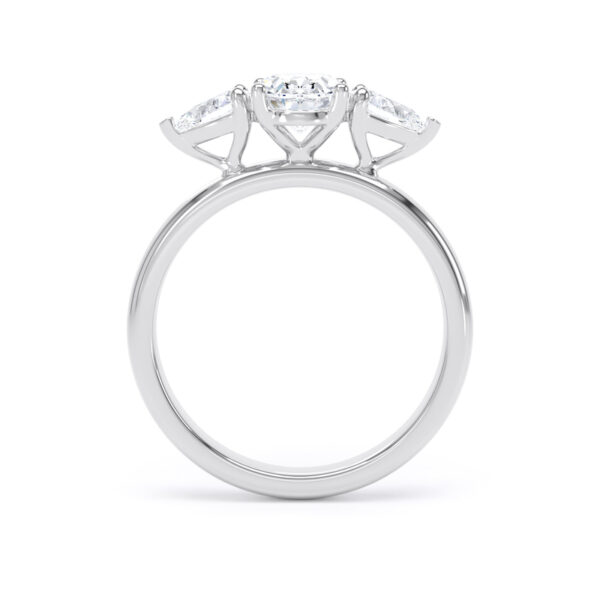
Crafted as One Setting
See how gallery, claws and finish are resolved as one setting through Kinzy’s design and making process.
Frequently Asked Questions
Does every engagement ring need a gallery rail?
No. Different setting architectures provide support in different ways. Ask the designer to identify the structural elements in your exact ring.
Can a gallery rail stop a diamond falling out?
It can help connect the claws, but it does not replace correct stone seating, claw contact, workmanship or inspection.
Is a thinner rail always more elegant?
No. Extreme thinness may reduce useful material and connection area. The right proportion should look refined while performing its intended job.
Can a gallery rail contain diamonds?
Some rails carry small diamonds or hidden-halo detail. That adds settings, cleaning needs and visual emphasis that should be approved separately.
Will the rail prevent a flush wedding band?
It may if it sits low or projects into the band’s path. The whole side profile, including basket and shoulders, determines clearance.
A Rail Is One Part of the Setting
A gallery rail can connect claws, organise the head and frame the diamond from the side. Its value comes from proportion and integration, not its mere presence.
Review it during the bespoke design process, book a Kinzy consultation and plan the neighbouring band through the wedding-ring builder.
Related Reading
Articles
Other articles from Kinzy London.
Articles, Diamond Guides, Engagement Rings, Settings
Does a Bezel Setting Make a Diamond Look Bigger or Smaller?
Articles, Craftsmanship, Engagement Rings, Settings
What Is a Gallery Rail—and Why Can It Matter for Centre-Stone Security?
Articles, Design Guides, Engagement Rings, Settings