- Engagement Rings
- Wedding Bands
Shop by style
- Classic
- Diamond Cut
- Two Colour
- Diamond Set
- Shaped
- Vintage
- Gemstone Bands
Shop by metal
- Gemstones
- Fine Jewellery
Fine Jewellery
- About Us
- Education
Diamond sourcing · Hatton Garden
The Kinzy Diamond Guide
Natural or laboratory grown, every diamond should be judged as a complete visual object, not a list of grades. This is Kinzy’s considered approach to origin, light, proportion and setting.
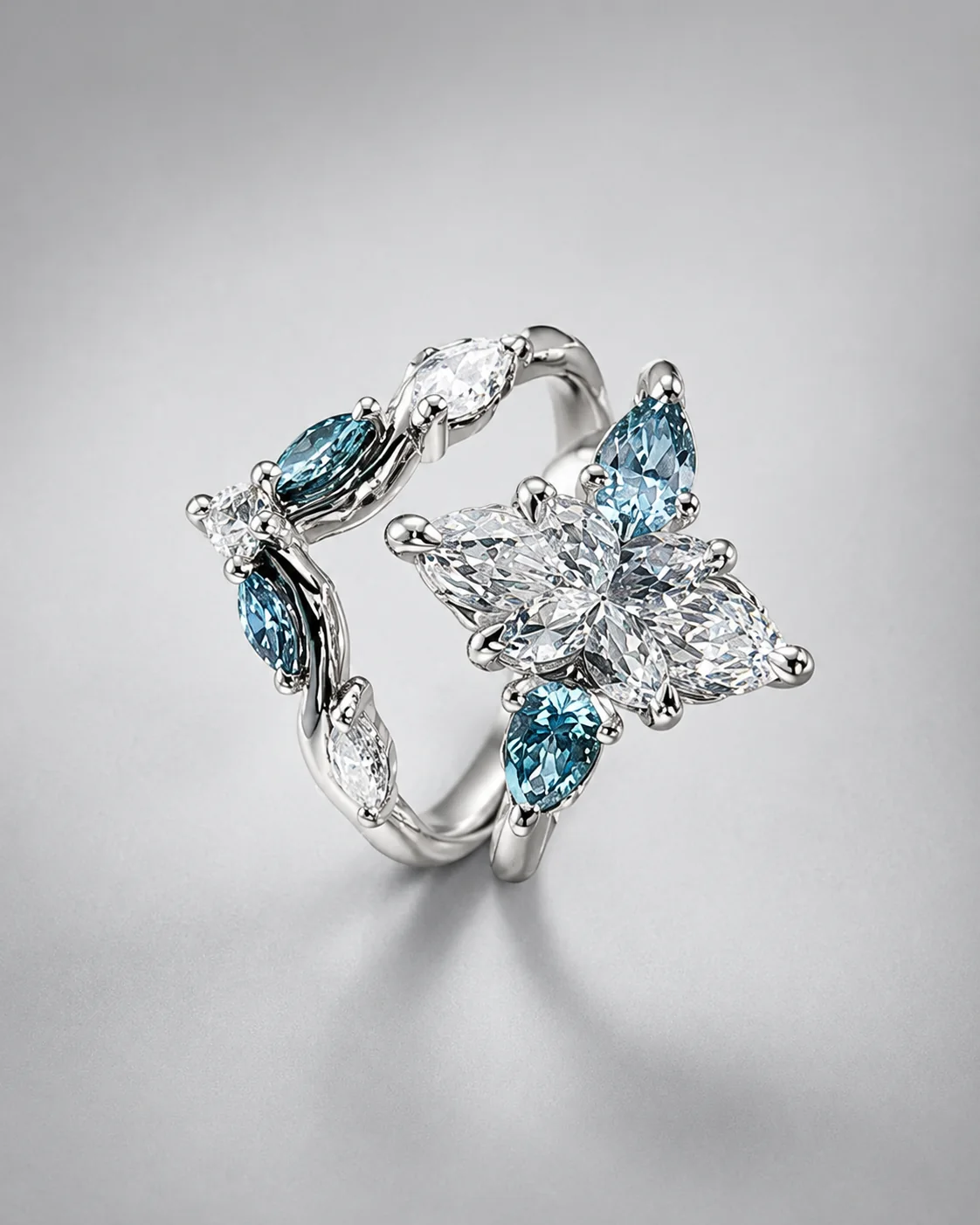
OriginNatural and laboratory grown, explained clearly
LightCut, brilliance, fire and visual balance
ProportionShape, scale and setting considered together
The quick answer
The best diamond is not simply the highest grade on paper. It is the stone whose cut, proportions, colour, clarity, carat weight and outline work together beautifully in the intended setting. Its origin and price should also feel right for you.A grading report provides essential facts; viewing the diamond and assessing it for the finished design completes the decision.
Natural and Laboratory Grown Diamonds
Natural and laboratory grown diamonds are both diamonds. They share essentially the same chemical composition, crystal structure and optical properties. Their principal difference is origin: natural diamonds formed within the Earth over geological time, while laboratory grown diamonds are produced under controlled conditions using HPHT or CVD technology.
Specialist equipment is normally required to identify origin reliably. A respected independent grading report should clearly state whether a diamond is natural or laboratory grown.
For a fuller comparison of origin, pricing, visual quality and longer term considerations, read our natural vs laboratory grown diamond guide. If you are exploring the laboratory grown route, continue with our guide to laboratory grown diamonds in London.
| Consideration | Natural diamond | Laboratory grown diamond |
|---|---|---|
| Origin | Formed naturally within the Earth and recovered through mining. | Created in a controlled environment using HPHT or CVD growth. |
| Material | Diamond crystal with the characteristic hardness and optical properties of diamond. | Diamond crystal with essentially the same chemical and optical properties. |
| Rarity | Rarity is linked to natural formation and the combination of quality characteristics. | Production is repeatable, although quality and appearance still vary between stones. |
| Grading | Can be assessed for colour, clarity, cut and carat weight by an independent laboratory. | Can be evaluated and positively identified by specialist laboratories; report terminology can differ by laboratory. |
| Price | Usually commands a higher price at a comparable apparent size and quality. | Often allows a larger or higher specification stone within the same initial budget. |
| Best for | Clients who value natural origin, geological rarity and the traditional diamond market. | Clients prioritising visual scale, design flexibility or a different balance of budget and specification. |
Kinzy perspective: neither origin makes every stone automatically beautiful. We assess the individual diamond, its report, proportions and appearance when viewed from above before considering how it will sit within the design.
Understanding the 4Cs of Diamond Quality
Cut, colour, clarity and carat weight form the 4Cs. Together, they provide a shared language for describing diamond quality. They should be read together. A heavier diamond is not necessarily more beautiful, and a high colour or clarity grade cannot compensate for weak proportions or poor light return.
Cut
Cut describes how successfully a diamond’s facets and proportions manage light. It influences brightness, fire, scintillation and the balance of the pattern seen from above. GIA assigns an overall cut grade to standard round brilliant diamonds; fancy shapes require a more individual visual and proportion assessment.
Colour
For natural diamonds in the D to Z range, D is colourless and increasing letters indicate progressively more yellow or brown body colour. The setting metal, diamond shape and surrounding stones can affect how colour appears in the finished ring.
Clarity
Clarity considers internal and external characteristics under 10× magnification, including their size, nature, number, relief and position. Many characteristics are difficult to see without magnification; their location can matter as much as the grade.
Carat
Carat is a measure of weight, not a direct measurement of diameter or visual size. Two diamonds of equal carat weight can face up differently because of their shape, depth and proportions.
For many clients, the smartest specification is a deliberate balance: prioritise the cut and visual beauty, choose a colour that suits the metal, and select clarity that looks clean to the unaided eye without paying for rarity that cannot be appreciated in normal wear.
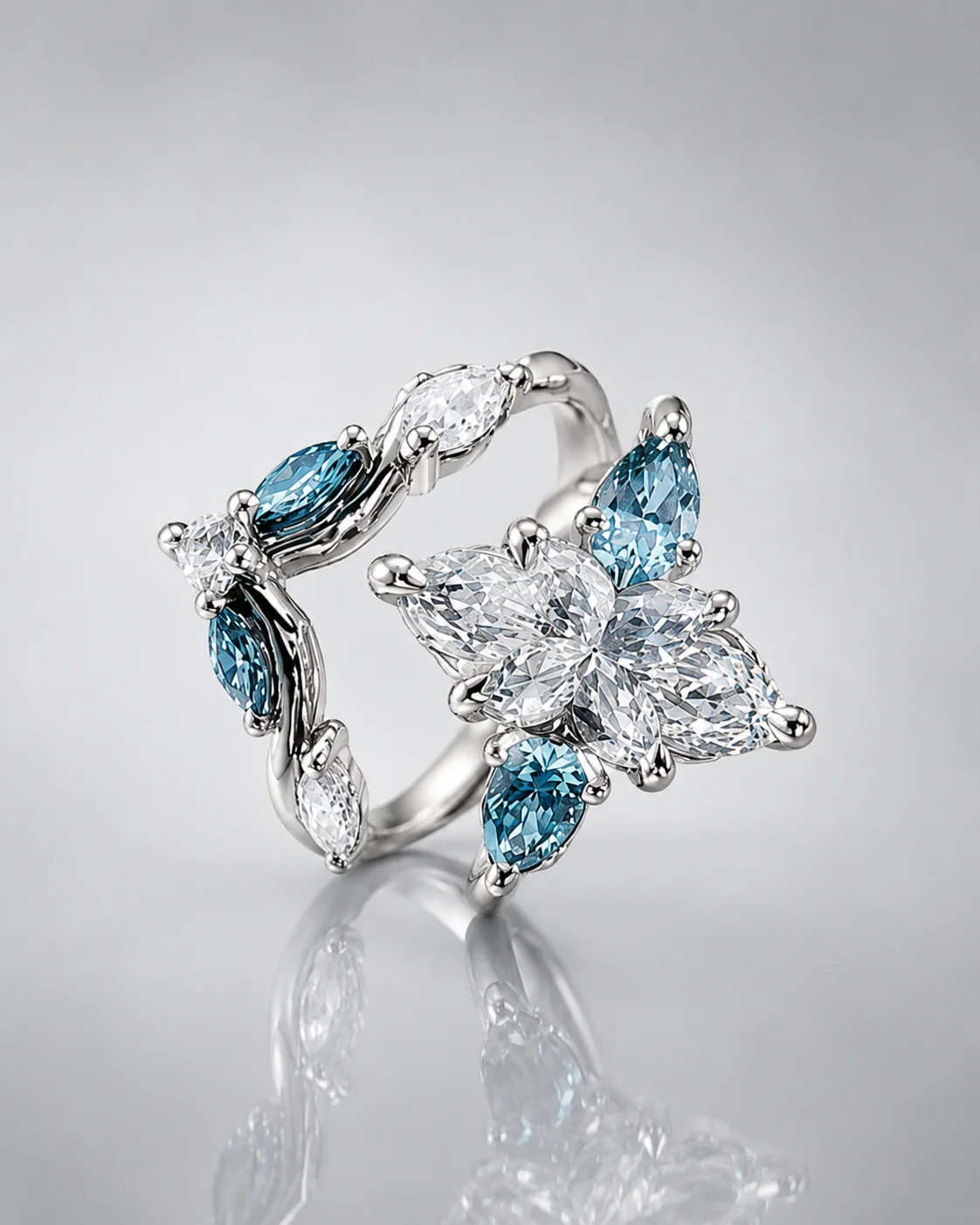
What Matters Beyond the 4Cs?
Proportions and light performance
Table size, depth, crown angle, pavilion angle and facet arrangement influence how a diamond returns light. The report numbers are useful screening tools, but the pattern seen from above must still be assessed. Fancy shapes can have attractive variation, so there is rarely one perfect set of measurements for every outline.
Polish and symmetry
Polish describes the finish of the facet surfaces. Symmetry considers the precision and alignment of the facets and outline. Both appear on many grading reports and should be viewed alongside cut, proportions and appearance.
Fluorescence
Fluorescence is the visible light some diamonds emit under ultraviolet radiation. It is recorded by strength on many grading reports. It is not automatically a fault: in most cases it has little visible effect, while a small proportion of strongly fluorescent stones may need closer inspection in varied lighting.
Ratio of Length to Width
For oval, pear, radiant, cushion, emerald, marquise and other elongated shapes, the ratio of length to width affects the silhouette. The right ratio is partly aesthetic and partly dependent on the setting and the wearer’s hand. Our diamond ratios guide explains how proportions change each outline.
Bow tie effect
Elongated brilliant shapes can show a darker bow tie pattern across the centre. Some contrast creates character and definition; an overly dark or distracting bow tie can reduce the stone’s visual appeal. This is best judged from the actual diamond rather than a grading report alone.
Choosing a Diamond Shape
Shape is the outline seen from above. It should not be confused with cut quality, which describes craftsmanship and light performance. The shape sets the visual language of the ring and influences apparent size, coverage and setting options.
Round
Classic and highly brilliant, with the most standardised cut assessment. It suits solitaires, halos and multiple stone designs.
Oval
An elongated brilliant outline that can create generous finger coverage. Assess the outline, bow tie and symmetry carefully.
Emerald
A step cut shape with long, open facets and a hall of mirrors effect. Clarity characteristics can be more visible than in brilliant cuts.
Cushion
A softened square or rectangular outline with several facet styles. Proportions and visual character vary significantly between stones.
Pear and marquise
Distinctive elongated shapes that require attention to outline, point protection, symmetry and bow tie.
Radiant and princess
Angular brilliant styles offering strong sparkle and contemporary geometry. Corner protection should be considered in the setting.
Explore how outline and construction come together in our guide to engagement ring settings, or view Kinzy’s engagement ring designs.
Diamond Grading Reports Explained
A grading report is an independent assessment of an unmounted diamond at the time of examination. Depending on the laboratory and report type, it may record origin, measurements, carat weight, colour, clarity, cut information, polish, symmetry, fluorescence, inscriptions and a plotted diagram of clarity characteristics.
For a closer comparison of reporting standards, terminology and verification, read our GIA vs IGI grading report guide.
- Confirm that the report identifies the diamond as natural or laboratory grown.
- Check that the report number matches any laser inscription, where present.
- Read measurements and proportions as well as headline grades.
- Verify the report number through the issuing laboratory’s official service.
- Remember that the report describes the stone; it does not choose the most beautiful diamond for your design.
Important distinction: a grading report is not a valuation and does not guarantee a future resale price. Market pricing can change, so purchase decisions should be based on informed preference, quality and suitability for the piece.
How Kinzy Approaches Diamond Selection
- Begin with the wearer and the design. Shape, hand proportions, lifestyle and preferred setting establish the brief.
- Set a complete piece budget. Reserve the right proportion for the setting, metal and craftsmanship rather than treating the centre stone in isolation.
- Choose the origin. Compare natural and laboratory grown options transparently, using the priorities that matter to you.
- Screen the report. Review the 4Cs, measurements, proportions, fluorescence and any relevant comments.
- Assess the actual stone. Look at outline, brightness, contrast, bow tie, characteristics visible to the eye and performance in different lighting.
- Design around it. Refine the setting, shoulders, band width and height so the stone is secure and visually balanced.
For a entirely individual piece, explore our bespoke engagement ring service. The selected stone and setting are developed through the CAD approval stage, with physical proportions considered through a wax model where appropriate.
How the Setting Changes the Diamond
A diamond is never viewed in isolation once it becomes jewellery. A yellow gold shank can warm the overall composition, while a platinum head can keep the immediate setting visually neutral. A halo increases spread; side stones create width; a bezel changes the visible outline; and the height of the setting affects profile, practicality and wedding band fit.
Prong placement should protect vulnerable points without interrupting the outline. Elongated and angular stones may require more considered support than a round diamond. Band width and setting height also influence stability, so the Kinzy Ring Size Guide and our comparison of rings with low and high settings are useful next steps.
Metal colour, hardness and maintenance should be discussed at the same time. Read our expert guide to precious metals for engagement and wedding rings.
Diamond Guide: Frequently Asked Questions
Are laboratory grown diamonds real diamonds?
Yes. Laboratory grown diamonds have essentially the same chemical composition, crystal structure and optical properties as natural diamonds. Their origin is different, and specialist testing is used to identify that origin.
Is cut the same as diamond shape?
No. Shape is the outline, such as round, oval or emerald. Cut quality describes how successfully the facets, proportions and finish work together. GIA’s overall cut grade currently applies to standard round brilliant diamonds; fancy shapes require additional visual assessment.
Does a higher carat weight always look larger?
No. Carat is weight. Apparent size depends on the shape and how the weight is distributed between diameter or length and depth.
What does “eye clean” mean?
It is a trade description for a diamond whose inclusions are not readily visible to the unaided eye under normal viewing conditions. It is not an official laboratory grade, and the result depends on the viewer, distance, lighting and location of the characteristics.
Should I choose the highest colour and clarity grades?
Not automatically. Very high grades are rarer and can increase price, but the visual difference may be subtle once the diamond is set. A balanced specification can direct more of the budget towards cut, proportions, carat weight or craftsmanship.
Can I rely on a grading report alone?
No. The report is essential evidence, but two diamonds with similar headline grades can look different. Compare the actual stones and consider the intended setting.
How should I care for a diamond ring?
Diamonds are very hard but can still chip, and the setting can wear. Avoid heavy impacts, have claws and settings inspected periodically, and follow our engagement ring care guide and Lifetime Atelier Care advice.
Personal diamond guidance at Kinzy London
Choose the stone with an expert beside you
Visit our Hatton Garden showroom to compare natural and laboratory grown diamonds, understand the grading reports and see how each option works within your intended design.
Expert source note: Technical grading explanations in this guide follow the Gemological Institute of America’s published 4Cs and diamond identification guidance. Individual laboratory terminology and services may change; the current issuing laboratory report should always be checked.