- Engagement Rings
- Wedding Bands
Shop by style
- Classic
- Diamond Cut
- Two Colour
- Diamond Set
- Shaped
- Vintage
- Gemstone Bands
Shop by metal
- Gemstones
- Fine Jewellery
Fine Jewellery
- About Us
- Education
14 August 2026
Bespoke vs Made-to-Order Engagement Rings: What Is the Difference?
Bespoke vs made-to-order rings differ mainly in where the design begins. A made-to-order ring starts with an existing model and is produced after you choose available specifications. A genuinely bespoke ring starts with the wearer, the chosen centre stone and a new design brief.
Both routes can produce beautiful jewellery. The important point is clarity. Words such as custom, personalised and bespoke are often used loosely, so ask which elements can truly change before you compare price or lead time.
Bespoke vs Made-to-Order Rings at a Glance
- Made-to-order: an established design produced after purchase in selected metal, size or stone options.
- Customisable: an established design with a wider menu of permitted changes.
- Bespoke: a design developed for one brief, usually around an exact centre stone and wearer.
The categories can overlap. A jeweller may adapt an existing setting so extensively that the project becomes effectively bespoke. Therefore, judge the process rather than the label.
Where a Made-to-Order Engagement Ring Begins
Made-to-order jewellery begins with a completed design. The proportions, gallery and construction have already been resolved. You may choose metal, ring size and a compatible diamond, but the core architecture remains the same.
This route offers useful certainty. You can often view a sample, understand the overall look and make fewer decisions. It suits someone who already loves a particular design and does not need it to respond to an unusual stone or detailed personal idea.
Explore Kinzy’s engagement-ring collection to see how established settings can provide a clear starting point.
Where a Bespoke Engagement Ring Begins
Bespoke starts with questions. How should the ring feel on the hand? Which view matters most? Must a straight wedding band sit flush? Does the wearer need a low profile? Is a family diamond involved?
The designer then develops the setting around the exact stone’s dimensions. CAD controls proportion, while a wax model can test scale before manufacture. The Kinzy bespoke service follows this collaborative path from consultation to reveal.
Design Freedom: Menu of Options or Open Brief?
A made-to-order ring usually offers controlled choices. You might select platinum or gold, choose a diamond size range and request engraving. The available changes protect a design that has already been tested.
With bespoke, the band profile, shoulder line, gallery, claws, setting height and stone arrangement can all evolve. However, freedom does not mean ignoring engineering. A skilled designer may reject a delicate detail if it weakens the ring.
Our guide to engagement-ring settings explains why every aesthetic decision also has a structural consequence.
Diamond Selection Works Differently
For a made-to-order model, the centre stone must fit the setting’s supported dimensions. Some designs can accommodate a range, while others require a narrow size or shape. The stone is selected for compatibility with the existing mount.
In bespoke work, the sequence can reverse. The client chooses the most beautiful suitable diamond, then the setting is built around it. This matters for fancy shapes because two stones with the same carat weight can have different length, width, depth and shoulder shape.
The GIA engagement-ring buying guidance recommends checking the grading report, setting, metal and ring size. Kinzy adds a visual comparison of outline, life and proportion before design approval.
CAD and Wax: Necessary or Optional?
A proven made-to-order design may not need a new CAD presentation for every client. The design already exists, although its dimensions may still be adjusted for the selected stone.
A bespoke ring normally benefits from CAD because no finished sample can represent the new combination exactly. A wax model then makes height and finger coverage tangible. See the Kinzy CAD and wax process for the stages involved.
Lead Time and Decision Time
Made-to-order often involves fewer approval stages. Once the specification and stone are confirmed, the workshop can follow an established route. Bespoke work includes discovery and design development before production begins.
Yet bespoke is not always dramatically slower. A client who gives decisive feedback may move efficiently, while a made-to-order ring can still wait for a particular diamond or busy workshop period. Ask for a schedule based on the actual order.
How the Cost Structure Differs
Made-to-order pricing benefits from a design that has already been developed. Bespoke may include more design time and specialist labour. On the other hand, bespoke can direct the budget precisely instead of paying for decorative details the client does not value.
Never compare headline totals without comparing the diamond, metal weight, side stones, included approvals, hallmarking and aftercare. Our guide to engagement-ring budgets in the UK offers a practical framework.
Personal Meaning Without Forced Symbolism
Personalisation can be quiet. An engraving, birthstone or hidden motif may be enough. A made-to-order ring can carry deep meaning because the proposal and wearer give it meaning.
Bespoke becomes valuable when the meaning changes the design itself. A family stone may dictate the structure. Two cultural references might inspire a gallery pattern. A wedding band may need to trace a unique outline.
The aim is not to add symbols for their own sake. It is to create coherence between story, proportion and wearability.
Long-Term Repair and Resizing
Ask how each route handles future care. An established model may have repeatable components, while a bespoke ring may require workshop notes or CAD records for a complex repair.
Either ring still experiences ordinary wear. Claws need inspection, surfaces collect marks and ring size can change. Kinzy’s engagement-ring care guide explains how to protect the piece between professional services.
Questions That Reveal What You Are Actually Buying
- Does this design already exist as a finished model?
- Which dimensions and details can change?
- Will the setting be created around my exact centre stone?
- Will I approve a new CAD or physical wax?
- Can a straight wedding band sit beside the ring?
- Who makes, sets and finishes the piece?
- Which aftercare and manufacturing protections are included?
- At what point do changes create an additional cost?
Clear answers matter more than whether the sales description uses the word bespoke.
Which Route Is Right for You?
Choose made-to-order when you love an existing design, want fewer decisions and are comfortable with its established proportions. It can offer an elegant balance of choice and certainty.
Choose bespoke when the stone, hand, lifestyle or story requires a new solution. It is also valuable when you want to control the side profile, wedding-band fit or details that are not visible in a standard product image.
Kinzy can discuss both routes during a private Hatton Garden appointment. The recommendation should follow the brief, not a preference for the more complicated process.
Compare Physical Examples Before Choosing the Route
Handle an established model and a bespoke sample if possible. Look underneath the centre, along the shoulder transition and inside the shank rather than comparing only sparkle. A made-to-order ring may already solve every practical requirement; a new commission should earn its extra decisions by improving proportion, fit or meaning.
Ask the jeweller to identify which details are fixed and which will be redrawn. That answer makes the distinction clearer than either label.
A Published Kinzy Example of Genuine Bespoke Scope
Kinzy’s one-of-one marquise trilogy commission was created around a marquise centre and bespoke trillion side stones, with the angles and proportions considered as a complete design. That is useful evidence of bespoke scope because the published outcome is presented as a unique composition, not a stock model with a minor option changed.
A separate Kinzy client account, shared on Instagram and reflected in the public published client-story trail, describes finding a distinctive ring and requesting alterations. The reviewer says the team guided the decisions and would not proceed until she was satisfied. That evidence supports client approval and adaptation; it does not tell us that every alteration automatically becomes a fully bespoke commission.
To compare the two routes honestly, ask what is fixed and what can change. Kinzy’s create-your-own-ring journey, bespoke service and CAD-led design process show the questions to resolve before accepting either label.
Featured Kinzy Pieces and Services
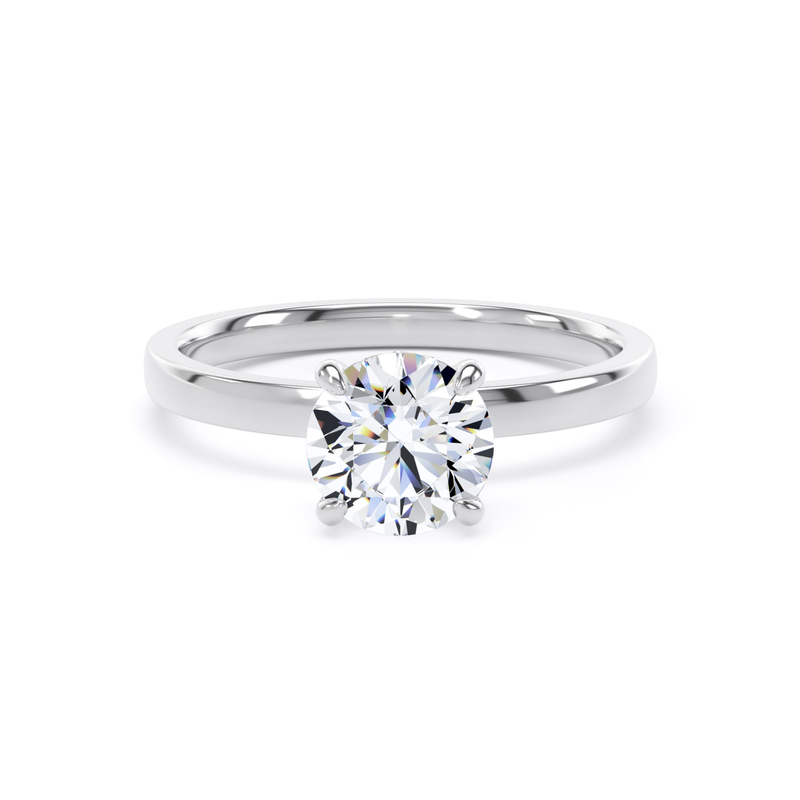
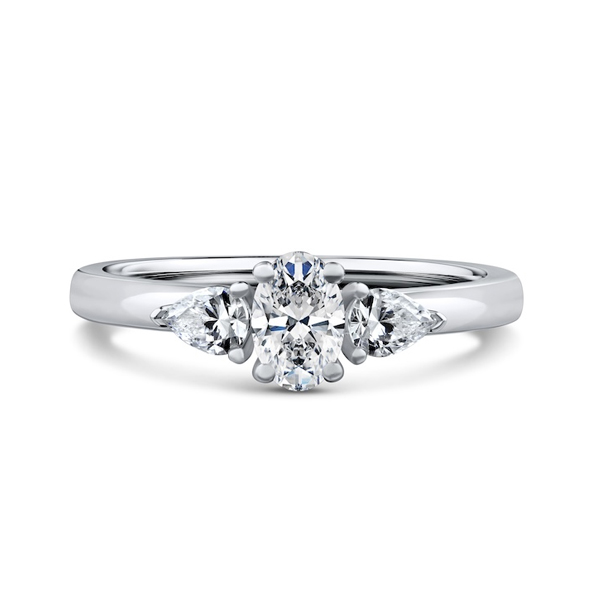
These Kinzy collection examples help distinguish a defined product starting point from a one-of-one design journey.
Related Reading and Services
- Engagement rings.
- Round engagement rings.
- Trilogy engagement rings.
- Bespoke jewellery service.
- Kinzy design process.
- Book a private consultation.
- High-Set Traditional Round Engagement Ring in Platinum.
- Oval Pear Side Stone Trilogy Ring in Platinum.
Official Kinzy Instagram Reference
This official post provides a Kinzy-owned reference for bespoke vs made-to-order engagement rings shown with kinzy solitaire and trilogy designs.
Frequently Asked Questions
Is made-to-order the same as handmade?
No. Made-to-order describes when and from what design the piece is produced. Handmade describes aspects of manufacture. A ring can be both made-to-order and carefully hand-finished.
Is a ring bespoke if I choose the metal and diamond?
Not necessarily. Those choices may sit within a standard model. Ask whether the architecture is redesigned around your brief and exact stone.
Can a catalogue ring be altered into a bespoke design?
Yes, if the changes become substantial enough to require new CAD, engineering and manufacture. The jeweller should explain where adaptation ends and new design begins.
Does bespoke guarantee a unique-looking ring?
No. A client may commission a highly restrained solitaire. Bespoke describes the individual design process, not how visibly unusual the final ring appears.
Which option gives better value?
Value depends on your priorities. Made-to-order is efficient when an existing design already fits. Bespoke is valuable when individual proportion and control solve a real need.
Final Verdict on Bespoke vs Made-to-Order Rings
Bespoke vs made-to-order rings should not be judged by prestige alone. The right route is the one that gives you enough control without adding decisions that serve no purpose.
To explore a new commission, visit Kinzy’s bespoke engagement rings in London. If an established design already feels right, the Kinzy team can help refine the specification with equal care.
Related Reading
Articles
Other articles from Kinzy London.
Articles, Bespoke Jewellery, Engagement Rings, Gemstones
How to Add a Hidden Birthstone or Secret Diamond to an Engagement Ring
Articles, Diamond Guides, Engagement Rings, Settings
Does a Bezel Setting Make a Diamond Look Bigger or Smaller?
Articles, Craftsmanship, Engagement Rings, Settings