- Engagement Rings
- Wedding Bands
Shop by style
- Classic
- Diamond Cut
- Two Colour
- Diamond Set
- Shaped
- Vintage
- Gemstone Bands
Shop by metal
- Gemstones
- Fine Jewellery
Fine Jewellery
- About Us
- Education
13 August 2026
How Long Does It Take to Make a Bespoke Engagement Ring?
To make a bespoke engagement ring properly, allow time for decisions as well as workshop production. Consultation, stone sourcing, CAD approval, wax modelling, manufacture, setting, hallmarking and quality control each have a purpose. Rushing one stage can create problems that take longer to correct. A sensible planning window is often measured in weeks, not days. However, no responsible jeweller should promise one universal lead time. The exact schedule depends on stone availability, design complexity, revisions and the date on which you give final approval.The Practical Bespoke Engagement Ring Timeline
For many commissions, clients should begin at least eight to twelve weeks before the ring is needed. Treat that as planning guidance rather than a Kinzy production guarantee. A straightforward design may progress faster, while a rare gemstone search or detailed hand work can take longer. At Kinzy London, the schedule is confirmed around the individual brief. The bespoke journey moves forward only when the client understands and approves the important decisions.Stage 1: Consultation and Brief — Usually the Fastest Stage
The first meeting establishes style, budget, metal, centre-stone preferences, ring size and proposal date. A prepared client may settle the direction quickly. Another client may need time to compare shapes or involve a partner discreetly. Bring reference images, but explain what you like in each one. The band may appeal in one photograph, while the gallery or diamond shape appeals in another. Our guide to choosing a diamond shape can help you narrow the field before your appointment.Stage 2: Diamond or Gemstone Selection
Commonly available diamonds may be curated promptly. Yet a very specific ratio, rare coloured diamond, antique stone or unusual gemstone can require a wider search. Availability can change daily, so a theoretical specification does not guarantee a suitable stone. Kinzy compares the certificate with the diamond itself. Measurements, outline, brightness and visible inclusions all matter. Read the GIA versus IGI certification guide before treating a report as a beauty score. Decision time also belongs in the schedule. If several diamonds are being considered, reserve space to view them in person rather than choosing under pressure.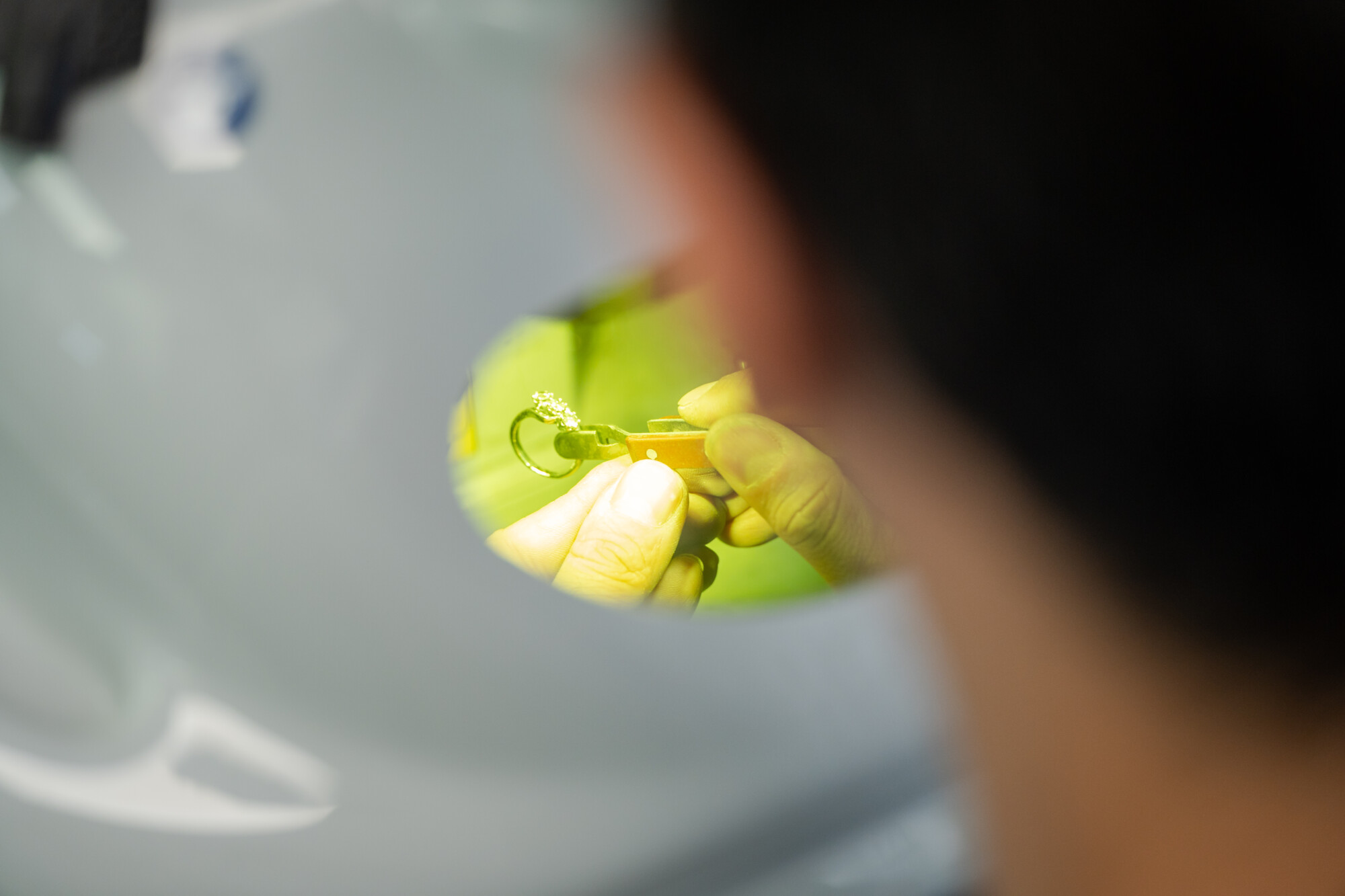
Stage 3: CAD Development and Revisions
CAD translates the brief into measurable geometry. The designer establishes band width, setting height, claw positions, gallery shape and the relationship between the centre and any side stones. This is where an attractive idea becomes a workable piece. One careful round of feedback is usually more efficient than several scattered changes. Review every supplied angle, then send one clear response. The Kinzy design process explains how digital approval leads into physical making. Revisions naturally extend the timeline. That is not a failure; it is the value of checking before metal is committed. Nevertheless, late changes after approval can require the model to be rebuilt.Stage 4: Wax Model and Physical Approval
A wax model reveals scale in a way that a screen cannot. You can assess height, band width, finger coverage and the space beside a future wedding band. Wax does not reproduce polished metal or diamond brilliance, so it should be judged for proportion. If the wax shows that the head feels too tall or the shoulders too broad, the CAD may return for adjustment. Allowing this loop protects the final result. It is one reason a bespoke timetable needs breathing space.Stage 5: Casting, Mounting and Assembly
After final approval, the workshop creates the precious-metal foundation. A mounter cleans, refines and assembles the components. The ring must support the chosen stone while preserving the approved silhouette. Complexity matters here. A solitaire has fewer components than a halo with diamond-set shoulders. A trilogy needs three carefully related settings. Intricate hand engraving adds another specialist stage. Kinzy’s in-house atelier approach keeps design and making closely connected in Hatton Garden.Stage 6: Diamond Setting
The setter cuts seats for the exact stones and secures them with claws, beads or a bezel. Fancy shapes need particular attention at points and corners. Melee must be matched and aligned so the surface feels continuous. Setting should never become the stage that compensates for an unsuitable mount. That is why the ring is developed around the centre stone’s real dimensions from the beginning.Stage 7: Hallmarking
Qualifying precious-metal jewellery sold in the UK must receive an independent hallmark. The London Assay Office describes service levels ranging from rapid options to a guaranteed five-day turnaround. Those services show why hallmarking needs a place in the schedule, even though the actual route will be managed by the jeweller. You can read the London Assay Office hallmarking information for the current process. Priority availability should never be assumed until confirmed.Stage 8: Final Polish and Quality Control
Polishing brings the metal to its intended finish. Then the ring receives a detailed inspection. The team checks stone security, symmetry, surface finish, ring size and the overall relationship between the approved design and completed piece. Quality control also needs time. A ring should not leave the atelier simply because a collection deadline has arrived. If a detail requires correction, the workshop must be able to address it.What Commonly Extends the Timeline?
- A rare diamond, gemstone, ratio or matched pair.
- Slow decisions between several design directions.
- Multiple CAD revisions submitted separately.
- A wax model that reveals a necessary proportion change.
- Hand engraving or unusually complex stone setting.
- A last-minute change of centre stone, metal or ring size.
- Seasonal workshop demand and public holidays.
- Assay Office timing or an external certification requirement.
How to Keep the Project Moving Without Rushing It
First, share the true deadline during the initial consultation. Include travel, proposal plans and any date when the ring must leave London. Second, agree who has authority to approve the design. Next, provide consolidated feedback. A marked screenshot can be clearer than a long message. Finally, avoid changing the brief after production starts unless the change is genuinely necessary. If the proposal date is close, discuss a private planning consultation rather than forcing an unfinished permanent ring. Kinzy can help prepare the next steps without promising a temporary or presentation ring.When Should You Start Before a Proposal?
Begin as soon as the idea feels serious. Extra time gives you a better choice of stones and calmer approvals. It also creates room for ring-size research when the design is a surprise. Our article on common engagement-ring mistakes explains why deadline pressure often leads to weak compromises. A private Kinzy consultation can establish a realistic route before you commit to a proposal plan.Protect Time for Collection and Proposal Travel
The manufacturing deadline should not be the morning you leave London. Build in time to inspect the finished ring, confirm fit, receive the grading report and valuation, and arrange appropriate insurance. If the proposal involves a flight, hotel or remote location, plan secure transport and storage as well. A small contingency also allows the workshop to correct an unexpected finishing issue without asking you to accept it. The ring is complete only after final quality control, not when the last stone enters the setting.How Kinzy’s Bespoke Process Shapes the Timeline
A bespoke commission moves through distinct stages: diamond or gemstone selection, CAD review, wax modelling, production and finishing. Each approval affects the schedule, so no single number of weeks applies to every ring. Kinzy clients often value professional guidance across the journey. Their comments describe an organised, supported process, not a timing guarantee. Use the ranges in this article for planning, then confirm the critical date through Kinzy’s documented design process. Explore bespoke commissions and ask the atelier for a written schedule based on the actual stone, design, approvals and hallmarking route.Featured Kinzy Pieces and Services
This finished Kinzy trilogy ring anchors the journey from stone choice and CAD approval to final presentation.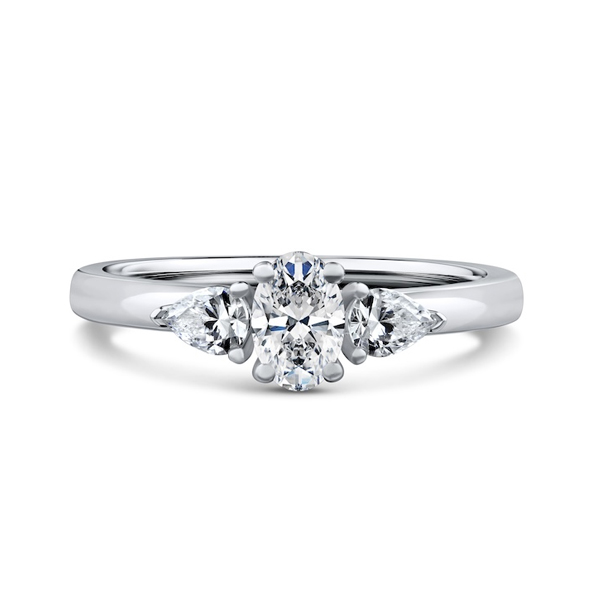
Related Reading and Services
- Engagement rings.
- Trilogy engagement rings.
- Kinzy gemstone stock.
- Bespoke jewellery service.
- Kinzy design process.
- Book a private consultation.
- Oval Pear Side Stone Trilogy Ring in Platinum.
See the Finished Craftsmanship
This finished Kinzy trilogy ring illustrates the journey from stone selection and CAD approval through setting, polishing and final inspection.Frequently Asked Questions
Can a bespoke engagement ring be made in two weeks?
Occasionally a simple project may move quickly, but two weeks should not be assumed. Stone sourcing, approval, manufacture, hallmarking and quality control all need confirmed capacity.When does the production clock start?
Lead time usually becomes meaningful after the stone, design and commercial terms are approved. An enquiry date alone does not reserve every workshop stage.Do CAD revisions delay a bespoke ring?
They can add time, but revisions are valuable when they prevent an unsatisfactory finished ring. Consolidated feedback keeps the process efficient.Does a wax model add unnecessary time?
No. A wax model can expose height, width or wedding-band issues before manufacture. A short approval stage may prevent a much longer remake.Can I collect the ring immediately after setting?
The ring still needs finishing and quality control. It may also require hallmarking at a different point in the production sequence.Final Thoughts: Allow Time to Make a Bespoke Engagement Ring
To make a bespoke engagement ring with care, plan for considered decisions and specialist work. The best schedule is transparent, specific to the commission and protected from avoidable last-minute changes. Explore Kinzy bespoke engagement rings in London, then arrange an appointment to receive a timeline based on your design and proposal date.Related Reading
Articles
Other articles from Kinzy London.
Articles, Bespoke Jewellery, Engagement Rings, Gemstones
How to Add a Hidden Birthstone or Secret Diamond to an Engagement Ring
Articles, Diamond Guides, Engagement Rings, Settings
Does a Bezel Setting Make a Diamond Look Bigger or Smaller?
Articles, Craftsmanship, Engagement Rings, Settings