- Engagement Rings
- Wedding Bands
Shop by style
- Classic
- Diamond Cut
- Two Colour
- Diamond Set
- Shaped
- Vintage
- Gemstone Bands
Shop by metal
- Gemstones
- Fine Jewellery
Fine Jewellery
- About Us
- Education
8 August 2026
Low-Set vs High-Set Engagement Rings: Comfort, Presence and Wedding-Band Fit
Low-set vs high-set engagement rings describes how far the centre stone sits above the finger. A low-set ring keeps the diamond close to the hand and can feel protected. A high-set ring raises the centre, creates a more prominent side profile and may leave room for a straight wedding band. Neither height is universally correct. The ideal profile depends on the diamond’s depth, gallery, band, lifestyle and intended wedding ring. A ring can be low without looking heavy, or high without being impractical, when every dimension has a reason.Low-Set vs High-Set Engagement Rings: Quick Comparison
- Low-set: close to the finger, reduced leverage, often practical for active hands.
- High-set: greater vertical presence, more side visibility and often better clearance for a straight band.
- Security: controlled by the complete setting, not height alone.
- Comfort: influenced by gallery width, finger anatomy, band depth and how the ring balances.
What Counts as a Low-Set Engagement Ring?
A low-set ring positions the pavilion and gallery near the finger. Bezel settings, compact baskets and some integrated heads can achieve this. The centre often feels visually connected to the band rather than perched above it. The practical advantage is reduced leverage. When the ring catches or receives a knock, a lower centre may exert less force through the band. It can also fit more easily beneath gloves. However, low does not mean flush. The diamond still needs space beneath its pavilion, and the setting needs enough metal for secure support. Very deep stones may prevent an extremely low profile.What Counts as a High-Set Engagement Ring?
A high-set ring raises the centre stone above the shoulders. Cathedral arms, peg heads and elevated baskets can create this profile. More of the diamond and gallery may be visible from the side. Height can give a ring presence and allow a straight wedding band to pass beneath the head. It can also make a smaller centre feel more distinct. Yet extra height increases leverage and may catch more often if the transition is abrupt. A successful high setting needs support. Cathedral shoulders can distribute the visual and structural rise, while a narrow unsupported peg may feel more exposed.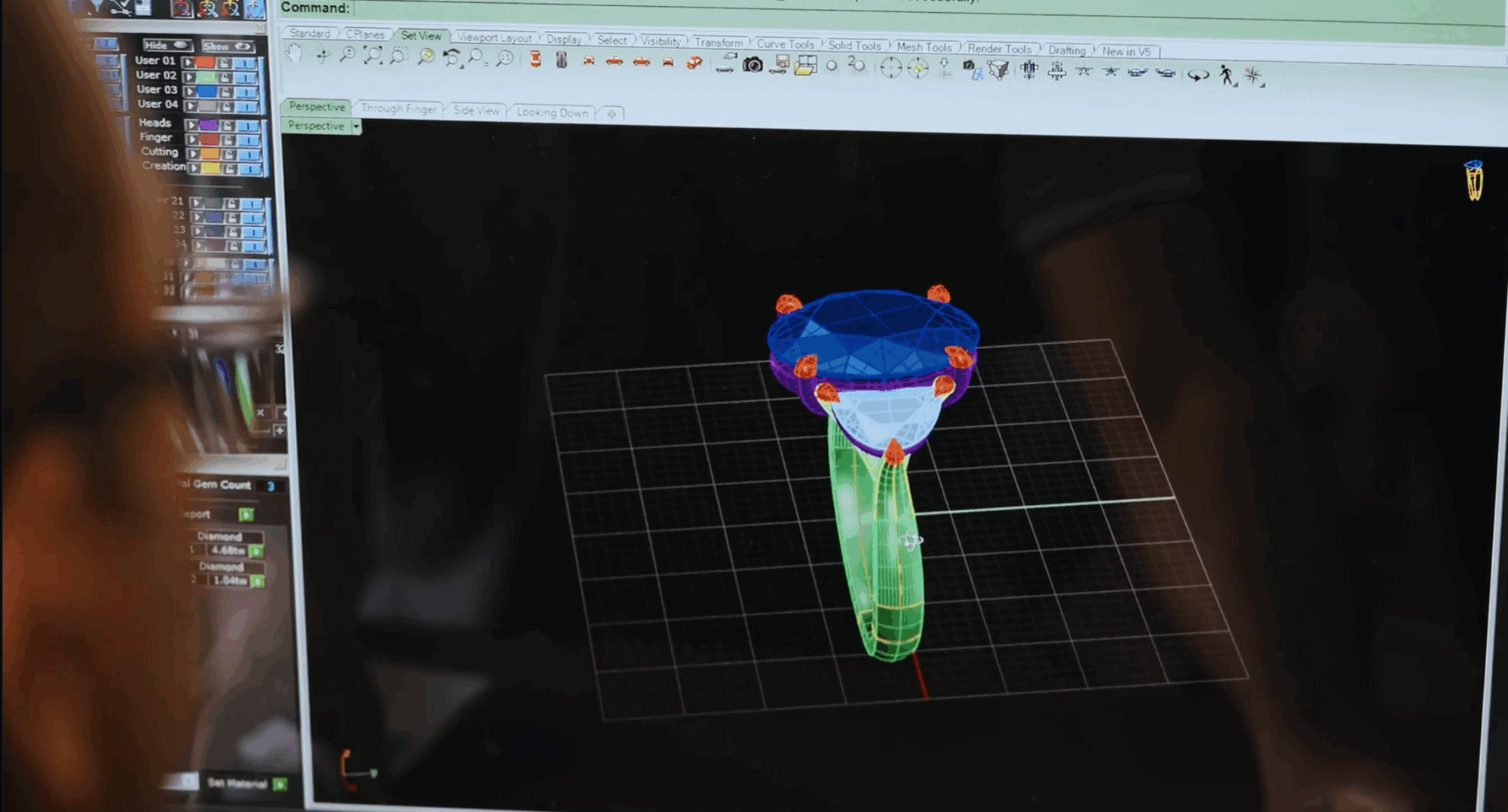
Comfort Depends on More Than Height
A low ring can still feel broad between the fingers if its basket extends sideways. A high ring can feel comfortable when the head is narrow, balanced and smoothly joined to the band. Finger shape and ring size also affect whether the centre rotates. Band width and depth matter. A very thin band beneath a large high-set diamond may allow spinning. A proportionate shank provides stability without unnecessary bulk. The guide to diamond ratios and measurements helps explain why carat weight alone cannot predict the required head.Which Profile Is Better for an Active Lifestyle?
A lower profile is often the more practical starting point for someone who works with their hands, wears gloves or cares for young children. It reduces projection, although no fine ring should be worn for sport, heavy lifting or manual work that could deform metal. A high setting can still be suitable when the wearer accepts greater awareness and removes the ring for higher-risk activities. The choice should follow real habits, not an idealised version of daily life. Use the engagement-ring care guide to plan when the ring should be removed.Wedding-Band Fit Is the Major Trade-Off
A high setting often allows a straight band to sit close because the head clears the wedding ring. A low basket may occupy that space, leaving a gap or requiring a fitted band. Neither result is a flaw if it is intentional. A shaped wedding band made to fit a yellow-gold oval engagement ring shows the practical value of planning both rings as a pair. Their profiles should be designed as a relationship, not treated as two unrelated purchases. Explore diamond wedding bands and decide whether you want a flush fit, deliberate gap or shaped contour before approving the engagement-ring gallery.How Height Changes the Ring’s Appearance
A low setting can feel sleek, contemporary and integrated. It may make the centre appear closer to the band and emphasise width across the finger. A high setting separates the centre and can create a more dramatic profile. Hidden halos and decorative galleries become more visible with height. Yet adding height only to display detail is not always wise. The design still needs a graceful transition and appropriate protection. Compare hidden halo engagement rings and hidden halo versus solitaire to see how under-gallery detail changes the profile.Diamond Shape and Depth Set Practical Limits
Round, oval and cushion diamonds can have different depths even at the same carat weight. Step cuts and elongated shapes also create distinct pavilion geometry. The jeweller must leave enough clearance while preventing unnecessary height. A pear or marquise needs protection at its tips. A deep coloured gemstone may require a specially developed basket. This is why the exact centre stone should be selected before the final head is engineered.Security, Leverage and Snagging
A higher centre creates a longer lever above the finger. That does not make it insecure, but it increases the importance of shoulder support, metal distribution and sensible wear. A low centre reduces projection, although exposed edges can still receive knocks. Snagging also depends on claw finish and gallery shape. Smooth transitions help fabric pass over the ring. Raised or worn claws should be inspected promptly.Profile, Ring Size and Spinning
A tall centre can make a ring top-heavy, particularly when the band is very fine or the finger size changes with temperature. The result may rotate even when the measured size seems correct. A broader or deeper shank can improve balance, while sizing beads may help in selected cases. A low profile can also spin if the head is wide and the band offers little resistance. Therefore, do not use height as the only explanation. Review the weight distribution, knuckle, finger base and intended band stack. The common engagement-ring mistakes guide covers decisions that look attractive online but create practical problems later. Budget decisions should include enough metal for stability rather than focusing only on the centre stone. Kinzy’s guide to engagement-ring spending explains how to protect the complete ring.How CAD and Wax Resolve the Choice
A side-profile CAD should state dimensions, not merely show an attractive enlarged render. Review the centre height, band depth, gallery width and wedding-band clearance. Then view the design at life size. CAD and a physical wax model let you assess profile and proportion before manufacture. The model can reveal whether the ring feels taller or broader than expected. Read the full Kinzy design process before approving a bespoke ring.A Supported Setting-Height Decision
A review cannot establish the safest height for every ring. It can show whether clients felt supported while making decisions. In Kinzy’s client testimonials on Kinzy’s website, Johannes describes professional guidance from the first stage to the result. Sarah says the team listened carefully to her requirements. Those experiences support the correct method: discuss lifestyle, compare profiles and approve the measurements. They do not justify a one-size-fits-all recommendation.Questions to Ask Before Approval
- What is the exact height from finger to the top of the centre stone?
- Does the chosen diamond’s depth require this profile?
- Will a straight wedding band sit safely, and is a gap intended?
- How does the gallery receive support from the shoulders?
- Could the ring rotate because of the centre-to-band balance?
- Can I see a life-size side view or wax model?
Featured Kinzy Pieces and Services
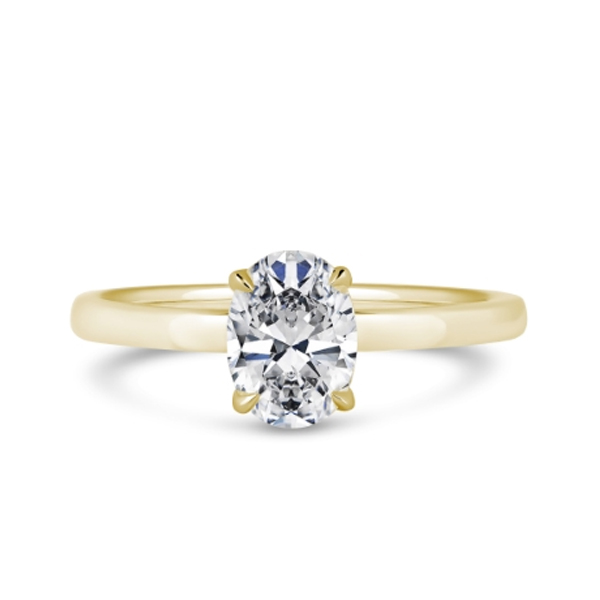
These Kinzy rings make the profile difference visible while keeping oval proportion and everyday wear in view.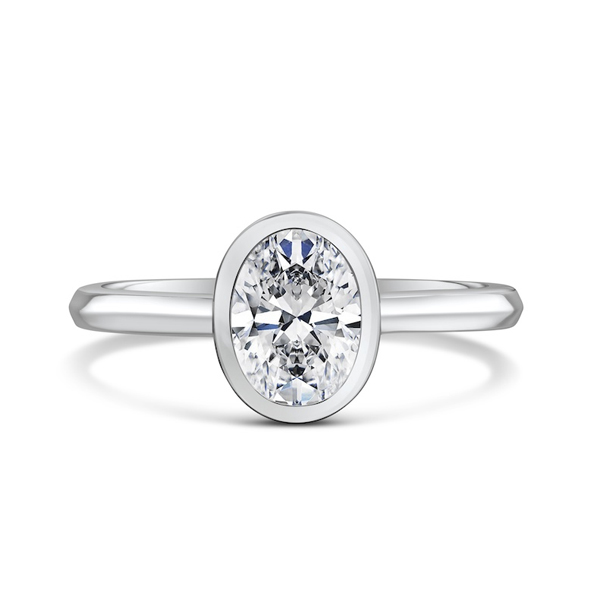
Related Reading and Services
- Oval engagement rings.
- Engagement rings.
- Create your own ring.
- Bespoke jewellery service.
- Book a private consultation.
- Oval Bezel Solitaire Ring in Platinum.
- High-Set Oval Hidden Halo Ring in 18k Yellow Gold.
Oval Setting-Height Reference
This Kinzy oval-ring reference shows how profile and wedding-band fit can change with setting height.Frequently Asked Questions
Are low-set engagement rings safer?
They reduce projection and leverage, which can be useful. Real security still depends on the setting, metal, stone and condition.Can a low-set ring sit flush with a wedding band?
Sometimes. A compact gallery may block a straight band, so confirm the side profile before manufacture.Do high-set rings make diamonds look bigger?
They can make the centre more prominent in profile, but they do not change its face-up measurements.Can a high setting be lowered later?
It may require replacing or rebuilding the head rather than a simple adjustment. It is better to resolve height during design development.Which profile is more timeless?
Both can be timeless. Proportion, comfort and the wearer’s established style matter more than the label.Final Thoughts on Low-Set vs High-Set Engagement Rings
Low-set vs high-set engagement rings is a balance between closeness, presence and wedding-band clearance. Low settings can feel protected and integrated. High settings can reveal the centre and create space beneath the head. Choose by reviewing the exact stone, side profile and daily routine. Height should solve practical and visual needs at the same time.Related Reading
Articles
Other articles from Kinzy London.
Articles, Bespoke Jewellery, Engagement Rings, Gemstones
How to Add a Hidden Birthstone or Secret Diamond to an Engagement Ring
Articles, Diamond Guides, Engagement Rings, Settings
Does a Bezel Setting Make a Diamond Look Bigger or Smaller?
Articles, Craftsmanship, Engagement Rings, Settings