- Engagement Rings
- Wedding Bands
Shop by style
- Classic
- Diamond Cut
- Two Colour
- Diamond Set
- Shaped
- Vintage
- Gemstone Bands
Shop by metal
- Gemstones
- Fine Jewellery
Fine Jewellery
- About Us
- Education
The Kinzy Expert Guide
The Kinzy Ring Size Guide
Our expert ring size guide brings together British letter sizing, atelier measuring methods and design knowledge for engagement rings, wedding bands and ring stacks.
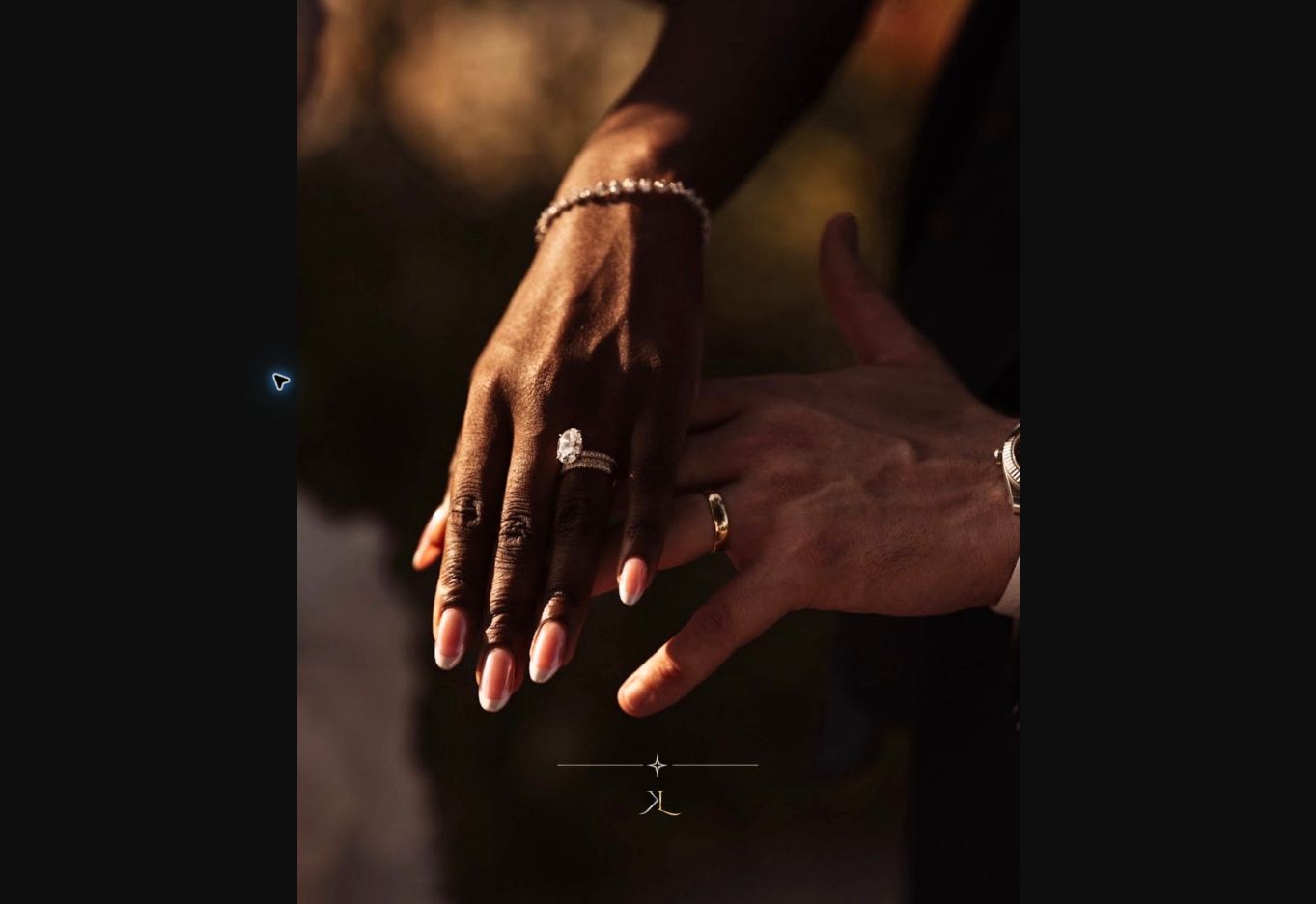
A–Z letter chartDiameter and circumference
Three measuring methodsClear steps for home or showroom
Design-specific adviceEngagement rings, bands and stacks
The quick answer
British ring sizes use letters. A ring should slide over the knuckle with gentle resistance, sit comfortably at the base of the finger and come off without pain. For the most reliable result, have the intended finger measured with a professional ring gauge.
The Kinzy Ring Size Chart
Kinzy uses the British letter-sizing system, with sizes shown from A upwards. Half sizes, such as M½, are used when a full size is not precise enough. The internal diameter is the straight-line measurement across the inside of a ring. The internal circumference is the distance around its inner edge.
The measurements below are a practical guide. Small differences between charts can occur because of rounding, so use the table to narrow down your size rather than as a substitute for a professional fitting.
| Letter size | Inside diameter | Inside circumference |
|---|---|---|
| A | 12.04 mm | 37.80 mm |
| B | 12.45 mm | 39.10 mm |
| C | 12.85 mm | 40.40 mm |
| D | 13.26 mm | 41.70 mm |
| E | 13.67 mm | 42.90 mm |
| F | 14.07 mm | 44.20 mm |
| G | 14.48 mm | 45.50 mm |
| H | 14.88 mm | 46.80 mm |
| I | 15.29 mm | 48.00 mm |
| J | 15.49 mm | 48.70 mm |
| K | 15.90 mm | 50.00 mm |
| L | 16.31 mm | 51.20 mm |
| M | 16.71 mm | 52.50 mm |
| N | 17.12 mm | 53.80 mm |
| O | 17.53 mm | 55.10 mm |
| P | 17.93 mm | 56.30 mm |
| Q | 18.34 mm | 57.60 mm |
| R | 18.75 mm | 58.90 mm |
| S | 19.15 mm | 60.20 mm |
| T | 19.56 mm | 61.40 mm |
| U | 19.96 mm | 62.70 mm |
| V | 20.37 mm | 64.00 mm |
| W | 20.78 mm | 65.30 mm |
| X | 21.18 mm | 66.60 mm |
| Y | 21.59 mm | 67.80 mm |
| Z | 21.79 mm | 68.50 mm |
What about half sizes? A half size sits between the two full sizes beside it. For example, M½ falls between M and N. Half sizes are useful when the smaller option feels too tight but the next full size feels loose.
How Should a Ring Fit?
A well-fitted ring feels secure without squeezing the finger. It should:
- pass over the knuckle with slight resistance;
- sit flat and comfortably at the base of the finger;
- stay in place during normal movement;
- come off with a gentle twist; and
- avoid leaving a painful or deep indentation.
A little movement can be normal, especially when the knuckle is wider than the base of the finger. However, a top-heavy ring that constantly turns may need a closer fit or a design adjustment. The height and construction of the setting can also make a difference, as explained in our guide to low-set and high-set engagement rings.
How to Measure Your Ring Size at Home
Method 1: Measure a ring that already fits
This is usually the easiest home method, especially for a surprise. Choose a ring worn on the same finger and the same hand, because corresponding fingers can be different sizes.
- Place the ring on a flat surface.
- Use a millimetre ruler or callipers to measure straight across the inside at its widest point.
- Do not include the metal edges in the measurement.
- Match the internal diameter to the nearest size in the Ring size chart.
- If the result sits between two sizes, arrange a professional check before manufacture.
Method 2: Measure the finger circumference
A flexible tape can give a useful estimate. If you do not have one, use a thin strip of non-stretch paper.
- Wrap the tape or paper around the base of the intended finger.
- Keep it comfortably close, without pulling it tight.
- Mark where the ends meet.
- Lay the strip flat and measure the length in millimetres.
- Compare the result with the circumference column in the chart.
String can stretch and compress, which makes it less reliable. Paper that is too wide can also make the size appear larger than it is.
Method 3: Visit Kinzy for a professional fitting
A jeweller can check the finger with calibrated gauges and account for the knuckle, band width, setting and intended ring stack. This is the best option before commissioning a valuable or difficult-to-resize design. Visit our Hatton Garden showroom to explore the Kinzy experience and discuss the fit with our team.
Seven Tips for a More Accurate Measurement
- Measure more than once. Check the size two or three times on different days.
- Measure later in the day. Fingers are often a little fuller by the afternoon or evening.
- Avoid temperature extremes. Cold hands may measure smaller, while very warm hands may measure larger.
- Use the correct hand. The same finger can differ between the left and right hand.
- Check the knuckle. The ring must pass over it but should not be loose at the finger base.
- Consider the band width. A broad band usually feels tighter than a fine band in the same nominal size.
- Measure for the final design. A solitaire, wide wedding ring and multi-ring stack can each feel different.
Best practice: use home measurement as a starting point. Before a bespoke ring enters production, confirm the size with a jeweller using a gauge that is similar in width to the finished band.
Wide Bands, Stacked Rings and Fit
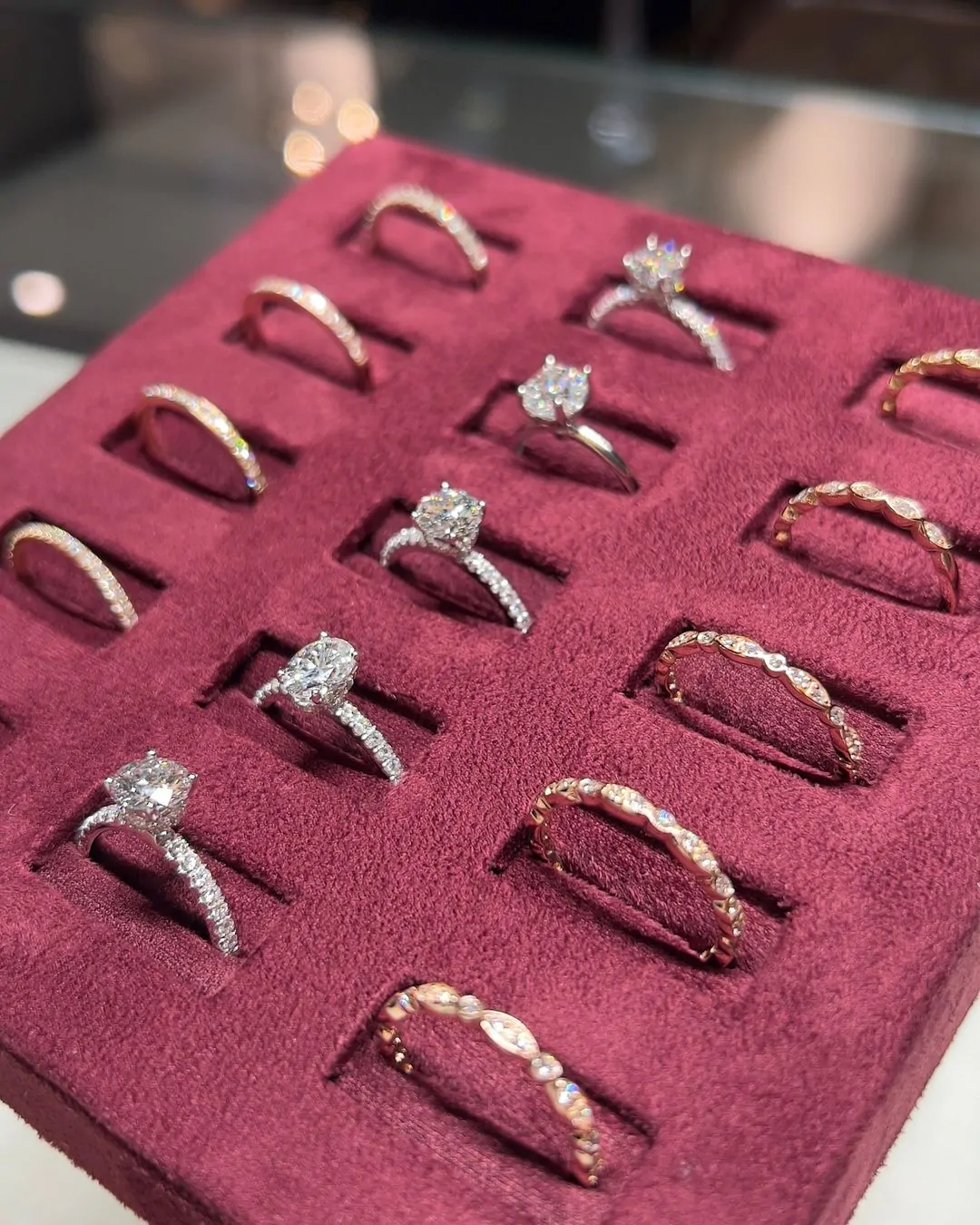
The greater the area of metal touching the finger, the tighter a ring can feel. Therefore, a 5 mm wedding band may need a different size from a delicate 2 mm ring. The internal profile matters too. A comfort-fit band can feel different from a flat internal profile.
If several rings will be worn together, try them as a stack. Engagement rings, plain bands and diamond wedding bands can change how the whole set sits. Metal choice and construction also influence the design, so our guide to precious metals for engagement and wedding rings is a useful next read.
Choosing an Engagement Ring Size
An engagement ring should be secure enough to protect the centre stone while remaining comfortable for daily wear. Larger or elevated centre stones can make a ring more likely to rotate when the fit is loose. Start by comparing the main engagement ring settings, then consider how the head, shoulders and band width will feel on the hand.
With a bespoke engagement ring, the proportions can be refined around the wearer. Our design team can balance the stone, setting and shank so the ring looks elegant and feels stable. The approved design is reviewed during the jewellery CAD stage, with the option to assess physical proportions through a wax model.
Choosing a Wedding Band Size
Wedding bands should be sized for the finger and for the way they will be worn. If the band will sit beside an engagement ring, try both pieces together. A straight band, shaped band and full eternity ring may each behave differently.
Full eternity and continuous-pattern designs can be difficult, or sometimes impractical, to resize after manufacture. Confirm the size carefully before ordering. If you are planning a fitted set, our bespoke design service can shape the wedding band around the engagement ring.
How to Estimate a Ring Size for a Surprise Proposal
If asking directly would spoil the surprise, use an existing ring from the correct finger and hand. Measure its internal diameter, or bring it to Kinzy for assessment. You can also ask someone close to the wearer for help, but avoid relying on a general guess.
If you cannot obtain a reliable measurement, choose a design that is normally suitable for later adjustment. Avoid committing to a full eternity band or a continuous pattern until the size is confirmed. Our team can explain which settings offer the most flexibility during a private consultation at our Hatton Garden showroom.
Can a Ring Be Resized?
Many rings can be resized, but the answer depends on the metal, setting, stone placement and amount of adjustment required. Plain shanks and many solitaire designs are usually more adaptable than full eternity rings, tension settings or bands with a continuous pattern.
Kinzy currently offers one complimentary resize within 12 months on eligible pieces, excluding full eternity and continuous-band designs. Please review the latest terms in our engagement ring care guide and ask our team to confirm eligibility for your ring. For long-term cleaning, inspection and maintenance information, see Lifetime Atelier Care.
The Kinzy Ring Size Guide: Frequently Asked Questions
What is the average ring size?
There is no single size that is right for most people. Finger size varies with the individual, the hand, the finger and the ring design. Measuring the intended finger is more reliable than ordering an “average” size.
Are British, US and European ring sizes the same?
No. Britain commonly uses letters, the US uses numbers and European systems often use a circumference-based number. Always use a conversion chart as an estimate and confirm the size before ordering.
What should I do if I am between two sizes?
Do not automatically choose the larger size. The better option depends on the knuckle, band width, setting and whether the ring will be stacked. A professional fitting can determine whether a half size is more comfortable.
Can finger size change?
Yes. Temperature, time of day and other temporary factors can change how a ring feels. Measure on more than one occasion and avoid sizing when your hands are unusually hot or cold.
Should I measure my left or right hand?
Measure the exact finger and hand on which the ring will be worn. The same finger on the opposite hand may not be the same size.
Can a full eternity ring be resized?
Resizing can be limited because stones or a continuous design run around the band. Confirm the size before manufacture and ask about future adjustment options during the design process.
Personal fitting at Kinzy London
Still unsure about your ring size?
Visit our Hatton Garden showroom for a professional fitting and design consultation. We will consider the finger, knuckle, band width, setting and how your rings will be worn together.
Measurement note: Ring dimensions are shown in millimetres and rounded for practical use. The international measurement method is described in ISO 8653:2016. A professional finger-gauge measurement should be used for the final order.