- Engagement Rings
- Wedding Bands
Shop by style
- Classic
- Diamond Cut
- Two Colour
- Diamond Set
- Shaped
- Vintage
- Gemstone Bands
Shop by metal
- Gemstones
- Ready To WearFine jewelleryMade to be worn.
Made to last.Diamond jewellery for every day and every occasion.Shop all jewellery →Fine jewellery
Diamond earringsPendantsBraceletsRingsShop allShop by occasion
Gifts under £1,000AnniversaryBirthdayBridal jewelleryAvailable sooner
Ready to dispatchNew arrivalsBestsellersBook an appointmentFine Jewellery
- About UsMade in LondonCrafted by people you can meet.Discover the people, workshop and personal service behind every Kinzy London piece.Meet KinzyRead our story →
About Kinzy
About KinzyOur storyClient storiesMeet your sales associateCraft & care
Our workshopDesign processLifetime Atelier CareOur guaranteesMade in our London workshopCertified diamondsLifetime carePersonal guidance - Education
Learn with Kinzy Diamond guideUnderstand the details that matter→Fit & setting guideChoose comfort and proportion→Behind the craftHow your jewellery is made→Expert guidance, clearly explained.
Practical diamond, gemstone and ring guidance to help you make a confident decision.
Explore all guides →
 Round
Round Oval
Oval Heart
Heart Marquise
 Cushion
 Pear
Pear Emerald
 Asscher
 Radiant
29 September 2026
Does a Bezel Setting Make a Diamond Look Bigger or Smaller?
Does a bezel setting make a diamond look bigger? It can. A fine, closely fitted border can extend the diamond’s outline and make the total face-up shape appear broader. Yet a thick, high-contrast or inward-projecting bezel can cover the girdle and make the visible diamond seem smaller. The outcome is design, not magic.
Judge three things separately: the diamond’s actual millimetre spread, the visible diamond inside the setting and the combined diamond-plus-metal silhouette. A bezel can enlarge the third while reducing the second.
What Is a Bezel Setting?
A full bezel uses a continuous rim of metal around the diamond’s perimeter. Metal is worked over or against the stone’s edge to retain it. A semi-bezel leaves planned sections open while holding the stone at opposing areas.
Bezel settings differ from claw settings, which use individual contact points. They also differ from a halo, where smaller stones surround the centre. Kinzy’s setting guide helps separate these categories before you compare visual size.
Why a Fine Bezel Can Look Larger
The eye reads an uninterrupted outline. When a slender bezel closely follows a round or oval diamond and has a similar light colour, the metal can become part of that outline. The combined shape occupies more area than the diamond alone.
GIA’s article on settings that can make a diamond look bigger notes that a bezel’s surrounding band may increase the apparent circumference. That is an optical impression, not an increase in carat weight or measured spread.
Why a Bezel Can Look Smaller
If the rim is broad or overlaps far onto the crown, less of the actual diamond is visible. A dark or warm high-contrast bezel can also draw a clear line around the stone, making the viewer notice where diamond ends and metal begins.
A deep setting may hide more of the side profile. A poorly fitted border can feel heavy or uneven. The remedy is not always “make it thinner”: the bezel still needs enough appropriately worked metal to perform its setting role.
White Metal vs Yellow Gold
White metal around a colourless diamond
Platinum or white gold can visually blend with a colourless diamond, particularly in bright light. That continuity may make the total shape read larger. White gold is commonly rhodium plated, so confirm its finishing and future maintenance.
Yellow or rose gold
A warm bezel creates deliberate contrast. It may define the true diamond boundary more clearly, but the strong frame can also make the entire design feel bolder. Some buyers prefer a white-metal bezel with a yellow-gold shank to combine visual continuity with warmth.
Review the metal differences in Kinzy’s platinum versus gold guide. Choose the alloy for the whole ring rather than treating metal colour as a size trick.
Bezel Width Is the Critical Variable
A hairline-looking rim can extend the outline discreetly. A substantial rim turns the bezel into a major graphic element. Both can be beautiful, but they answer different briefs.
Ask for dimensions or comparable finished examples, because CAD may exaggerate or simplify the metal before final setting. Kinzy’s design process explains the CAD stage; the handcrafted-jewellery page shows why final bench work matters.
Diamond Shape Changes the Effect
Round
A smooth circular bezel can make the outline exceptionally clean. Any unevenness is also easy to notice because the eye expects a perfect rhythm.
Oval
A fine bezel can reinforce length and create a larger continuous ellipse. Watch the width at the ends and sides: inconsistent metal can distort the apparent outline.
Emerald and radiant cuts
Straight edges and clipped corners create an architectural border. The bezel may make the whole shape look broader, while heavy corner metal can reduce the visible facets.
Pear and marquise
The pointed ends require sensitive construction. A bezel can provide a protective frame, but excess metal can blunt the graceful tip. The selected stone must guide the final contour.
Carat Weight Is Not Face-Up Size
Carat measures weight, not diameter. Two diamonds of the same carat can have different length, width and depth. Before debating the bezel, compare the actual measurements and outline of the centre stone.
Kinzy’s diamond-certification guide explains where measurements appear on grading reports. Visual spread still needs to be judged beside cut quality, because an unusually shallow stone is not automatically a better choice simply because it faces up large.
Does a Bezel Reduce Sparkle?
A bezel covers part of the perimeter, but it does not automatically stop a well-cut diamond returning light face-up. Diamond brightness is primarily the product of cut and cleanliness. GIA notes that a bezel can affect a poorly cut diamond’s brightness, which reinforces the need to choose the stone and setting together.
Compare the actual diamond in neutral and everyday lighting. Do not judge only under concentrated showroom spotlights or from a computer render.
Protection Is a Benefit, Not Invulnerability
A bezel surrounds more of the girdle than claws and can protect the edge from some knocks. It may also reduce projecting points that catch. It cannot make the diamond or ring immune to impact, crushing, chemicals or unsafe activities.
Remove fine jewellery where risk demands it and follow the care information for the stone. Kinzy’s engagement-ring care guide and lifetime atelier care page explain handling and the current service route for Kinzy creations.
Full Bezel vs Semi-Bezel
A full bezel produces a continuous frame and the strongest visual outline. A semi-bezel reveals more edge at planned openings and can feel lighter. It may emphasise the long axis of an oval or emerald cut depending on placement.
Semi-bezel is not simply “half as protective”. Its engineering, contact and stone shape must be evaluated as their own setting. Ask to see every open edge and understand how the stone is retained.
Setting Height and Wedding-Band Fit
Bezels can be designed low or high. A low bezel may be attractive to someone who dislikes projection, but it can prevent a straight wedding band from sitting closely. A high bezel may create clearance while changing presence and leverage.
Read Kinzy’s setting-height guide, review wedding-band options and use the band builder to define the neighbouring profile.
How to Compare Bezel and Claw Versions Fairly
- Use the same diamond shape and millimetre dimensions.
- Compare at the same image scale and lighting.
- Record bezel metal, colour and intended finished width.
- Separate visible diamond area from total framed outline.
- View the side as well as the top.
- Check total height and wedding-band clearance.
- Ask how the stone can be inspected and cleaned.
- Choose protection and character, not apparent size alone.
When Bespoke Design Helps
A bespoke bezel can be drawn around the selected stone rather than a generic outline. That is particularly valuable for unusual proportions, asymmetric shapes or a two-metal design. The goal should be a consistent rim and sound stone seat, not the thinnest render possible.
Kinzy’s bespoke page, bespoke comparison and timing guide explain the route from brief to approval. Confirm current feasibility and schedule through the contact page.
See How the Setting Changes the Outline
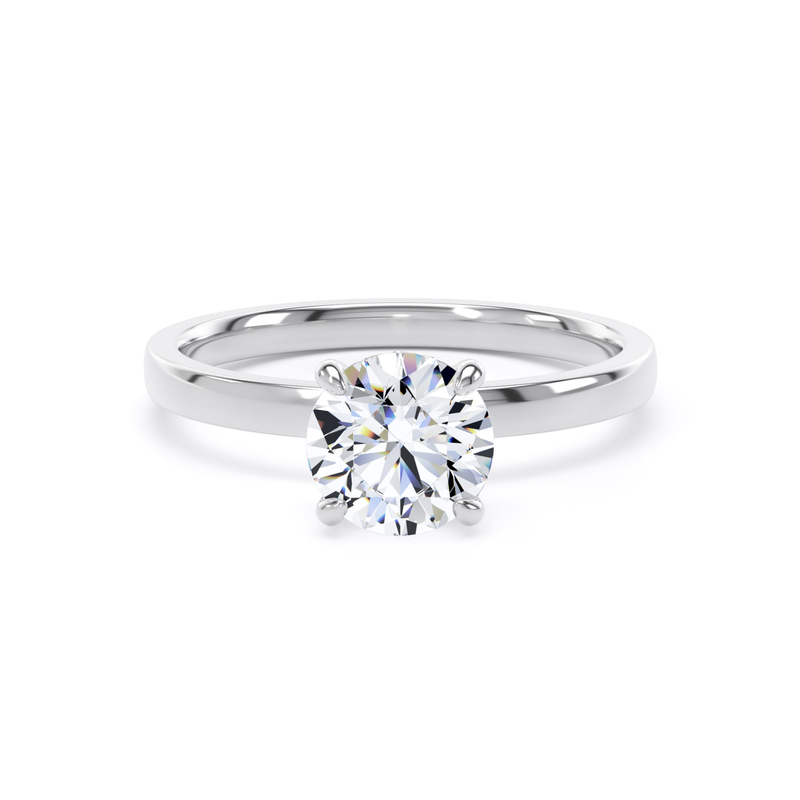
Compare a claw-set silhouette with the continuous frame of a bezel. Kinzy can refine the bezel width, metal colour and profile around your chosen diamond.
From Proportion to Polish
See how the setting’s outline is carried from design through making and final polish.
Frequently Asked Questions
Does a white-gold bezel make a diamond look bigger?
It may blend with a colourless diamond and extend the total outline. Bezel width, plating, stone colour and workmanship all affect the result.
Does a yellow-gold bezel make a diamond look smaller?
It can define the diamond boundary more clearly, yet the bold warm frame may make the complete design feel larger. Compare both interpretations.
Is a bezel safer than claws?
It covers more of the girdle and can protect against some knocks, but no setting is invulnerable. Construction, wear, activity and inspection still matter.
Can any diamond shape be bezel set?
Many shapes can be, but corners, points, outline and cutting tolerances affect feasibility and the final look. Assess the selected stone.
Can a bezel be changed to claws later?
That would generally be a structural redesign rather than a simple adjustment. Ask the maker to assess the existing ring and stone.
The Bezel Changes Both Outline and Contrast
A fine, harmonious bezel can enlarge the combined silhouette, while a heavier or contrasting rim can define the visible diamond more sharply. Judge the diamond and metal outline together.
Approve the real dimensions through a bespoke design brief, book a Kinzy consultation and plan the accompanying band in the wedding-ring builder.
×
BESPOKE DESIGN BRIEF
Begin with what you know so far.
A short, considered brief. Nothing needs to be certain yet.
This site is protected by reCAPTCHA and the Google Privacy Policy and Terms of Service apply.
PERSONAL BESPOKE GUIDANCE
Shape the next detail with your Kinzy jeweller.
A short design brief gives our Hatton Garden atelier a thoughtful starting point—whether you have a clear idea or are still comparing possibilities.
Related Reading
Articles
Other articles from Kinzy London.
Articles, Diamond Guides, Engagement Rings, Settings
Does a Bezel Setting Make a Diamond Look Bigger or Smaller?
Articles, Craftsmanship, Engagement Rings, Settings
What Is a Gallery Rail—and Why Can It Matter for Centre-Stone Security?
Articles, Design Guides, Engagement Rings, Settings