- Engagement Rings
- Wedding Bands
Shop by style
- Classic
- Diamond Cut
- Two Colour
- Diamond Set
- Shaped
- Vintage
- Gemstone Bands
Shop by metal
- Gemstones
- Fine Jewellery
Fine Jewellery
- About Us
- Education
21 June 2026
Engagement Ring Care Guide: How to Protect Your Ring for Life
The Kinzy Expert Guide
The Kinzy Jewellery Care Guide
Simple, considered advice for cleaning, wearing, storing and professionally maintaining an engagement ring for years to come.
Gentle home cleaningWarm water, mild soap and a soft brush
Regular inspectionsWatch the claws, stones and setting
Professional aftercareAnnual servicing and atelier support
The quick answer
Clean an engagement ring gently, remove it for chemicals and heavy tasks, store it separately and have it checked professionally if a stone moves, a claw catches or the ring takes a knock. Small, consistent habits protect both its sparkle and structure.
A Practical Engagement Ring Care Routine
An engagement ring is made to be worn and loved, but daily life can affect the diamond, claws, band and finish. A simple routine makes it easier to notice change early and avoid preventable damage.
| When | What to do | Why it matters |
|---|---|---|
| Every day | Remove the ring for heavy work, strong chemicals and situations where it could be caught or knocked. | Protects the setting, claws and surface finish. |
| Regularly | Look for movement, uneven claws or snagging, and clean gently when residue dulls the diamond. | Helps identify changes before they become larger repairs. |
| After an impact | Stop wearing the ring and arrange a professional inspection, even if it appears intact. | Damage to a claw or setting can be difficult to see unaided. |
| Annually | Book professional servicing in line with Kinzy’s aftercare requirements. | Allows the structure, setting and finish to be examined together. |
How to Clean Your Ring Gently at Home
Oil, lotion and soap naturally collect around a diamond and setting. This film reduces sparkle but does not mean the stone itself has changed.
- Prepare a gentle solution. Use warm water with a small amount of mild washing-up liquid.
- Let residue soften. Place the ring in the solution briefly, away from an open drain.
- Brush carefully. Use a very soft brush around the setting, beneath the centre stone and along the band without forcing the claws.
- Rinse and dry. Rinse thoroughly and pat dry with a clean, lint-free cloth.
Avoid improvised deep-cleaning methods. The GIA diamond care guide cautions against abrasive cleaners and home steam or ultrasonic cleaning. A diamond may be durable, but the setting or treated stones may not be suitable for aggressive methods.
When Should You Take Your Ring Off?
Remove your ring before the gym, gardening, lifting heavy items, hands-on work, deep cleaning or swimming. These activities can expose the setting to impact, pressure, chlorine or harsh products.
Heavy tasks
Weights, tools and luggage can press against the band or catch a raised setting.
Chemicals
Bleach, chlorine and strong cleaning agents can affect precious-metal finishes and should be kept away from fine jewellery.
Beauty products
Apply creams, oils and perfume before putting the ring on to reduce residue around the stone.
This advice applies across solitaire, halo, trilogy and shoulder-set rings.
Check the Claws and Protect Pointed Shapes
Claws hold the diamond in position and can move or wear over time. Look at the ring periodically. If the stone appears uneven, moves, clicks or begins catching on fabric, stop wearing it and ask a jeweller to inspect it. Do not try to tighten claws at home.
Pear and marquise diamonds have pointed ends that need proper protection. Avoid catching those points on hair, knitwear or bedding. Princess-cut corners also deserve care, while oval, emerald, cushion and round shapes still require regular setting checks.
If a diamond moves, a claw catches or the ring has taken a knock, stop wearing it until the setting has been checked.
How to Store an Engagement Ring Safely
When the ring comes off, place it in one deliberate, secure location. A lined jewellery box, soft pouch or ring dish away from sinks helps prevent loss and limits contact with other pieces.
- Store rings separately so diamonds and metal surfaces do not rub against one another.
- Avoid loose pockets, handbags and open bathroom shelves.
- Keep a consistent safe place near the bed, but never beside an open drain.
- Use a secure travel case rather than the original presentation box when discretion matters.
Should You Polish Your Ring?
Professional polishing can refresh precious metal, but it should not be overdone because each polish removes a very small amount of material. Everyday marks are a natural part of wearing fine jewellery.
Platinum develops a soft patina that many wearers enjoy. Yellow gold can be polished when appropriate to restore warmth and shine. White gold may also need rhodium replating as its bright surface finish wears. Compare these differences in the Precious Metals Guide.
When to Book Professional Maintenance
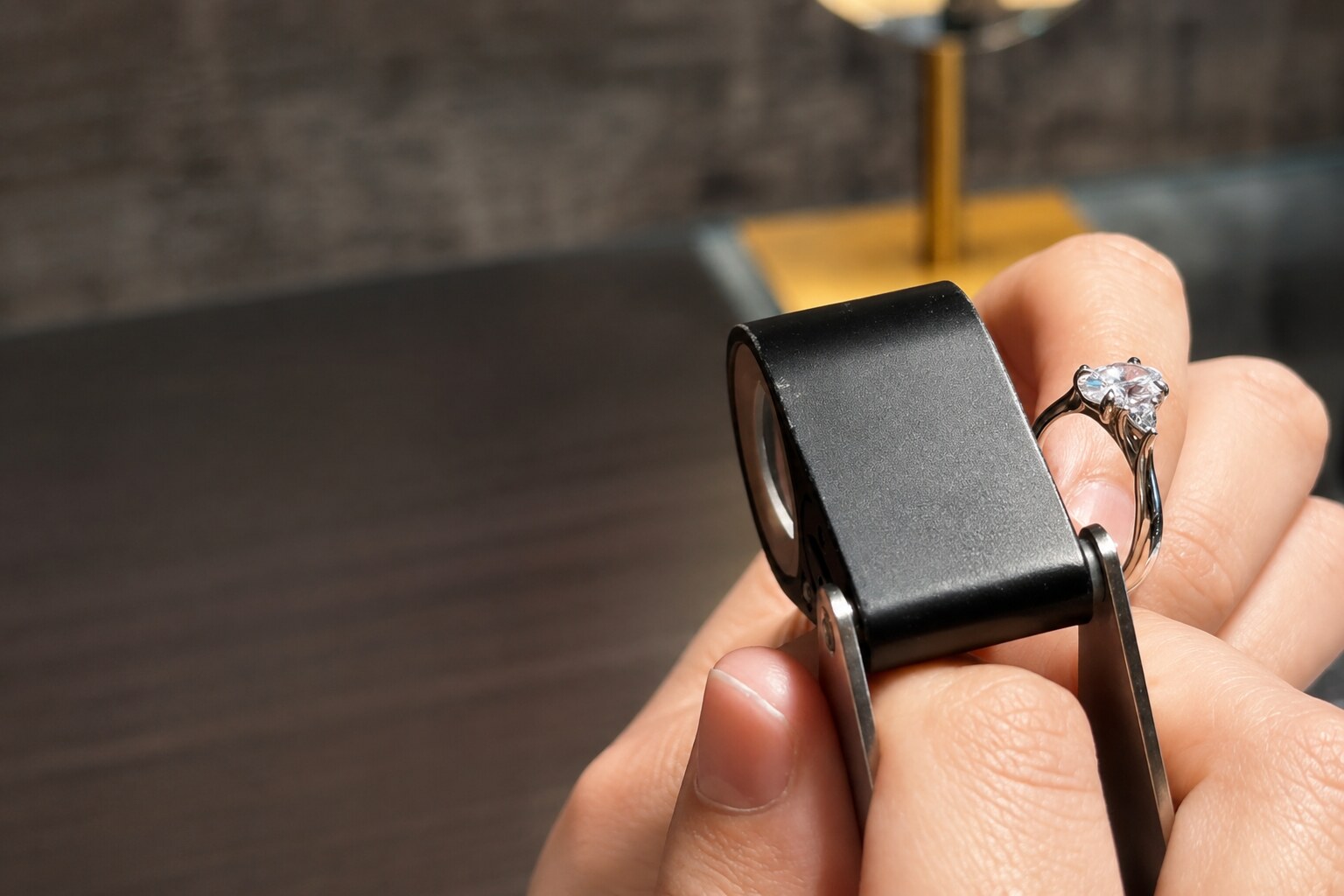
Home cleaning improves appearance, but it does not replace an inspection under magnification. A professional can check the claws, stones, setting and band as one structure.
Arrange an assessment after a significant knock, before important travel, whenever the ring catches or feels different, or before commissioning a wedding band. A band that sits incorrectly can rub against the engagement ring; planning both together helps protect the pair. Explore Kinzy’s wedding-band service if you are ready to plan the match.
Kinzy London Lifetime Manufacturing Warranty
Every Kinzy London piece is covered by a lifetime manufacturing warranty for craftsmanship. The warranty supports the way the jewellery was made; it does not cover accidental damage, general wear, neglect or work performed by a third party.
Regular care is therefore important. If a ring feels loose, begins catching or receives an impact, it should be checked before being worn again.
What Is Included in Kinzy’s Lifetime Care Package?
- Complimentary engraving at purchase.
- One complimentary resize within 12 months, excluding full-eternity rings and continuous-band designs.
- An annual service with claw tightening, professional cleaning, a light polish and plating where required, plus a structural inspection.
- Showroom support for cleaning and maintenance when needed.
The annual service is required to maintain the warranty. Repairs arising from accidental damage or wear are chargeable. Contact Kinzy before arranging work elsewhere so the team can advise on the safest next step.
Insure and Document Your Ring
Keep the invoice, diamond report and any valuation documents together in a secure place. Take clear photographs from several angles, record the ring’s distinguishing details and retain digital copies separately from the jewellery.
If the centre diamond has a grading report, keep the report number with your records rather than inside the ring box. The Diamond Certification Guide explains what these reports record and why they matter.
Atelier aftercare
Let Us Check Your Ring
If your ring has taken a knock, feels loose or is due its annual service, contact Kinzy before continuing to wear it. Our team can advise on inspection, cleaning and maintenance.
Articles
Other articles from Kinzy London.
Articles, Bespoke Jewellery, Engagement Rings, Gemstones
How to Add a Hidden Birthstone or Secret Diamond to an Engagement Ring
Articles, Diamond Guides, Engagement Rings, Settings
Does a Bezel Setting Make a Diamond Look Bigger or Smaller?
Articles, Craftsmanship, Engagement Rings, Settings