- Engagement Rings
- Wedding Bands
Shop by style
- Classic
- Diamond Cut
- Two Colour
- Diamond Set
- Shaped
- Vintage
- Gemstone Bands
Shop by metal
- Gemstones
- Fine Jewellery
Fine Jewellery
- About Us
- Education
2 September 2026
Wedding Ring Profiles Explained: Court, D-Shape, Flat Court and Flat Compared
Wedding ring profiles describe the cross-sectional shape of a band. Although two rings may look almost identical from above, one can have a rounded outer surface, another a flat face, and each can meet the finger differently on the inside.
This guide compares court, D-shape, flat court and flat profiles without declaring one universally best. The right choice comes from seeing the outer silhouette, inner geometry, width and depth as a complete design.
What Is a Wedding Ring Profile?
Imagine cutting straight through a plain band and looking at the exposed end. The outline you would see is its profile. That small shape determines whether the ring reads as softly rounded, crisply contemporary or somewhere between the two.
Profile is not the same as width. Width runs across the finger when you look down at the hand. Depth is the thickness from the inside surface to the outside surface. Profile describes how those dimensions are shaped.
Kinzy’s create-your-own-ring designer provides a practical place to compare the current profile choices with metal, width and finish.
Read the Outside and Inside Separately
The outside controls the visible character. A domed surface catches light in a moving highlight; a flatter face holds a broader, more architectural plane. The inside controls how the ring meets the skin and moves over the knuckle.
A name such as “flat court” combines those two ideas. Therefore, do not choose from the label alone. Inspect the illustrated cross-section, confirm the written specification and, if possible, try a physical sample in a similar width.
Court Wedding Ring Profile
A court profile is generally curved on both its outer and inner surfaces. The outside forms a traditional rounded band, while the inside is also shaped rather than remaining completely flat.
Visually, this is the softest of the four profiles in this comparison. Light travels across the outer curve, so a polished court band has no single broad front plane. In a quieter finish, the same curve remains apparent through the silhouette.
The inner curve is often associated with a comfort-style fit. Comfort still depends on the correct size, width, depth and edge treatment, so the word “court” should not be taken as a guarantee that every wearer will prefer it.
D-Shape Wedding Ring Profile
A D-shape profile is usually rounded on the outside and flatter on the inside. Its cross-section resembles a capital D when viewed in the conventional orientation: curved outer face, straighter inner face.
From above, it can share the familiar domed appearance of a court band. The distinction becomes clearer in the inner surface and overall cross-section. This makes D-shape useful for someone who likes a traditional exterior but wants to compare a flatter inner geometry.
The amount of curvature and edge softness can vary. Ask to see the maker’s actual sample rather than assuming that all D-shape rings use identical proportions.
Flat Court Wedding Ring Profile
A flat court reverses the visual logic of a traditional court. Its outer face is flatter, while the inside is curved. The result is a clean, contemporary surface combined with an inner geometry designed to meet the finger more gradually.
Because the exterior provides a broader plane, the selected finish becomes particularly visible. A high polish creates a strong reflection; a satin or brushed treatment makes the plane look more restrained.
Flat court is not simply a flat band with a marketing name. The curved inside is an important part of the specification and can change both the feel and the amount of metal used at a given width.
Flat Wedding Ring Profile
A flat profile has a flatter exterior and a flatter inner surface than the other options here. The edges should still be finished for wear rather than left as sharp, unfinished corners.
This profile gives the strongest architectural impression. Straight planes and defined transitions make the width visually clear, especially in a polished metal. A softer finish can reduce glare while preserving the geometric outline.
Do not confuse “flat” with thin. A flat ring can be produced in different widths and depths, and those dimensions will affect its presence and fit.
Wedding Ring Profiles Compared at a Glance
- Court: rounded outside, curved inside; the most continuously domed silhouette.
- D-shape: rounded outside, flatter inside; traditional-looking exterior with a different inner geometry.
- Flat court: flatter outside, curved inside; a modern visible plane with internal curvature.
- Flat: flatter outside and inside; the most linear cross-section in this group.
These are working definitions, not a substitute for the exact maker’s drawing or sample. Edge radius, depth and the degree of curvature can change within the same broad profile family.
Why Width Changes the Profile
A narrow band reveals less outer surface, so a gentle dome and a flat face can appear similar. As width increases, the geometry becomes easier to read. However, finish can quieten or emphasise it, so compare width and profile together.
Depth and Edge Treatment Matter Too
Two bands with the same width and profile name may differ in depth or edge transitions. A softened edge makes a flat face gentler; a smaller radius preserves a more defined plane. Request clarification when an online image does not show these details.
Comfort Is More Than an Inner Curve
Comfort depends on finger shape, knuckle size, width, depth and ring size. A curved inside may move over the knuckle differently, but correct sizing remains essential. Try samples in a comparable width; the showroom page and contact page provide the route for arranging a visit.
How Profile Changes the Look of a Finish
On a court or D-shape exterior, reflections move across a curve. On a flat court or flat exterior, the finish occupies a broader plane. Daily wear alters either surface; Kinzy’s Lifetime Atelier Care information explains how a Kinzy piece is assessed and refreshed where appropriate.
How Metal Colour Interacts with Profile
A rounded white-metal band can appear fluid; a flat yellow-gold band can emphasise colour and geometry. Compare material before finish. Kinzy’s guide to platinum versus gold explains the metal distinctions relevant to wedding bands.
Choosing a Profile Beside an Engagement Ring
A wedding ring profile does not determine whether a band will sit flush. The engagement ring’s basket, setting height and decorative structure control the available space. Profile then influences how the two outer surfaces relate once they are together.
A domed wedding band can echo rounded claws and shoulders. A flat court can introduce a deliberate clean line. Both approaches can work. Review the side view using the Kinzy guides to engagement-ring settings and low-set versus high-set rings.
For diamond-set and shaped options, the broader diamond wedding-band guide covers styles beyond a classic plain profile.
Should a Couple Choose Matching Profiles?
Matching profiles create an obvious connection. Yet different hands may prefer different widths or inner surfaces. Shared metal or engraving can provide the relationship while each profile suits its wearer. Kinzy’s article on meaning over trends explores that broader principle.
Compare Wedding Ring Profiles Online
Open the Kinzy online ring designer and keep the metal, width and finish constant while changing only the profile. This isolates the shape. Then repeat the comparison in the intended width, because a profile can look different as its visible area changes.
When one option stands out, note the complete specification. A screenshot or saved summary is useful only if it includes the name, dimensions, metal, finish and size rather than a picture alone.
When a Classic Profile Becomes Bespoke
A standard builder is appropriate when its available profile and dimensions already suit the brief. If you want an unusual edge, a contour around another ring, mixed geometry or details not shown, discuss a more individual route.
The Kinzy guide to bespoke and made-to-order rings separates those approaches. You can also view the Kinzy design process, bespoke service and handcrafted jewellery pages before a consultation.
Check the Metal Specification and Hallmark
Profile describes shape, not metal content. Confirm the stated metal and fineness separately. The British Hallmarking Council’s UK consumer hallmarking guidance explains what buyers should look for in shops and online.
The Goldsmiths’ Company hallmark guide sets out the sponsor, fineness and Assay Office components. These independent marks help verify precious metal; they do not identify the profile, which should remain on your order specification.
Common Profile-Choosing Mistakes
- Judging only the top view and never checking the cross-section.
- Assuming “court” and “D-shape” are interchangeable.
- Choosing a profile without holding width and finish constant.
- Treating curved inside as a guarantee of perfect comfort.
- Ignoring depth and edge treatment.
- Expecting a profile to solve a gap created by an engagement-ring setting.
- Ordering from an image without recording the written specification.
For wider buying principles, review Kinzy’s guide to common ring-buying mistakes, particularly its emphasis on fit, construction and clear questions.
Profile Comparison Checklist
- Look at the band’s cross-section, not only its top view.
- Identify the outer surface: rounded or flatter.
- Identify the inner surface: curved or flatter.
- Compare profiles at the same width, depth, metal and finish.
- Try a physical sample if comfort or proportion is uncertain.
- Check the side view beside any engagement ring.
- Record the exact profile name and full dimensions.
- Confirm the metal, fineness, size, price, timing and terms separately.
From Profile Choice to Finished Ring
A wedding ring profile is a subtle decision with a lasting effect on comfort and proportion. Once you have compared court, D-shape, flat court and flat online, the Kinzy team can help you refine the width, depth and edge finish as one complete design.
Explore Kinzy’s craftsmanship and the Kinzy experience for a closer look at how each piece is brought to life.
Compare the Profiles in Detail
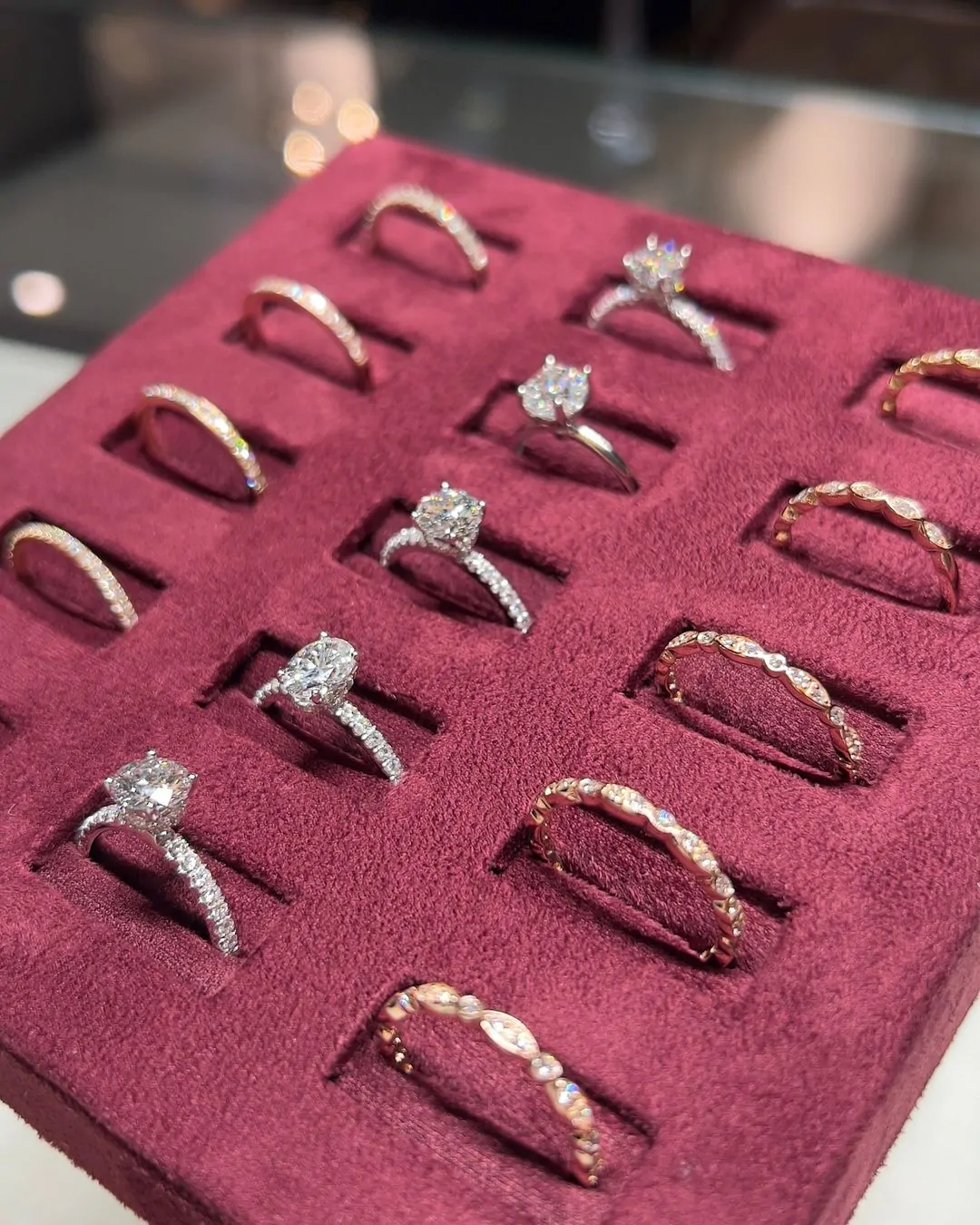
Use the display as a reminder to compare scale and silhouette, then isolate the profile in the online designer.
Inside the Kinzy Atelier
A closer look at the craftsmanship and finishing behind every Kinzy ring.
Frequently Asked Questions
What is the difference between court and D-shape rings?
Both usually have a rounded exterior. A court profile also has a curved inner surface, while D-shape is generally flatter inside.
What is the difference between flat court and flat?
Both have a flatter visible face. Flat court adds a curved inner surface; flat is flatter through more of its cross-section.
Which wedding ring profile is best?
No profile is best for everyone. Compare the look, width, depth, inner fit and relationship with any neighbouring ring.
Does a curved inside make a ring larger?
Not automatically. Profile and sizing systems need to be assessed together, so confirm the finished size rather than adjusting it by assumption.
Can I compare the profiles before visiting Kinzy?
Yes. Use the online ring designer first, then arrange a consultation if you want to compare physical samples or resolve a pairing question.
Final Thoughts on Wedding Ring Profiles
The clearest way to compare wedding ring profiles is to separate the visible outer surface from the inner fit. Court is rounded inside and out; D-shape is rounded outside and flatter inside; flat court pairs a flatter face with a curved inside; flat keeps a more linear geometry.
Explore the profiles in Kinzy’s online ring designer. For physical samples, engagement-ring pairing or a more individual specification, book a private Kinzy consultation.
×
WEDDING RING CONSULTATION
Tell us what you are considering.
A short, considered brief. Nothing needs to be certain yet.
This site is protected by reCAPTCHA and the Google Privacy Policy and Terms of Service apply.
WEDDING RING CONSULTATION
Choose a wedding ring that feels entirely yours.
From proportion and comfort to finish and fit, a short brief lets your Kinzy jeweller prepare considered options before your consultation.
Related Reading
Articles
Other articles from Kinzy London.
Articles, Bespoke Jewellery, Engagement Rings, Gemstones
How to Add a Hidden Birthstone or Secret Diamond to an Engagement Ring
Articles, Diamond Guides, Engagement Rings, Settings
Does a Bezel Setting Make a Diamond Look Bigger or Smaller?
Articles, Craftsmanship, Engagement Rings, Settings