- Engagement Rings
- Wedding Bands
Shop by style
- Classic
- Diamond Cut
- Two Colour
- Diamond Set
- Shaped
- Vintage
- Gemstone Bands
Shop by metal
- Gemstones
- Ready To WearFine jewelleryMade to be worn.
Made to last.Diamond jewellery for every day and every occasion.Shop all jewellery →Fine jewellery
Diamond earringsPendantsBraceletsRingsShop allShop by occasion
Gifts under £1,000AnniversaryBirthdayBridal jewelleryAvailable sooner
Ready to dispatchNew arrivalsBestsellersBook an appointmentFine Jewellery
- About UsMade in LondonCrafted by people you can meet.Discover the people, workshop and personal service behind every Kinzy London piece.Meet KinzyRead our story →
About Kinzy
About KinzyOur storyClient storiesMeet your sales associateCraft & care
Our workshopDesign processLifetime Atelier CareOur guaranteesMade in our London workshopCertified diamondsLifetime carePersonal guidance - Education
Learn with Kinzy Diamond guideUnderstand the details that matter→Fit & setting guideChoose comfort and proportion→Behind the craftHow your jewellery is made→Expert guidance, clearly explained.
Practical diamond, gemstone and ring guidance to help you make a confident decision.
Explore all guides →
 Round
Round Oval
Oval Heart
Heart Marquise
 Cushion
 Pear
Pear Emerald
 Asscher
 Radiant
30 September 2026
How to Add a Hidden Birthstone or Secret Diamond to an Engagement Ring
A hidden birthstone engagement ring carries meaning without turning the whole design into a literal symbol. A small gem might sit inside the shank, beneath the centre stone or within a side gallery. It can represent a birthday, meeting month, family member or private promise.
The most successful secret stones are designed in from the beginning. Placement must respect skin comfort, structural metal, cleaning, future sizing and contact with a wedding band. “Hidden” should describe the view, not the information available to the owner.
Begin with the Meaning
Decide what the hidden stone represents before choosing its size, colour and placement. One well-considered detail is often enough.
Resist placing a full family chart into a small ring. Multiple colours and settings can turn a private accent into visual clutter and take metal from areas that need strength. Kinzy’s article on personalised engagement rings explains the broader desire for meaning; this guide focuses on making one hidden detail wearable.
Five Possible Hidden-Stone Locations
1. Inside the shank
A small flush-set gem on the inner surface is genuinely private. It also contacts skin, occupies metal and may sit in a future sizing area. The setting must finish smooth and should not create a recess that becomes uncomfortable or difficult to clean.
2. Beneath the centre stone
A gem can sit in the gallery or lower basket, visible from selected side angles. This keeps it away from the palm but places it close to structural elements and the centre setting. Space, support and cleaning access need careful review.
3. On the bridge between the shoulders
A bridge-set accent can be glimpsed when the hand moves. Check whether a wedding band will touch it or block the view.
4. On an outer shoulder
A tiny stone on the side of the shank is less secret but often easier to see and clean. It may also receive more direct knocks.
5. Within a decorative motif
A gem can become the centre of a flower, star or abstract mark. Keep the motif subordinate to the ring and large enough to finish cleanly.
Choose the Gem for Its Location, Not Only Its Month
Birthstone lists offer symbolism, but gemstones have different hardness, toughness, cleavage, treatments and stability. A protected side accent may still experience soap, heat, pressure and cleaning. A gem suitable for occasional earrings is not automatically sensible inside a daily-wear ring.
For example, GIA’s August birthstone guidance says peridot is softer than many gems, can be affected by acids and is not recommended for hard daily use in a ring. By contrast, its sapphire care guide describes corundum as relatively hard with excellent toughness, while also noting that treatments can change care needs.
These examples do not create a simple approved list. Ask for the exact gemstone identity, whether it is natural or laboratory-grown, any treatments and care appropriate to its proposed position.
A Secret Diamond Is Not Maintenance-Free
Diamond is extremely hard, but it can still chip, and its small setting can wear or collect residue. A hidden diamond also adds another element for inspection. Choose it for neutral sparkle or symbolism, not because “diamond needs no care”.
If the centre and hidden diamonds come with different documentation, record which report belongs to which stone. Kinzy’s certification guide explains the role and limits of diamond reports.
Inside-Shank Placement: Comfort Comes First
A flush-set inner stone should not protrude into the finger. Its opening and metal edge need a smooth finish, and enough surrounding material must remain. A very wide or deep recess can hold moisture and residue.
Ask the wearer to try a representative internal profile. Do not place the stone where it will be compressed constantly by a pronounced knuckle or neighbouring finger. If the ring already needs an unusually fine lower shank, choose another location rather than removing more metal.
Protect the Future Sizing Area
Rings are commonly sized at the lower shank. A gemstone, hallmark or engraving in that zone can complicate future work. Sizing may still be possible, but the maker needs to know what must be preserved and whether the setting can tolerate the process.
Place the hidden stone away from the likely sizing area where the design allows. Kinzy’s bespoke process is the right stage to discuss future adaptability, not after the stone has been added to a finished ring.
Gallery Placement: Structure Before Symbolism
A stone beneath the centre can look magical through an open side. It must not interrupt claw support, gallery rails or the seat of the main gem. Nor should its setting leave an impractically thin edge simply to remain invisible from above.
Use Kinzy’s settings guide and setting-height comparison to understand the available space. The centre stone’s security and the head’s structure take priority over the accent.
Consider the Wedding Band at the Same Time
A hidden gem on the outer bridge or low gallery may rub against a wedding band. Repeated metal-to-setting contact can affect both rings and may obscure the detail. Review the pair from the side before approving placement.
Explore Kinzy wedding bands and use the live wedding-band builder to define width, profile and metal. Bring those choices into the engagement-ring design conversation.
Metal Colour Can Reveal or Conceal the Gem
A blue sapphire can feel vivid against yellow gold and quieter beside a cool white metal. A pale diamond may disappear into platinum; a ruby may become a tiny flash through an open gallery. There is no correct contrast.
Compare real stones in the intended metal. Screen colours and CAD renders are poor evidence for subtle saturation. Kinzy’s platinum vs gold guide provides the wider metal context.
Approve the Detail at More Than One Scale
Request a full-ring view, side view, close view and a clear indication of the hidden stone’s actual dimensions. An enlarged render can make a one-millimetre accent feel like a major design feature. A full-hand view may reveal that it is almost invisible.
Ask which part of the image represents pre-setting metal and how the final stone edge will sit. Kinzy’s design process describes CAD and optional wax-model stages; the handcrafted-jewellery page explains the later physical work.
Cleaning and Inspection
Hidden recesses can collect lotion and soap. Clean only with methods suitable for the gemstone and any treatment. Do not assume an ultrasonic cleaner is safe simply because the stone is small; GIA’s general care guidance explains the limitations.
Inspect the accent setting during professional servicing. Kinzy’s engagement-ring care guide covers everyday precautions, while lifetime atelier care sets out the current assessment and service process for Kinzy creations.
Your Hidden-Stone Design Checklist
- Write the meaning in one clear sentence.
- Choose whether the stone is visible on the hand, off the hand or only from one angle.
- Confirm gem identity, origin description, treatments and care.
- Check suitability for the precise location and daily wear.
- Protect structural metal and the centre setting.
- Keep the lower-shank sizing area clear where possible.
- Check skin comfort and cleaning access.
- Review contact with the wedding band.
- Approve actual dimensions, metal and setting style in CAD.
- Record the detail for future repair, sizing and insurance.
Make the Secret Part of the Original Brief
Adding a gem after manufacture can require cutting into finished metal, disturbing polish or working around existing stones. It may be possible, but it should not be assumed. Design the placement with the rest of the ring wherever possible.
A private Kinzy consultation can start with the meaning, selected centre design and daily-wear needs. Review the Kinzy experience, prepare your appointment references and visit the Hatton Garden showroom.
A Detail Known Only to You
A hidden birthstone or secret diamond should feel personal, comfortable and integral to the ring. Kinzy plans its placement around the setting, future sizing and everyday care.
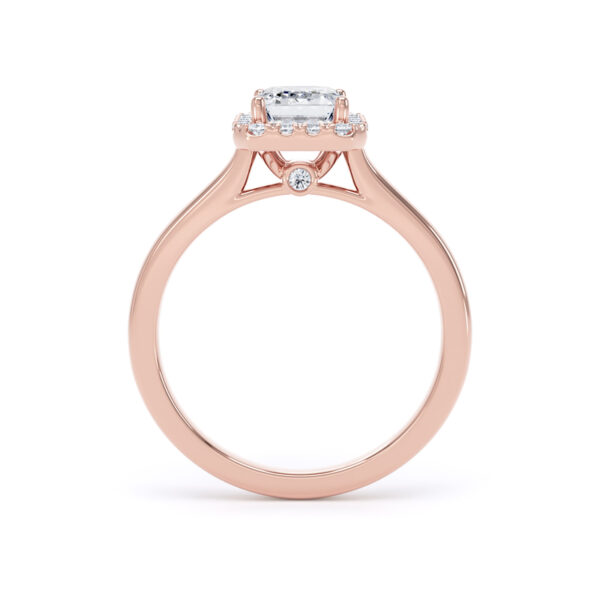
A Secret Detail, Made In-House
See how personal details are carried from CAD through setting and final inspection.
Frequently Asked Questions
Where is the safest place for a hidden birthstone?
There is no universal safest location. The gem, setting, available metal, centre architecture, sizing zone and daily wear all affect the answer.
Can a birthstone be set inside the ring?
Potentially. It should sit flush and smooth, retain sufficient surrounding metal and avoid the likely future sizing area where possible.
Which birthstones are suitable for daily-wear rings?
Suitability depends on hardness, toughness, cleavage, stability, treatments, setting and placement. Obtain advice for the exact gem rather than relying only on its month.
Can I add several family birthstones?
It may be possible, but multiple settings use space and can complicate the design. Consider whether one representative colour or motif communicates the meaning more elegantly.
Can a hidden stone be added to an existing engagement ring?
Sometimes, after inspection, but it may require structural work and may not suit the available metal. Do not assume an after-market addition is simple.
Make the Detail Feel Inevitable
The most successful hidden stone feels personal, comfortable and fully resolved within the ring. Choose the gem for its placement, preserve the future sizing route and record the detail clearly.
Develop the idea through Kinzy’s bespoke service, book a private consultation and plan the wedding-band relationship with the ring builder.
×
BESPOKE DESIGN BRIEF
Begin with what you know so far.
A short, considered brief. Nothing needs to be certain yet.
This site is protected by reCAPTCHA and the Google Privacy Policy and Terms of Service apply.
PERSONAL BESPOKE GUIDANCE
Shape the next detail with your Kinzy jeweller.
A short design brief gives our Hatton Garden atelier a thoughtful starting point—whether you have a clear idea or are still comparing possibilities.
Related Reading
Articles
Other articles from Kinzy London.
Articles, Bespoke Jewellery, Engagement Rings, Gemstones
How to Add a Hidden Birthstone or Secret Diamond to an Engagement Ring
Articles, Diamond Guides, Engagement Rings, Settings
Does a Bezel Setting Make a Diamond Look Bigger or Smaller?
Articles, Craftsmanship, Engagement Rings, Settings