- Engagement Rings
- Wedding Bands
Shop by style
- Classic
- Diamond Cut
- Two Colour
- Diamond Set
- Shaped
- Vintage
- Gemstone Bands
Shop by metal
- Gemstones
- Fine Jewellery
Fine Jewellery
- About Us
- Education
26 August 2026
Why an Engagement Ring Setting Should Be Built Around the Exact Centre Stone
An exact centre stone needs a setting based on its real length, width, depth, outline and girdle rather than a generic carat-weight template. That fit influences security, visual balance, setting height and how the finished ring sits beside a wedding band.
Two diamonds with the same shape and weight can have different measurements. Therefore, choosing the stone before finalising the mount gives the designer facts instead of averages.
Carat Weight Does Not Define External Size
Carat measures weight, not diameter or face-up area. One oval can carry weight in its depth, while another spreads more across the finger. Cushions vary in corner radius, and pears can be broad, slender or asymmetrical.
The Kinzy diamond-ratio guide explains how length and width change a stone’s character. A mount labelled “for one carat” cannot capture all those differences.
How an Exact Centre-Stone Setting Improves Fit
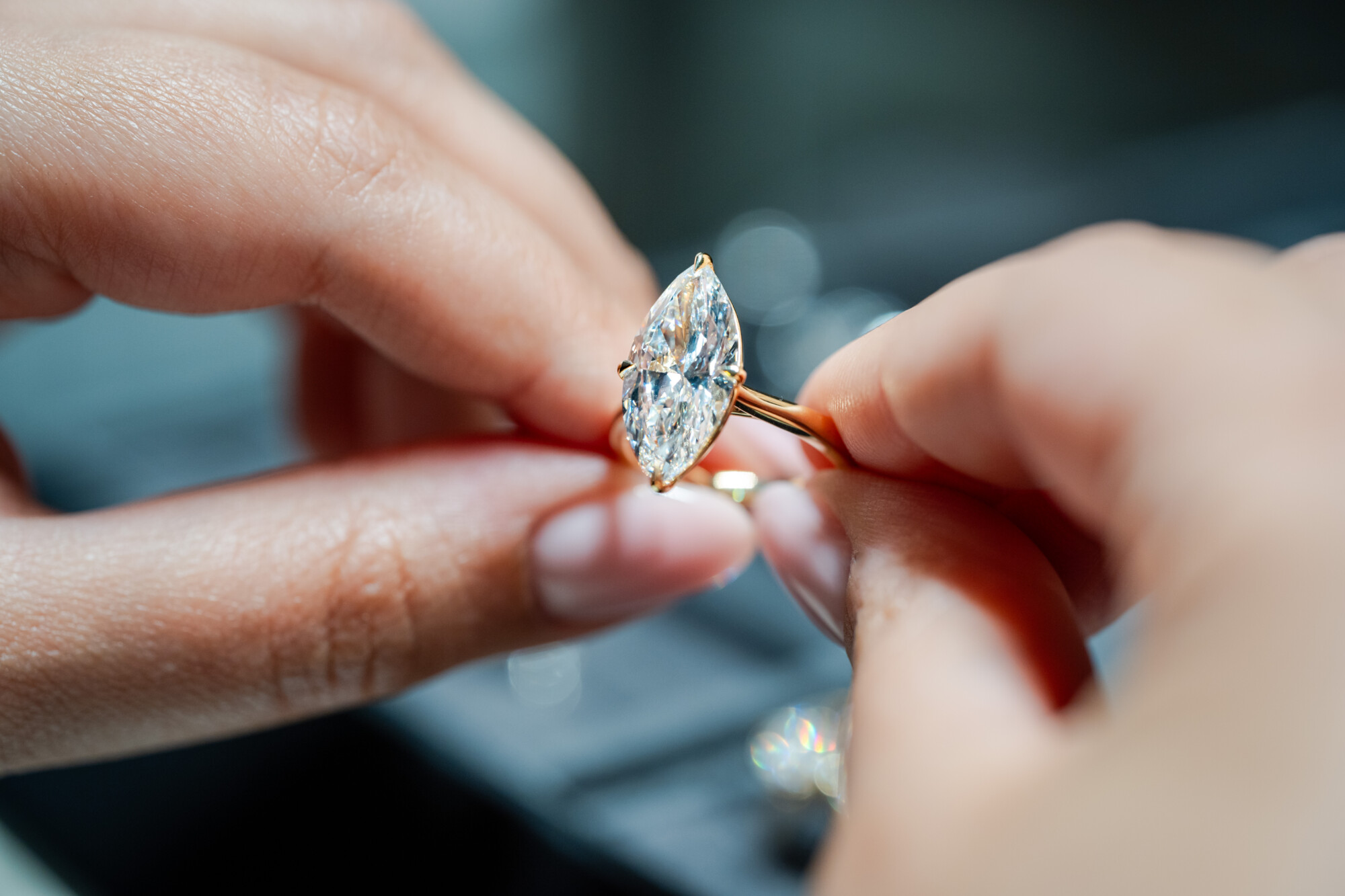
The setter cuts small seats inside the claws or setting wall. Those seats should meet the stone in appropriate places without forcing it, leaving it loose or covering more than necessary.
Exact measurements help position the support beneath the girdle. They also let the designer keep gaps controlled around a halo or bezel. Precision does not eliminate skilled setting; it gives the setter a sound starting structure.
The Girdle Changes the Required Seat
A diamond’s girdle can vary in thickness around its perimeter. Very thin areas may need protection, while thick areas affect how the stone sits and how much metal appears from above.
The grading report records girdle characteristics, but the loose stone should also be viewed directly. GIA’s explanation of diamond anatomy shows where the girdle, crown and pavilion meet.
Depth Determines More Than Overall Height
The pavilion extends below the girdle. A deeper stone may require more clearance inside the gallery, while a shallower one may sit lower. Simply pushing a deep diamond into a stock head can create awkward height or insufficient support.
The setting must also avoid contact between the culet or pavilion and the finger rail. CAD allows the designer to inspect those relationships before manufacture.
Fancy Shapes Need Individual Protection
Pears and marquises have vulnerable points. Emerald and radiant cuts have clipped corners that must align with the setting. Antique cushions may not be perfectly symmetrical, and an oval can show slight variations from one side to the other.
Suitable claws, V-tips or bezels should follow the real outline. Our guide to choosing a diamond shape shows why lifestyle and outline should influence the setting decision.
Claw Position Changes the Visual Shape
Claws are structural, but they also frame the outline. Four claws placed at the cardinal points can make a round diamond appear squarer. Corner claws can emphasise the clipped geometry of an emerald cut. Misaligned claws make even a fine diamond look unsettled.
The choice between four and six claws also affects exposure and redundancy. Review the Kinzy settings guide before treating claw number as a purely decorative choice.
A Halo Must Follow the Actual Outline
A halo that is too large leaves an obvious air line. One that is too tight can crowd the centre or create inconsistent gaps. Elongated shapes make even small spacing errors visible.
Building the halo around the exact stone lets the designer control the border and align the surrounding diamonds. Hidden halos also depend on the centre stone’s height and pavilion clearance.
Side Stones Need More Than Matching Labels
In a trilogy ring, the side stones should transition into the centre. Their millimetres, angle, outline and table height all matter. Two stones described by the same shape can still meet poorly.
A measured model can test the spaces between stones and the amount of metal required. This creates a cohesive spread rather than three separate heads placed beside one another.
Exact-Stone CAD Makes Approval More Meaningful
A generic placeholder may be adequate for an early concept. It should not drive final manufacturing. Once the diamond is selected, its dimensions should replace the placeholder and the designer should recheck every surrounding element.
Kinzy’s CAD and wax process shows the ring from several angles. Clients can then evaluate balance while the workshop evaluates feasibility.
The Stone’s Orientation Must Be Deliberate
Some diamonds have a preferred direction because of outline, inclusion placement or facet appearance. Marking the orientation helps the setter place the best face towards the viewer and position claws sensibly.
This is especially relevant for antique stones and asymmetric fancy shapes. See how older outlines differ in the antique diamond cuts guide.
Wedding-Band Fit Begins with the Centre Stone
The pavilion and basket help determine whether a straight wedding ring can sit flush. Raising the centre may create clearance, but it changes profile and exposure. Lowering it may improve everyday confidence while requiring a shaped band.
These are design choices, not faults, when agreed early. Compare possible pairings with Kinzy’s diamond wedding-band guide.
Can a Stock Setting Ever Work?
Yes. A well-made stock mount can suit a calibrated stone when its dimensions fall within the setting’s intended range and a skilled setter confirms the fit. Made-to-order jewellery can also offer efficient, dependable options.
The problem is assuming fit from carat weight alone. Ask whether the head will be adjusted or selected for the exact measurements before purchase.
Why Secure Does Not Mean Visually Heavy
Security comes from correct support, sound metal and appropriate setting technique. Simply adding bulk can reduce refinement without addressing the weakest point. Delicate appearance and structural competence can coexist when dimensions are purposeful.
The selected metal matters too. Compare the wear and visual properties in the platinum versus gold guide.
What to Confirm Before Approval
- The CAD uses the chosen stone’s exact measurements.
- The intended orientation is recorded.
- Claws or bezels protect vulnerable edges and points.
- The pavilion has safe clearance beneath it.
- Halo and side-stone gaps look controlled.
- Band width, depth and setting height are stated in millimetres.
- The intended wedding band has been considered.
- The workshop will inspect stone security before handover.
Maintenance Still Matters After a Precise Fit
Metal wears through friction and impact. Even a well-fitted stone needs regular visual checks, careful cleaning and professional inspection. Stop wearing the ring if a claw catches repeatedly or the diamond appears to move.
Kinzy’s complimentary annual atelier care includes claw tightening and structural assessment, alongside cleaning and polishing.
What an Exact Setting Cannot Correct
A made-to-measure mount cannot improve a diamond with an outline, colour or light performance you do not enjoy. It also cannot remove an inclusion, reverse an existing chip or make an unsuitable design immune to impact.
Select the centre stone on its own merits first. Then use the setting to support its proportions and protect vulnerable areas. Kinzy’s guide to choosing diamond shape separates visual preference from the engineering decision that follows.
Why Exact Measurements Matter
Two diamonds of the same carat weight can look entirely different once their length, width and depth are considered. Kinzy’s same-carat comparison shows oval, radiant and elongated cushion diamonds side by side, illustrating why the setting must respond to the individual stone rather than carat weight alone.
Review the stone’s ratio and measurements, understand the setting architecture and use the Kinzy design process to refine the mounting around its exact proportions.
A Setting Built Around Its Stone
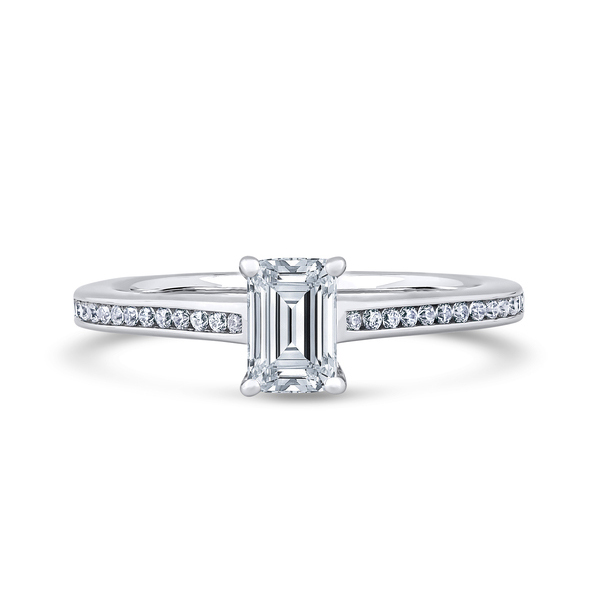
The emerald-cut centre in this Kinzy setting makes the relationship between exact stone dimensions and mounting geometry visible.
Proportion, Considered in Detail
See how Kinzy balances diamond measurements, setting architecture and the finished presence of a ring.
Frequently Asked Questions
Are all one-carat diamonds the same size?
No. Carat is weight. Length, width and depth can vary between diamonds of the same weight and shape.
Can a setting be made before choosing the diamond?
An early concept can be prepared, but final dimensions should respond to the selected stone.
Does a bespoke setting make a diamond safer?
It can improve fit and protection when designed and set well. Wear, impact and maintenance still affect security.
Why does diamond depth affect the ring?
Depth influences gallery clearance, overall height, claw geometry and sometimes wedding-band fit.
Can an heirloom diamond receive an exact setting?
Yes, subject to condition. Its real outline and any vulnerable areas should guide the new mount.
Final Thoughts on the Exact Centre Stone
An exact centre stone deserves a setting that respects the fact that diamonds are not interchangeable units. Measuring first gives the designer and setter better control over security, scale and the finished silhouette.
Arrange a private Kinzy consultation to select a centre stone and develop the ring around its individual proportions.
×
BESPOKE DESIGN BRIEF
Begin with what you know so far.
A short, considered brief. Nothing needs to be certain yet.
This site is protected by reCAPTCHA and the Google Privacy Policy and Terms of Service apply.
PERSONAL BESPOKE GUIDANCE
Shape the next detail with your Kinzy jeweller.
A short design brief gives our Hatton Garden atelier a thoughtful starting point—whether you have a clear idea or are still comparing possibilities.
Related Reading
Articles
Other articles from Kinzy London.
Articles, Bespoke Jewellery, Engagement Rings, Gemstones
How to Add a Hidden Birthstone or Secret Diamond to an Engagement Ring
Articles, Diamond Guides, Engagement Rings, Settings
Does a Bezel Setting Make a Diamond Look Bigger or Smaller?
Articles, Craftsmanship, Engagement Rings, Settings