- Engagement Rings
- Wedding Bands
Shop by style
- Classic
- Diamond Cut
- Two Colour
- Diamond Set
- Shaped
- Vintage
- Gemstone Bands
Shop by metal
- Gemstones
- Fine Jewellery
Fine Jewellery
- About Us
- Education
4 September 2026
Light, Medium or Heavy Wedding Bands: How Ring Depth Changes Feel, Durability and Price
Understanding how ring depth changes feel is easy to overlook because most photographs show only width and finish. Yet the amount of metal beneath the visible surface changes how a band feels between the fingers, how much physical presence it has and how its price is calculated.
“Light”, “medium” and “heavy” are comparative descriptions, not universal gram weights. Before choosing through the Kinzy wedding-ring builder, learn which measurement sits behind the label and request the complete specification for the exact size, metal, width and profile.
Depth, Width and Weight Are Three Different Facts
Width runs across the finger from one edge of the band to the other. Depth describes the radial thickness between the inside and outside surfaces. Weight is the mass of the finished ring.
Increasing depth usually increases the metal when other variables remain comparable. Weight also changes with finger size, width, profile, internal curvature, alloy and decoration.
Ring size is another independent measurement. The current ISO 8653 standard specifies how ring size is measured and designated; it does not replace width and depth in a production brief.
Why Light, Medium and Heavy Are Not Universal Standards
Suppliers and manufacturers can divide their ranges differently. One catalogue’s medium depth may sit close to another range’s light or heavy option. Even where two descriptions match, the cross-sections may not.
Ask for millimetres and, if available for the configured ring, an estimated or finished gram weight. Confirm whether the quoted depth is maximum or average and whether polishing tolerances affect it. The Kinzy design-process overview shows why precise decisions belong in the approval record.
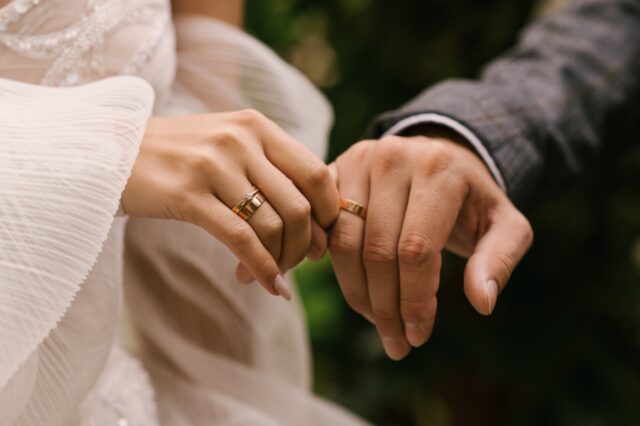
What a Light Wedding Band Means
A light band generally uses a shallower or more economical cross-section than heavier versions of a comparable design. It can feel discreet on the hand and may suit someone who dislikes a pronounced sensation between neighbouring fingers.
Light should not mean unfinished or sharp. The inside and edges still need careful refinement. Nor should the label be taken as a guarantee of comfort: a broad, flat, shallow ring can feel different from a narrow ring with greater depth.
If the design includes engraving, texturing, grooves or stones, ask whether the available metal supports those details.
What a Medium-Weight Wedding Band Means
A medium band sits between the lighter and heavier variants within the same range. It may offer a useful balance for someone who wants noticeable substance without choosing the deepest available cross-section.
The word “medium” cannot tell you whether the exterior is flat, court-shaped or D-shaped, or whether the inside is standard or comfort fit. Those profiles distribute the same nominal depth differently.
Use medium as a comparison point, not a default answer. Try light, medium and heavy samples with the same width and outer profile so only the intended variable changes.
What a Heavy Wedding Band Means
A heavy wedding band generally contains more metal and feels more substantial than lighter variants of a comparable ring. The additional depth may create a stronger edge presence and a more pronounced sense of weight when the hand moves.
That can feel luxurious to one wearer and intrusive to another. Check the space beside neighbouring fingers and bend the hand fully. A heavy label should be an intentional preference, not shorthand for quality.
More material can support a substantial form, but alloy, profile, workmanship, decoration and wear still determine durability.
Wedding Ring Weight and Depth at a Glance
- Light: less physical substance within a comparable family; discreet feel; exact depth still required.
- Medium: an intermediate construction within that supplier’s range; useful reference point, not a universal measurement.
- Heavy: greater substance and usually more precious metal; stronger presence and potentially higher price.
- All three: must be judged with width, profile, size, alloy, finish and intended daily wear.
How Ring Depth Changes Feel Between the Fingers
A deeper band extends further from the finger, so its edges may be more noticeable against the fingers on either side. Rounding the exterior or refining the edge can soften that sensation without removing the depth.
Inside curvature changes the contact beneath the band. It is possible to combine a substantial outer cross-section with a rounded interior, but the two decisions should be stated separately. Do not assume “heavy” automatically means comfort fit.
Move beyond a static try-on. Type, hold a cup, make a relaxed fist and let the hand hang naturally. The preferred ring should feel deliberate without demanding constant adjustment.
Does a Heavier Wedding Ring Last Longer?
Additional material can provide a larger starting cross-section, which may be useful in a ring expected to receive decades of wear. It does not make the band immune to scratches, dents, distortion or poor treatment.
A deep ring with unsuitable detailing is not automatically more durable than a well-proportioned medium band. Remove fine jewellery where machinery, heavy lifting or impact creates a risk.
Kinzy’s ring care guide explains sensible cleaning and inspection, while Lifetime Atelier Care sets out Kinzy’s published ongoing-care provision.
How More Metal Can Affect Price
Within the same size, width, profile and alloy, a deeper solid band generally requires more precious metal. That material difference can affect the quotation. The final price can also reflect manufacturing, finishing, engraving, hallmarking and any decorative detail.
Do not multiply a generic price per gram. A finished ring is not sold as a raw metal bar, and two designs with similar finished weights may require different work. Compare written configurations and ask which variables changed between quotations.
Kinzy’s guidance on setting a jewellery budget is written for engagement rings, but its central principle applies here: decide what is comfortable for you rather than following a formula.
Metal Density Changes the Physical Result
Two rings with the same external volume need not weigh the same when made in different metals. The Royal Society of Chemistry lists elemental platinum and gold with different densities. Finished jewellery uses alloys, so those elemental figures are context rather than a calculator for a completed band.
Compare actual configured rings or maker estimates. Kinzy’s platinum versus gold guide explains the broader colour and maintenance decision without pretending that metal name alone predicts the feel of every design.
For gold purity, the World Gold Council confirms that 18-carat gold contains 75 per cent gold. Alloy composition and ring geometry still determine the finished piece.
Finger Size Changes the Amount of Metal
A larger ring size has a greater circumference. If width, depth, profile and alloy remain the same, more material is required to continue that cross-section around the larger circle. That is why a category name cannot promise one fixed gram weight across every size.
Fit must be checked independently. A deeper band may feel more present at the edges, while a wider band covers more skin. Test a sample close to both the intended width and depth rather than relying on a narrow sizing gauge.
Kinzy’s article on common ring-buying mistakes reinforces the value of inspecting real proportions rather than approving from numbers alone.
Profile Redistributes the Same Depth
A flat exterior carries depth across a broad plane. A court or D-shaped exterior gathers more of the visual height towards the centre. A flat-court design can combine a modern outside with a curved inner surface.
Therefore, two rings sharing maximum depth may not look or feel identical. Ask for the cross-section, then view it from the side and three-quarter angle. Kinzy’s behind-the-scenes bespoke article shows why the supporting architecture matters beyond the top view.
Finish and Wear Look Different on a Deep Band
A polished heavy band has a substantial reflective edge as well as a visible top surface. Brushed, satin or textured finishes break up that reflection, but daily contact will still create signs of wear.
Normal marks do not prove that the wrong weight was chosen. Ask how refinishing affects the design; engraving and milgrain also require adequate supporting metal.
Engraving and Hallmarking Are Not Weight Categories
A heavier band may offer more internal area for engraving, but character length also depends on width, size and inside curvature. Confirm the inscription and placement as part of the order.
A hallmark is different: it verifies precious-metal fineness under UK law, subject to exemptions. Government hallmarking guidance lists exemption thresholds by metal, which is one reason gram weight may matter legally even though it does not define a retail “light” or “heavy” category.
How Depth Works Beside an Engagement Ring
A deep wedding band may stand proud of a finer engagement-ring shank when viewed from the side. That contrast can be intentional, but check contact points and whether either ring tilts.
Use Kinzy’s settings guide and low-set versus high-set comparison to identify the neighbouring structure. For diamond coverage and bridal styles, consult the separate diamond wedding-band guide.
A Better Way to Compare Light, Medium and Heavy
- Select one width, outer profile, inner profile, metal and finish.
- Try light, medium and heavy samples within that same design family.
- Request the depth in millimetres for each sample.
- Ask for estimated or finished weight only for the exact size and metal.
- Move the hand naturally and notice edges, rotation and neighbouring fingers.
- Wear any ring that will sit beside the wedding band.
- Compare quotations with every specification aligned.
When the Kinzy builder presents alternative weights or depths, record the precise option with the rest of the configuration. If a label is not explained, ask Kinzy to confirm it before ordering.
Questions to Put on the Order
- What is the band’s finished width?
- What is its stated or approximate finished depth?
- Does light, medium or heavy refer to a defined cross-section?
- Which outer and inner profiles are included?
- Which precious metal and fineness are quoted?
- Is the weight an estimate or a finished measurement?
- How do engraving and finish affect the design?
- What future resizing and refinishing limits should be understood?
For an in-person comparison, visit the Greville Street flagship or arrange a discussion with your Kinzy sales associate.
Consider Depth from Every Angle
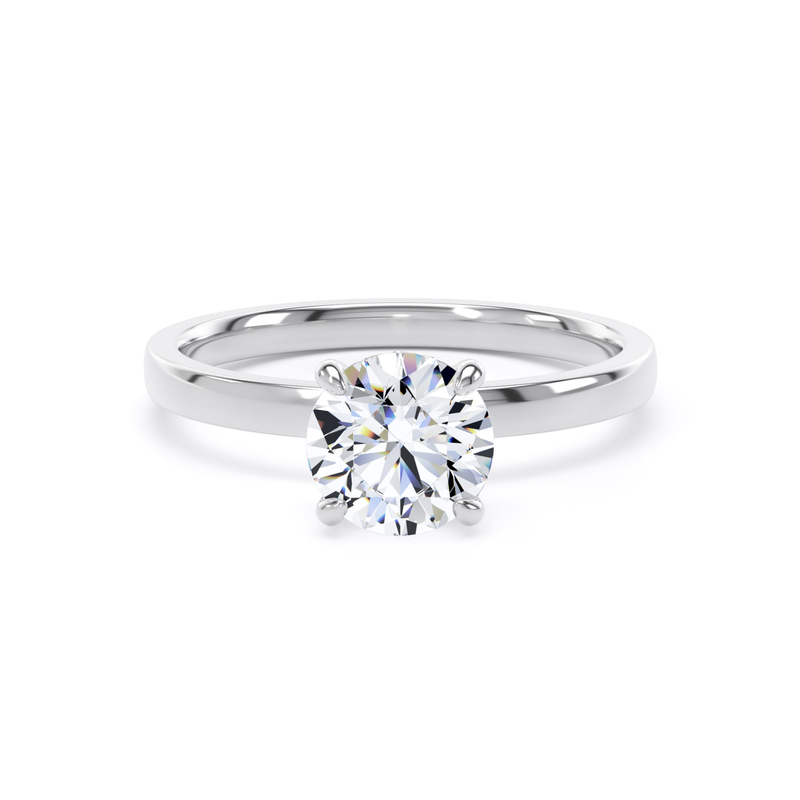
A clean Kinzy solitaire provides a useful side-profile reference when comparing the wedding band’s depth beside another ring.
Proportion Beyond the Top View
Explore how two rings relate in profile, where depth and scale become as important as width.
Frequently Asked Questions
How many grams is a light, medium or heavy wedding ring?
There is no universal gram range. Finished weight changes with ring size, width, depth, profile and alloy. Request the measurement or estimate for the exact configuration.
Is a heavy wedding ring more durable?
More material can provide a substantial starting cross-section, but durability also depends on alloy, design, workmanship, decoration and wear. Heavy is not a quality grade.
Does a heavier wedding band cost more?
Within a truly comparable design, more precious metal can increase the price. Labour, finish, engraving and other design details also affect the quotation.
Is depth the same as width?
No. Width runs across the finger; depth runs from the inside to the outside surface. Both should be stated in millimetres.
Is a light ring automatically more comfortable?
No. Width, edges, inner curvature, size and finger shape can matter more than the category name. Compare matched samples through normal hand movement.
Can a heavy wedding ring be resized?
Many plain bands can be adjusted, but the method and limits depend on material, profile, finish, engraving and decoration. Confirm future options before manufacture.
Final Thoughts on How Ring Depth Changes Feel
Understanding how ring depth changes feel turns light, medium and heavy from status labels into useful proportions. They only become meaningful when tied to millimetres, metal, finger size, width, profile and the way the ring feels in motion.
Build the visible design through Kinzy’s create-your-own-ring service, then book a private consultation to compare the physical options and approve one complete specification.
×
WEDDING RING CONSULTATION
Tell us what you are considering.
A short, considered brief. Nothing needs to be certain yet.
This site is protected by reCAPTCHA and the Google Privacy Policy and Terms of Service apply.
WEDDING RING CONSULTATION
Choose a wedding ring that feels entirely yours.
From proportion and comfort to finish and fit, a short brief lets your Kinzy jeweller prepare considered options before your consultation.
Related Reading
- Diamond Wedding Bands London: How to Choose the Perfect Ring to Wear for Life
- Platinum vs Gold Engagement Rings: Which Metal Should You Choose?
- Engagement Ring Care Guide: How to Protect Your Ring for Life
- Tom Holland and Zendaya Wedding Rings: Why Their Quietly Coordinated Gold Bands Matter
- Cristiano Ronaldo and Georgina Rodríguez Wedding Rings: The Expert Kinzy Analysis
Articles
Other articles from Kinzy London.
Articles, Bespoke Jewellery, Engagement Rings, Gemstones
How to Add a Hidden Birthstone or Secret Diamond to an Engagement Ring
Articles, Diamond Guides, Engagement Rings, Settings
Does a Bezel Setting Make a Diamond Look Bigger or Smaller?
Articles, Craftsmanship, Engagement Rings, Settings