- Engagement Rings
- Wedding Bands
Shop by style
- Classic
- Diamond Cut
- Two Colour
- Diamond Set
- Shaped
- Vintage
- Gemstone Bands
Shop by metal
- Gemstones
- Fine Jewellery
Fine Jewellery
- About Us
- Education
7 September 2026
Should Your Wedding Band Sit Flush with Your Engagement Ring—or Leave a Deliberate Gap?
Should your wedding band sit flush with an engagement ring? It can, but it does not have to. A close, uninterrupted pairing creates one visual composition. A deliberate gap gives each ring its own outline. Both can look refined when the spacing is planned rather than accidental.
The question should be answered through design, comfort and construction—not by treating “flush” as a universal sign of quality. Some engagement rings are engineered for a straight band. Others have a low or projecting setting that makes space part of their character.
What Does “Sit Flush” Actually Mean?
A flush pairing usually means the outer edge of the wedding band can move close to the engagement-ring shank without the settings colliding. From above, there is little or no visible gap. From the side, however, the rings remain separate objects and may touch at selected points.
Do not judge the result from one face-up photograph. Turn the rings sideways, move the fingers naturally and see whether either ring is being pushed out of position. Kinzy’s engagement-ring settings guide explains the structural details that affect the space beneath a centre stone.
Why Some Wedding Bands Cannot Sit Flush
The setting may extend beyond the engagement-ring shank. A low basket, halo edge, prominent claw, side stone or decorative gallery can occupy the path of a straight wedding band. In that case, forcing the rings together does not create a better fit; it simply creates a contact point.
Setting height is particularly influential. A higher gallery often leaves room for a straight band to pass underneath. A low setting can feel wonderfully integrated and comfortable yet require a shaped companion. Compare the structures in Kinzy’s guide to low-set and high-set engagement rings.
Should Your Wedding Band Sit Flush? The Case for a Close Fit
A flush set can make two rings read as one considered design. Repeated metal lines feel continuous, diamond-set shoulders can flow into the wedding band and the stack may rotate more coherently when the profiles are compatible.
This approach is especially useful when the wearer wants a neat, compact silhouette. It can also simplify the later addition of a straight anniversary band, provided the overall width remains comfortable on the finger.
Flush does not mean the rings must be identical. A plain wedding band can sit closely beside diamond-set shoulders, or a fine diamond line can meet a polished engagement-ring shank. The physical relationship and the decorative relationship are separate decisions.
The Case for a Deliberate Gap
A narrow gap frames both outlines. It can make a detailed engagement ring easier to read and prevent a broad stack from becoming visually dense. The effect can feel light, antique or quietly individual, depending on the ring styles.
A gap also preserves the option of a straight wedding ring when a close fit would require a pronounced contour. This matters to someone who expects to wear the wedding band alone and prefers a complete circular silhouette.
The key word is deliberate. An even line of space looks composed. An irregular gap caused by one sharp collision point can make the rings sit awkwardly and deserves a closer technical assessment.
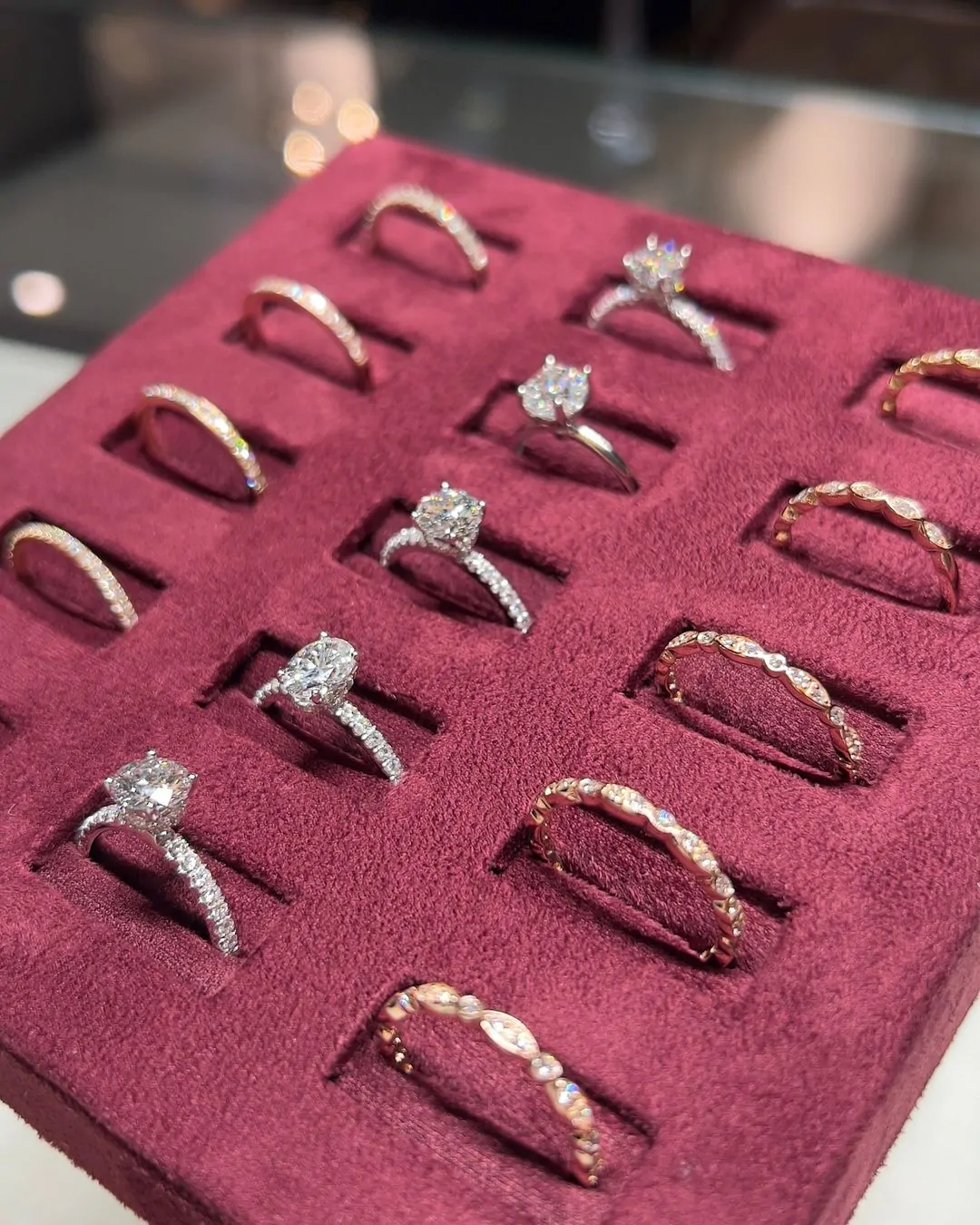
Contact Is More Important Than Visible Space
Two rings can appear flush while making poor contact underneath. Equally, a small visible gap can leave both pieces structurally comfortable. Ask a jeweller to inspect where metal, diamonds and setting edges meet.
Repeated rubbing can alter surfaces over time, while a diamond edge may be less forgiving than polished metal. The response depends on the actual construction, so broad rules are less useful than examining the pair together.
Professional checks matter for stone-set rings. GIA’s diamond engagement-ring care guidance recommends checking settings and keeping the ring clean; its wider jewellery-care article explains why ultrasonic cleaning is not suitable for every gem or treatment.
Straight, Shaped or Spacer Band?
A straight wedding band
A straight band retains a classic standalone appearance. It may sit flush with a wed-fit engagement ring or preserve a gap beside a lower setting. Try several widths because a very fine band can sometimes move beneath an overhanging detail differently from a deeper profile.
A shaped wedding band
A curve, V or contour makes room around the engagement ring. The outline can be almost invisible beneath the centre setting or become a visible design feature. The closer the contour, the more important accurate measurement becomes.
A spacer band
A narrow plain band can create controlled separation between a stone-set engagement ring and another band. It changes the total width and appearance of the stack, so it should be tested as part of the complete arrangement rather than added as an afterthought.
Start with How You Want to Wear the Rings
Will both rings be worn together every day? Will the wedding band often be worn alone? Is another band likely to be added later? These questions determine whether an exact fitted silhouette or a more flexible straight band is the better investment.
Also consider hand proportions. A close stack can look compact on one finger and crowded on another. Width, depth and setting height influence comfort more than the number of rings alone.
When to Design Both Rings Together
If the engagement ring has not been made, planning its wedding-band relationship early provides the greatest freedom. Gallery height, shoulder line and under-gallery clearance can be considered before the metal is committed.
That does not require the two rings to look like a fixed set. It simply allows an informed choice. Kinzy’s design process and bespoke-ring guide show why CAD and physical proportion reviews are valuable decision stages.
When the Engagement Ring Already Exists
Bring it to the wedding-band appointment. A product code, carat weight or top-view image cannot capture every projection and contact point. The ring also needs to be checked in the correct finger size because rotation can change the apparent spacing.
A bespoke contour may be developed around an existing piece, while a carefully chosen straight band may reveal that the gap is more attractive than expected. Explore Kinzy’s bespoke jewellery approach before deciding that one route is mandatory.
Match Width, Profile and Finish Before Chasing a Perfect Line
A flush fit can still look unresolved when profiles disagree. A softly rounded engagement-ring shank beside a sharply edged wedding band creates a different rhythm from two matching curves. Likewise, equal widths feel formal while varied widths can give the engagement ring greater emphasis.
Metal colour can unify the pairing or establish contrast. Read Kinzy’s platinum and gold guide, then compare the real metals beside the engagement ring rather than relying on screen colour.
A Five-View Fit Check
- Top: Is the gap even and visually intentional?
- Side: What stops the rings from moving closer?
- Underside: Do the shanks align comfortably around the finger?
- In motion: Does one ring push, catch or rotate the other?
- Wedding band alone: Does its outline still feel complete?
Use Kinzy’s wedding-band builder to begin narrowing the design, then arrange a consultation for a direct fit review.
Do Not Alter the Engagement Ring Without Understanding the Consequences
Changing a gallery, setting or shank solely to eliminate a gap can affect proportion, structure and future servicing. Ask what would change, who would perform the work and how any existing warranty or insurance requirements are affected.
Sometimes a wedding-band adjustment is sensible. Sometimes a shaped ring is cleaner. Sometimes preserving the gap is the most elegant answer. The decision should follow evidence from the actual pair.
Design the Pairing as One
Kinzy’s online builder starts the wedding-ring decision. A private appointment then allows the engagement ring, desired spacing and long-term stack to be considered together.
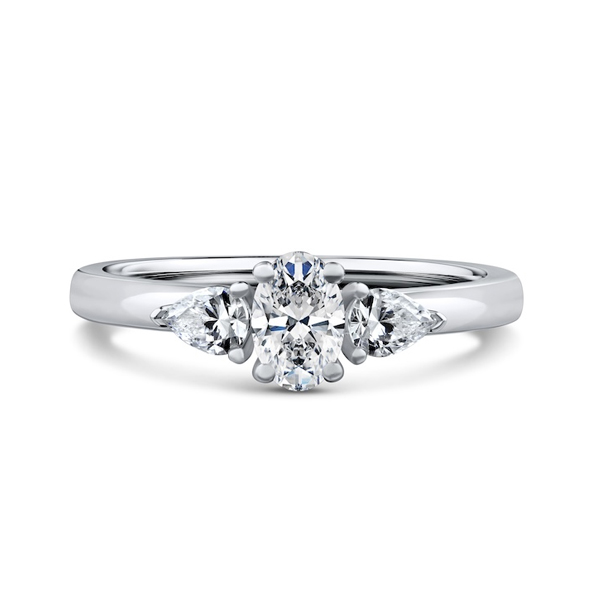
The Beauty of Deliberate Spacing
See how an engagement ring and wedding band can sit in considered harmony, whether closely paired or intentionally separated.
Frequently Asked Questions
Is a gap between an engagement ring and wedding band wrong?
No. An even, intentional gap can define both rings beautifully. Irregular spacing caused by one collision point should be inspected.
What engagement-ring setting allows a flush wedding band?
Settings with sufficient clearance beside or beneath the centre can often accept a straight band, but the exact gallery, claws and shoulders must be checked.
Will a shaped wedding ring eliminate every gap?
Not necessarily. It can create a closer line, but the final spacing depends on the contour, profile and movement of both rings.
Can I add a third ring later?
Usually, but plan the total width and geometry now. A very exact two-ring contour can limit where a straight anniversary band sits.
How do I check my existing ring with Kinzy?
Begin with the Kinzy wedding-band builder, then bring the engagement ring to a private appointment for direct assessment.
Final Thoughts: Flush Is a Choice, Not a Rule
Should your wedding band sit flush? It is a design decision supported by technical fit. Aim for spacing that looks intentional, feels comfortable and avoids careless contact—not a standard imposed by photographs.
Explore Kinzy’s custom wedding-band builder and book a consultation to assess the relationship on the hand.
×
RING PAIRING & FIT BRIEF
Let us consider the two rings together.
A short, considered brief. Nothing needs to be certain yet.
This site is protected by reCAPTCHA and the Google Privacy Policy and Terms of Service apply.
RING PAIRING & FIT
Review the pair before you decide.
A considered wedding-ring choice begins with the engagement ring already on your hand. Send a short brief and receive personal guidance from your Kinzy jeweller.
Related Reading
Articles
Other articles from Kinzy London.
Articles, Bespoke Jewellery, Engagement Rings, Gemstones
How to Add a Hidden Birthstone or Secret Diamond to an Engagement Ring
Articles, Diamond Guides, Engagement Rings, Settings
Does a Bezel Setting Make a Diamond Look Bigger or Smaller?
Articles, Craftsmanship, Engagement Rings, Settings