- Engagement Rings
- Wedding Bands
Shop by style
- Classic
- Diamond Cut
- Two Colour
- Diamond Set
- Shaped
- Vintage
- Gemstone Bands
Shop by metal
- Gemstones
- Fine Jewellery
Fine Jewellery
- About Us
- Education
8 September 2026
Plain vs Diamond-Set Wedding Bands: Beauty, Maintenance and Everyday Wear
Comparing plain vs diamond-set wedding bands is not simply “subtle or sparkly”. It changes how the ring relates to an engagement ring, how often settings should be checked, what future sizing may involve and how the surface develops through daily wear.
Both can become exceptional lifelong rings. A plain band places proportion, metal and finish at the centre of the design. A diamond-set band adds rhythm and light, but asks the setting and stone coverage to be considered as carefully as the diamonds themselves.
Plain vs Diamond-Set Wedding Bands: Begin with Their Role
Decide whether the wedding ring should visually complete the engagement ring, provide a calm boundary beside it or feel like an independent piece. A diamond-set engagement ring may be continued with more brilliance or balanced by a clean line of polished metal.
There is no formula based on the centre-stone size. Study the complete hand, the spacing between rings and the amount of detail already present. Kinzy’s diamond wedding-band guide offers a broad starting point; this comparison focuses on the practical consequences of choosing stones or leaving the band plain.
What Makes a Plain Wedding Band Beautiful?
Without diamonds, every proportion is visible. Width determines presence. Depth affects weight and comfort. A court, D-shaped, flat or softly rounded profile changes how the ring feels and how its edges meet the neighbouring engagement ring.
Finish also becomes more prominent. High polish reflects its surroundings; satin and brushed surfaces diffuse light; a hammered surface introduces irregular texture. These are not ways to hide an ordinary ring. They are design choices that shape how the metal is read.
A plain band can be quietly minimal or boldly architectural. It may also offer a clean area for engraving, although the available space and placement should be confirmed for the chosen width and profile.
What a Diamond-Set Wedding Band Adds
Diamonds create changing light rather than one continuous reflection. The effect depends on stone size, spacing, setting style and how far the diamonds travel around the circumference. A fine, closely spaced line feels different from larger stones with visible metal between them.
The setting is part of the design. Grain, channel, claw and other techniques produce different edges and degrees of metal visibility. Ask which method is being proposed and why it suits the intended stone size and daily wear.
Do not assess sparkle under strong showroom lighting alone. Compare the band in softer, neutral light and at normal viewing distance. The aim is an appropriate relationship with the engagement ring, not the largest possible reaction in one environment.
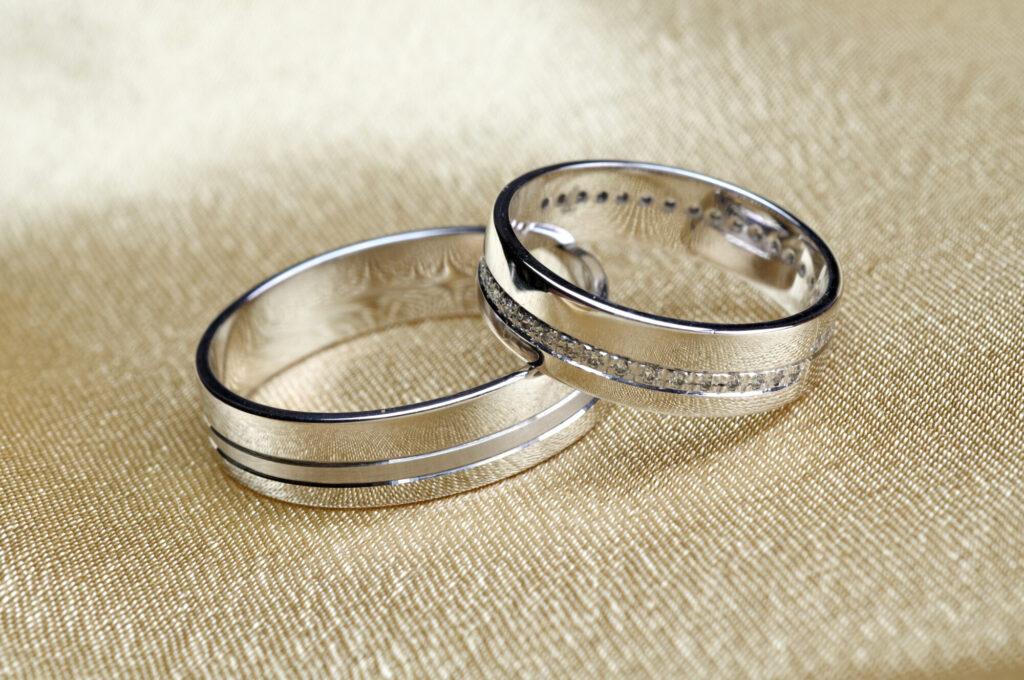
Diamond Coverage Changes More Than Appearance
Part-set or half-set bands
Diamonds across the visible upper section leave uninterrupted metal at the back. This can keep the palm side smoother and may preserve more options if sizing is needed, although every design must be assessed individually.
Three-quarter-set bands
Coverage extends further around the finger, reducing the chance that rotation reveals a plain section. The remaining metal can still provide a practical break, but its dimensions and hallmark placement should be considered.
Full-set bands
Diamonds continue around the circumference for an uninterrupted appearance. This removes the visual “back” of the ring, but future size alteration can be more complex and may not be suitable for every construction. Confirm the size carefully and ask what options would remain.
Everyday Comfort Is About Edges and Profile
A plain ring can feel very smooth when its inner and outer edges are well resolved. A diamond-set ring may have a more articulated outer surface, especially where settings extend towards the edges. Neither should be assumed comfortable or uncomfortable from the category alone.
Try the ring with the engagement ring and by itself. Make a gentle fist, type and allow the neighbouring fingers to meet the band. Check whether the ring feels balanced or top-heavy and whether the setting catches delicate fabric.
Kinzy’s setting guide explains why construction determines daily behaviour. The same principle applies to the smaller settings across a wedding band.
Maintenance: Surface Care vs Setting Care
Every wedding ring acquires signs of wear. A plain polished surface develops fine marks that become part of its character and can be professionally refinished when appropriate. Textured finishes also change with contact and may require their original direction or pattern to be restored rather than simply polished.
A diamond-set ring adds settings that should be inspected. Look for a rough edge, visible movement, a changed gap or a stone that reflects differently from its neighbours. Do not test a suspected loose diamond aggressively at home.
GIA’s general jewellery-care guidance explains why cleaning must be adapted to the gems and treatments present. Its diamond-specific advice also recommends checking settings and avoiding abrasive cleaning.
Cleaning a Plain and a Diamond-Set Band
A plain band can usually be wiped with a soft, lint-free cloth, while appropriate at-home cleaning depends on its metal and any surface treatment. A diamond-set band collects residue around the settings, so gentle cleaning may make a greater visual difference.
Do not assume every ring is suitable for an ultrasonic or steam cleaner. The complete construction, any treatments and the condition of the settings matter. If uncertain, use professional guidance rather than a viral cleaning method.
Kinzy clients can read the current details of Lifetime Atelier Care and discuss the correct care route for their actual ring.
Resizing Deserves Attention Before Purchase
Finger size can change over a lifetime. A plain band often provides a relatively continuous section of metal for a jeweller to assess, but unusual profiles, engravings and mixed constructions still matter. Diamond settings reduce or divide that uninterrupted area.
Ask what size change is realistically possible for the exact design—not for “diamond bands” as a category. Also ask how alteration could affect spacing, setting integrity, finish, hallmark and engraving. UK guidance on repairing and sizing ring shanks explains why work on hallmarked pieces needs appropriate handling.
How the Band Sits Beside an Engagement Ring
A plain band can create a visual pause beside a complex engagement ring. A diamond-set band can continue shoulder sparkle or introduce contrast beside a solitaire. Check the top view, side profile and contact points rather than choosing from an isolated image.
If the engagement setting prevents a straight band from moving close, the wedding ring may need a curve or a deliberate gap. Use Kinzy’s setting-height guide before assuming the wedding-band style alone will solve the fit.
Metal Choice Affects Both Options
Platinum and gold have different visual and wear characteristics. Gold is alloyed to create jewellery with different colours and working properties; the World Gold Council’s gold jewellery overview explains colour and caratage.
For a diamond-set band, metal colour affects the visible framework around the stones. For a plain band, it is the principal colour of the design. Compare Kinzy’s guide to platinum and gold rings and view the chosen metal beside the engagement ring in person.
Cost Should Be Compared Through Specification
A diamond-set band usually includes stones and additional setting work, but diamond count alone does not establish quality or value. Ask for the precious metal, profile dimensions, diamond details, setting type, coverage and included aftercare.
Likewise, do not treat a plain ring as technically simple. A precise profile, balanced weight, specialist finish and careful fit are all part of the finished result. Kinzy’s handcrafted jewellery page introduces the importance of workmanship beyond surface decoration.
A Decision Test for Real Life
- Which band looks resolved beside the engagement ring in ordinary light?
- Which feels comfortable against neighbouring fingers?
- Will the wedding ring often be worn alone?
- How important is uninterrupted sparkle compared with future sizing flexibility?
- Are you comfortable with regular setting checks?
- Does the chosen band still feel like your ring rather than a trend?
Begin comparing styles through the Kinzy wedding-band builder. A private consultation can then test the shortlist beside the actual engagement ring.
Discover Your Wedding-Band Direction
Use the online builder to clarify whether metal, diamonds or a balance of both should lead the design. Confirm current options and technical suitability with the Kinzy team.
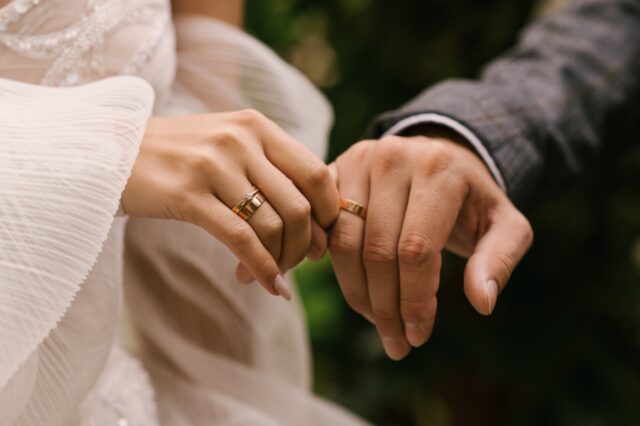
Personal Details, Made Yours
From restrained diamond accents to meaningful engraving, see how personal details give a wedding band its own identity.
Frequently Asked Questions
Is a plain wedding band more durable than a diamond-set band?
Durability depends on metal, dimensions, construction, setting and wear. A diamond-set band has additional settings that require inspection; a plain band still needs appropriate care.
Can a diamond wedding band be resized?
Some can, but the possible adjustment depends on stone coverage, setting style and available plain metal. Ask about the exact design before ordering.
Should the wedding band match the engagement-ring diamonds?
Not necessarily. The size and rhythm should create a coherent composition, but contrast can be intentional. Compare both rings together in ordinary light.
Is a full diamond band practical for daily wear?
It can be, provided the construction, comfort and maintenance suit the wearer. Consider contact against neighbouring fingers and future sizing before deciding.
Where can I compare Kinzy wedding-band options?
Start with the Kinzy wedding-band builder, then book an appointment to review proportion and setting beside your engagement ring.
Final Thoughts on Plain vs Diamond-Set Wedding Bands
Plain vs diamond-set wedding bands are best compared with beauty and ownership considered together. Choose the ring whose profile, light, care and future flexibility fit the life it will accompany.
Explore the Kinzy custom wedding-band builder or book a private Kinzy consultation to compare both directions on the hand.
×
WEDDING RING CONSULTATION
Tell us what you are considering.
A short, considered brief. Nothing needs to be certain yet.
This site is protected by reCAPTCHA and the Google Privacy Policy and Terms of Service apply.
WEDDING RING CONSULTATION
Choose a wedding ring that feels entirely yours.
From proportion and comfort to finish and fit, a short brief lets your Kinzy jeweller prepare considered options before your consultation.
Related Reading
Articles
Other articles from Kinzy London.
Articles, Bespoke Jewellery, Engagement Rings, Gemstones
How to Add a Hidden Birthstone or Secret Diamond to an Engagement Ring
Articles, Diamond Guides, Engagement Rings, Settings
Does a Bezel Setting Make a Diamond Look Bigger or Smaller?
Articles, Craftsmanship, Engagement Rings, Settings