- Engagement Rings
- Wedding Bands
Shop by style
- Classic
- Diamond Cut
- Two Colour
- Diamond Set
- Shaped
- Vintage
- Gemstone Bands
Shop by metal
- Gemstones
- Fine Jewellery
Fine Jewellery
- About Us
- Education
30 August 2026
Jewellery CAD Revisions: What to Change Before Your Ring Reaches Wax
Jewellery CAD revisions should resolve proportion, dimensions and structure before a bespoke ring moves into wax and precious metal. This is the stage to question band width, centre height, shoulder taper, gallery shape, claw position and wedding-band clearance.
A CAD approval is not a request to imagine the finished polish perfectly. It is confirmation that the measurable design is right. Knowing what to change—and what the render exaggerates—prevents endless cosmetic revisions while protecting the decisions that affect comfort and durability.
Jewellery CAD Revisions: The Priority Order
- Confirm the correct centre-stone measurements.
- Review overall finger coverage at life size.
- Check band width, depth and taper.
- Assess setting height and gallery support.
- Review claws, bezel or halo position.
- Test wedding-band clearance.
- Confirm side stones and personal details.
- Approve only after the revised dimensions are recorded.
The full route appears in Kinzy’s bespoke design process. This guide focuses only on the revision decision.
1. Verify the Exact Centre Stone First
A CAD built around an average stone is not ready for final approval. The selected diamond or gemstone has a specific length, width, depth, girdle and report number. Those details determine the head.
Check that the model uses the correct measurements. A deeper oval may need more clearance. A marquise needs tip protection. An emerald cut may require different corner handling from a radiant.
Read Kinzy’s natural-diamond selection guide and the certification guide before treating the stone as a generic placeholder.
2. Review the Ring at Life Size
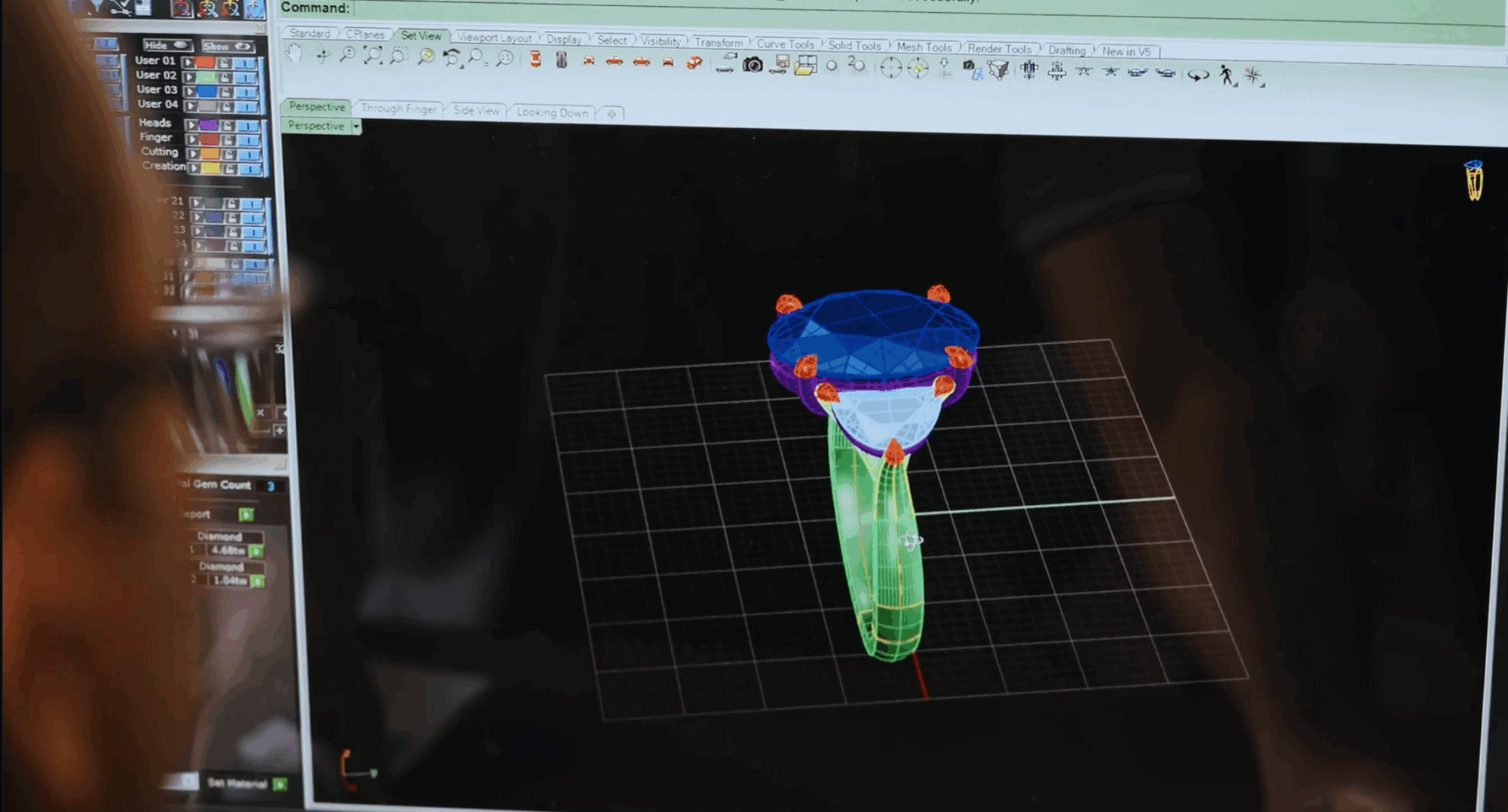
CAD renders are enlarged so that small construction details can be seen. This can make claws look heavy, pavé appear oversized and galleries feel taller than they will be.
Ask for a life-size print or dimensioned view. Compare the centre’s millimetre span with the intended finger size. A visually dramatic render may translate into a refined physical ring, while a small proportion error can become obvious on the hand.
Use diamond ratios and measurements to understand the scale of the centre.
3. Change Band Width Before Surface Decoration
The shank carries the ring and influences balance. Review its width at the base, shoulders and point of meeting the head. A pinched band can draw attention to the centre; an abrupt taper may look weak.
Depth matters as much as width. A band can appear fine from above but have enough depth for stability. Conversely, a broad yet shallow band may not feel substantial.
If diamonds will be set into the shoulders, confirm where they stop and how much plain metal remains for possible resizing. Compare shoulder set engagement rings with the solitaire approach.
4. Revise Height Through the Side Profile
The top view cannot show whether the centre sits unnecessarily high. Review the distance from the finger to the top of the stone, the pavilion clearance and how the shoulders support the head.
Lowering the setting may improve practicality but block a straight wedding band. Raising it may create clearance while increasing leverage. The revision needs to solve both issues rather than move one dimension in isolation.
The engagement-ring settings guide explains basket, cathedral and other structural options.
5. Examine the Gallery from Several Angles
The gallery supports the centre and creates much of the side character. Check the rails, openings and transitions. Decorative detail should not make the basket bulky or create a hard edge against the wedding ring.
A hidden halo needs precise placement. It should be visible from intended angles without becoming a wide collar. Read the hidden halo guide before approving the diameter and height.
6. Review Claws as Geometry, Not Finished Polish
CAD claws may be shown longer or heavier because the setter needs material to work with. Ask which portions are setting allowance and what the finished profile should be.
Position remains important. Claws should protect vulnerable points, preserve the outline and align with the facet structure where practical. A revision may move a claw without changing the overall design.
7. Put the Wedding Band into the CAD
A ring can look perfect alone and create problems as a pair. Add a simple band profile beside the engagement ring. Check whether the rings touch at a safe metal surface or whether diamonds and claws will rub.
Decide whether a flush fit, deliberate gap or shaped band is intended. Kinzy’s diamond wedding-band guide explains the long-term wear considerations.
8. Match Side Stones by Millimetres
In trilogy and shoulder-set designs, side stones need exact dimensions too. Carat weights can hide differences in depth and face-up size. CAD should show the real pair rather than an idealised match.
Review angle, spacing and top line. Side stones that sit too low can look detached; stones that sit too high may compete with the centre or snag.
See Kinzy’s guide to trilogy engagement rings for the symbolism, then use CAD to resolve the engineering.
9. Add Personal Details After the Core Proportions Work
Engraving, hidden birthstones and decorative motifs can make a ring personal. They should not be used to distract from an unresolved band, gallery or head.
Confirm text spelling, orientation and available surface. A date or message needs enough metal depth and a clear approval record. The personalised engagement-ring guide offers ideas without encouraging over-design.
What the Wax Stage Adds
Wax makes the approved dimensions physical. It can reveal finger coverage, height and the transition between components. It cannot reproduce diamond sparkle, final claw finishing or polished metal colour.
A wax observation may justify a revision, but the public Kinzy evidence does not document a particular client’s before-and-after change. This article deliberately avoids inventing one. It explains the approved process instead.
CAD Approval at Kinzy
Kinzy clients review their CAD before the design moves into wax. This gives you a clear opportunity to consolidate changes, confirm the dimensions that matter and see the revised design as a whole rather than approving details in isolation.
The wax model then brings the ring to true scale before precious metal is committed. See the stages in our bespoke-process reel or reserve a private consultation to begin your own design.
Revision Control: Preventing Endless Changes
Revision Control: Preventing Endless Changes
A clear process records each version, requested change and approval date. Combine related revisions rather than sending one small adjustment at a time. Ask the designer to explain any request that would weaken the ring or conflict with the centre stone.
Confirm how many CAD and wax revisions are included and what additional work costs. At Kinzy, two complimentary CAD revisions and two wax models form part of the established bespoke policy; further CAD or wax work is charged at £45. The written quotation should remain the controlling document.
What Becomes Difficult After Approval?
Once the ring enters manufacture, changing centre height, band width or side-stone layout can require a new model and casting. After setting, structural changes may require removing stones and rebuilding metal.
This is why approval should be unhurried but decisive. Cosmetic expectations about polish can wait; dimensional uncertainty should not.
A Final CAD Approval Checklist
- Correct centre and side-stone measurements.
- Confirmed metal, ring size and band dimensions.
- Life-size top, side and three-quarter views.
- Agreed setting height and wedding-band relationship.
- Protected tips, corners and girdle areas.
- Correct engraving and hidden details.
- Revision number and written approval recorded.
For guided development, explore Kinzy bespoke designs or book a consultation.
A Setting Worth Reviewing in Detail
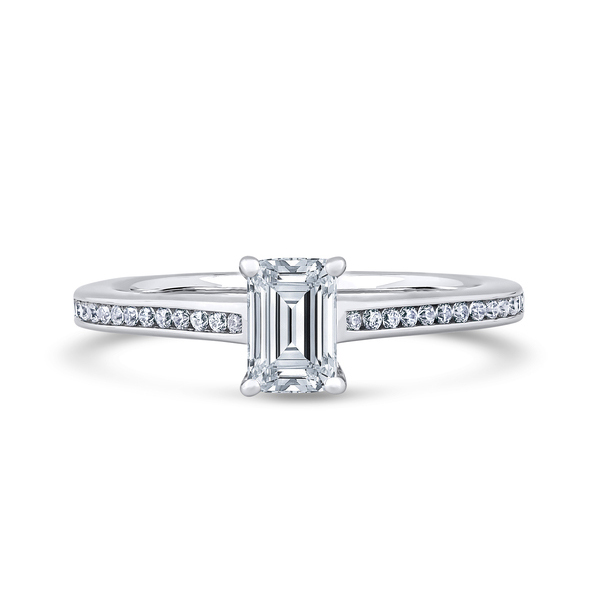
The finished Kinzy shoulder setting gives each CAD revision a clear destination: balanced structure, wearability and visual proportion.
From CAD to Wax
Step inside the Kinzy design process and see how each commission is refined before making begins.
Frequently Asked Questions
How many jewellery CAD revisions should I need?
There is no ideal number. A clear brief and consolidated feedback reduce unnecessary rounds. Confirm the included allowance in writing.
Why do CAD claws look thick?
They may include setting allowance and be enlarged on screen. Ask what the finished claw profile should be.
Can I change the centre stone after CAD approval?
A different stone may require a new head or CAD because dimensions and girdle features change.
Should the wax look like finished jewellery?
No. It tests mass and scale. Fine setting, polished surfaces and diamond light will not be fully represented.
Can I approve the ring from a top view only?
No. The side profile reveals height, gallery support and wedding-band clearance.
Final Thoughts on Jewellery CAD Revisions
Jewellery CAD revisions should make the ring more coherent, wearable and technically resolved. Prioritise stone measurements, scale, band, height and the wedding-band relationship before decorative details.
Once those foundations are right, wax can confirm the physical presence. Clear approval protects the client, designer and workshop from avoidable changes later.
×
BESPOKE DESIGN BRIEF
Begin with what you know so far.
A short, considered brief. Nothing needs to be certain yet.
This site is protected by reCAPTCHA and the Google Privacy Policy and Terms of Service apply.
PERSONAL BESPOKE GUIDANCE
Shape the next detail with your Kinzy jeweller.
A short design brief gives our Hatton Garden atelier a thoughtful starting point—whether you have a clear idea or are still comparing possibilities.
Related Reading
Articles
Other articles from Kinzy London.
Articles, Bespoke Jewellery, Engagement Rings, Gemstones
How to Add a Hidden Birthstone or Secret Diamond to an Engagement Ring
Articles, Diamond Guides, Engagement Rings, Settings
Does a Bezel Setting Make a Diamond Look Bigger or Smaller?
Articles, Craftsmanship, Engagement Rings, Settings