- Engagement Rings
- Wedding Bands
Shop by style
- Classic
- Diamond Cut
- Two Colour
- Diamond Set
- Shaped
- Vintage
- Gemstone Bands
Shop by metal
- Gemstones
- Fine Jewellery
Fine Jewellery
- About Us
- Education
20 August 2026
Can You Use a Family Diamond in a New Engagement Ring?
A family diamond engagement ring can unite inherited meaning with a design made for the present wearer. In many cases, a sound diamond can be removed from its old mount and set into a new bespoke ring. However, the stone must be identified and inspected before anyone promises a design.
The safest process treats sentimental value and physical condition as separate facts. A diamond may be emotionally priceless while still carrying a chip, abrasion or unusual proportion that affects the new setting.
Begin with Identity, Not Assumption
Family descriptions can change over generations. A stone remembered as a diamond may be another colourless gem, a diamond simulant or a composite. The first appointment should establish what the centre stone is and record its measurements.
If paperwork survives, bring it. An old valuation, receipt or grading report can help trace the history. Nevertheless, the jeweller should compare the document with the actual stone rather than assume they belong together.
Inspect the Diamond Before Removing It
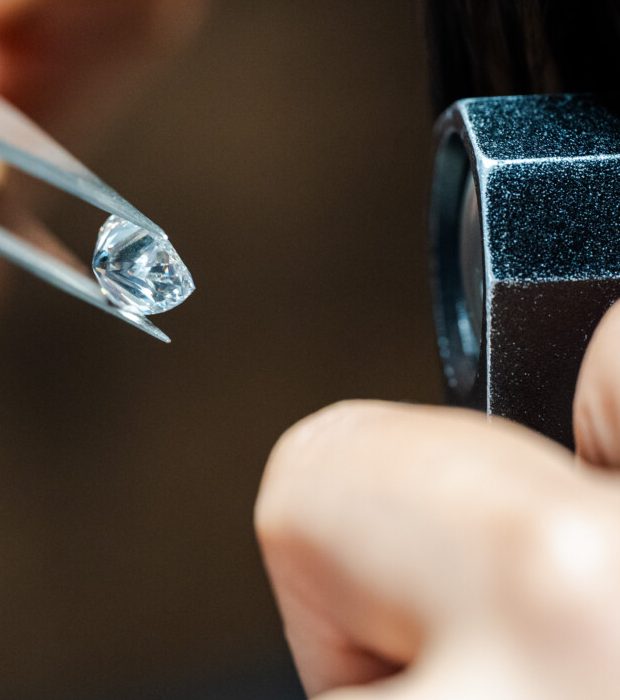
Initial inspection should happen while the stone remains set. The jeweller can look for chips near claws, girdle abrasions, fractures, previous repairs and signs that the current mount places stress on the stone.
Removal carries risk, especially when claws are worn or the setting surrounds a vulnerable area. That risk should be explained before work begins. Once loose, the diamond can receive a fuller view from every direction.
Condition Can Matter More Than Nominal Hardness
Diamond is extremely hard, but hardness describes resistance to scratching. It does not make every edge immune to chipping. Thin girdle areas, pointed shapes and existing damage need protection.
A chip does not automatically make the diamond unusable. Its position, depth and stability determine the options. Sometimes a claw or bezel can protect the area. In other cases, repolishing or a different design may be wiser.
GIA’s diamond care guidance explains why professional inspection should precede strong cleaning methods or repair.
Should the Family Diamond Receive a New Grading Report?
A current laboratory report may help when the existing paperwork is missing, outdated or impossible to match. It can record weight, colour, clarity, measurements and identifying characteristics after the stone is loose.
Certification is not always necessary for the design itself. Yet it can support insurance, valuation and future identification. Discuss whether the time and cost serve the commission. The Kinzy certification guide explains what a report does and does not prove.
Record the Diamond Before It Enters the Workshop
Good intake protects everyone. The jeweller should note shape, measurements, visible condition and any report or laser inscription. Photographs can record the stone in its original setting and after removal.
If the report number appears on the girdle, it can be checked under magnification. However, not every older diamond has an inscription. Inclusions may also act like an identifying fingerprint.
Design Around the Real Measurements
Old and modern diamonds rarely follow one standard outline. Hand-cut stones can be asymmetrical, deeper or less predictable than a calibrated replacement. Even modern one-carat diamonds differ in length, width and girdle shape.
Therefore, the new mount should fit the actual stone. Kinzy uses the diamond’s dimensions in the CAD and wax process, allowing claw position, halo spacing and setting height to respond to it.
Choose a Setting That Protects the Weakest Area
A round diamond with an even girdle may suit several setting styles. A pear or marquise needs protection at the point. An antique cushion may require claws placed around its individual corners rather than a generic four-claw head.
A bezel can offer broader edge protection, but it changes the visual outline. Six claws can distribute security around a round stone, while four reveal more edge. Review the engagement-ring settings guide before deciding from appearance alone.
Preserve Character Instead of Forcing Modern Perfection
An old mine or old European cut may show warmth, broad flashes and gentle asymmetry. Those qualities form part of its character. A highly geometric modern mount can either sharpen that contrast beautifully or make the stone feel misplaced.
Explore antique diamond cuts to understand why historic faceting should not be judged by modern brilliant-cut expectations.
What Happens to the Original Mount?
Decide whether the old setting should be preserved, repaired, stored or recycled. Its historic or sentimental value may exceed the scrap value. Removing a stone can also alter a delicate antique mount permanently.
If several family members have an interest, agree ownership and consent before work begins. A jeweller cannot resolve a family dispute after the setting has been cut.
Can the Original Metal Be Reused?
Sometimes, but not always in the literal way clients imagine. Unknown alloys, solder, porosity and contamination can make old metal unsuitable for a new precision casting. The workshop may recommend crediting its scrap value and using fresh alloy of known fineness.
If preserving the physical metal is essential, discuss whether a small element can be incorporated or whether hand fabrication offers a safe route. The promise must be technically honest and documented.
Plan the Wedding Band at the Same Time
The inherited diamond may dictate a low or unusual gallery. Test whether a straight band can sit beside it. A shaped wedding ring may be beautiful, but it should be an intentional decision.
Kinzy’s diamond wedding-band guide explains how height, width and stone setting affect the pair.
Agree Family Consent and Chain of Custody
Before the jeweller removes anything, confirm who owns the diamond and whether other relatives expect the original ring to remain intact. Written consent is especially sensible when one person delivers a piece owned by someone else.
At handover, record the old mount, centre stone, documents and any additional stones separately. The same inventory should account for every component when the new ring and unused material return.
Valuation, Insurance and Responsibility
Ask how the stone is covered while it is in the jeweller’s custody and what condition is recorded. After completion, obtain an appropriate valuation and tell the insurer that an inherited stone sits in a new mount.
The policy may distinguish the replacement value of the stone from family meaning, which insurance cannot replace. Keep old documents, photographs and the new paperwork together.
When Reusing the Diamond May Not Be the Best Choice
Do not force the project if the stone is badly damaged, disputed, too small for the intended design or emotionally tied to a piece that another relative wants preserved. You can honour the story through engraving, a related motif or a different item of jewellery.
A family diamond should enrich the engagement ring, not burden it with an impossible promise.
The Kinzy Approach to a Heirloom Stone
Kinzy begins with inspection and a clear brief. Once the stone’s dimensions and condition are understood, the setting can be developed around its strengths. A wax model lets the client assess scale before the workshop commits to metal.
To discuss an inherited stone privately, arrange a Hatton Garden consultation and bring every document connected to the piece.
What We Can Confirm Before Redesign
Kinzy’s bespoke process brings stone assessment, CAD review and wax modelling together. With an inherited diamond, the safest order is to inspect and measure the stone first, then design around its true proportions and condition.
Without documented provenance, a pictured ring should not be described as containing a family stone. Existing paperwork and a physical inspection help establish what is known before redesign begins.
A responsible heirloom project begins with inspection, continues through the Kinzy CAD and wax process, and ends with a setting suited to the stone. Arrange a private assessment before committing the family diamond to production.
Featured Kinzy Pieces and Services
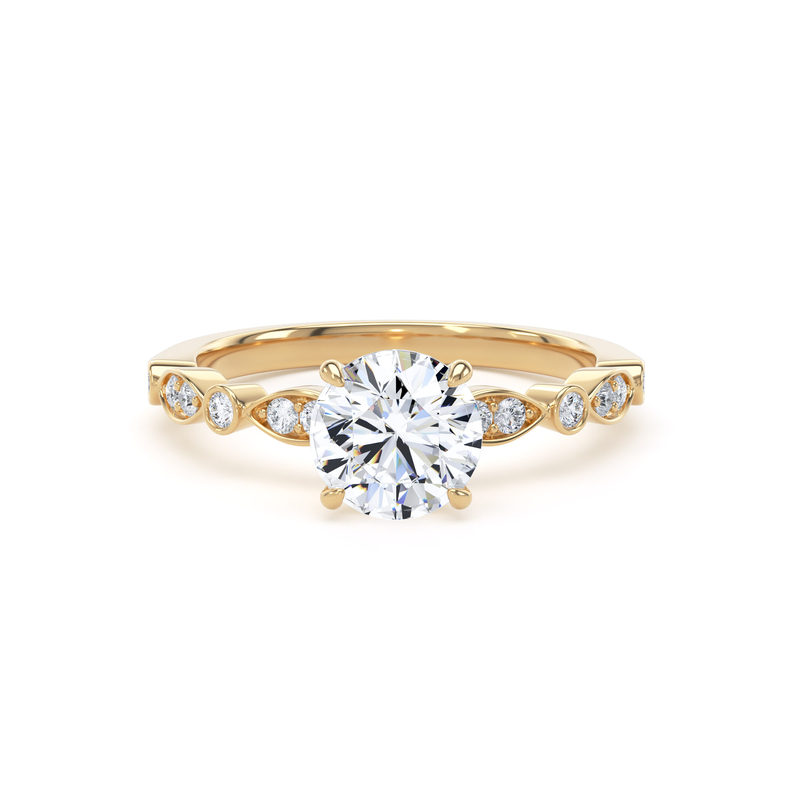
Kinzy's vintage-style setting demonstrates how heritage character can inform a new design without claiming an heirloom provenance.
Related Reading and Services
- Kinzy ring collection.
- Engagement rings.
- Round engagement rings.
- Bespoke jewellery service.
- Kinzy design process.
- Book a private consultation.
- Round Vintage-Style Engagement Ring in Yellow Gold.
Vintage-Inspired Design Reference
View a Kinzy vintage-inspired engagement ring to explore how heritage details can be interpreted in a newly made setting.
Frequently Asked Questions
Can any old diamond be reset?
No. Many can, but identity, condition, shape and ownership must be assessed. Existing damage may limit the safest setting choices.
Will removing the diamond damage the old ring?
It can alter or damage a worn setting. The jeweller should explain the removal method and likely effect before proceeding.
Do inherited diamonds need certification?
Not always, although a current report can support identification, valuation and insurance. The stone normally needs to be loose for full grading.
Can I reuse both the diamond and old gold?
Possibly, but unknown alloy and solder can make direct reuse unwise. Ask for a technical assessment rather than a blanket promise.
Can Kinzy design around an antique-cut diamond?
Yes, subject to inspection. Bespoke CAD allows the mount to follow the stone’s individual outline and protect vulnerable areas.
Final Thoughts on a Family Diamond Engagement Ring
A family diamond engagement ring becomes successful when history and engineering receive equal respect. Preserve the story, document the stone and let the new setting answer its real proportions.
Explore Kinzy bespoke engagement rings in London to begin a responsible heirloom redesign.
Related Reading
Considering the wider piece as well as the diamond? Read Can Old Jewellery Be Remade into a New Bespoke Ring?
Articles
Other articles from Kinzy London.
Articles, Bespoke Jewellery, Engagement Rings, Gemstones
How to Add a Hidden Birthstone or Secret Diamond to an Engagement Ring
Articles, Diamond Guides, Engagement Rings, Settings
Does a Bezel Setting Make a Diamond Look Bigger or Smaller?
Articles, Craftsmanship, Engagement Rings, Settings