- Engagement Rings
- Wedding Bands
Shop by style
- Classic
- Diamond Cut
- Two Colour
- Diamond Set
- Shaped
- Vintage
- Gemstone Bands
Shop by metal
- Gemstones
- Fine Jewellery
Fine Jewellery
- About Us
- Education
31 August 2026
Designing an Engagement Ring and Wedding Band Together: A Kinzy Ring Study
Designing an engagement ring and wedding band together allows height, width, contact points and visual rhythm to be resolved before everyday wear begins. This Kinzy ring study examines a yellow-gold pairing built around a 1.5-carat oval diamond.
Kinzy’s original Instagram post presents the centre as E colour, VS1 clarity and GIA certified, with a wedding band made to fit the engagement ring.
The Pair at a Glance
The Kinzy commission post shows:
- A 1.5-carat oval centre diamond.
- E colour and VS1 clarity.
- A GIA laboratory report.
- A yellow-gold setting.
- A wedding band shaped around the engagement ring.
Together, these details create a warm, coordinated pair in which fit is treated as part of the design.
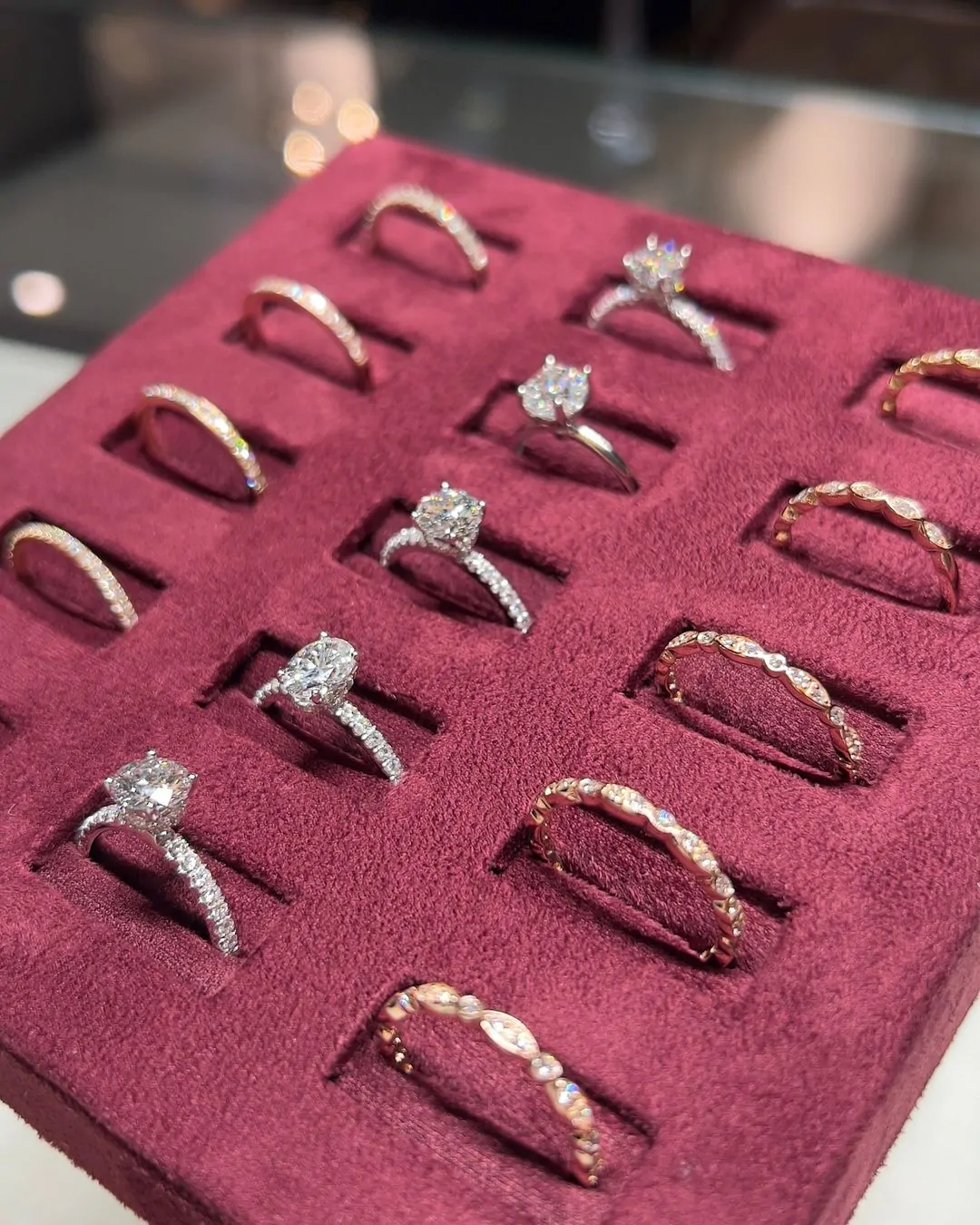
Why the Oval Centre Matters to the Pair
An oval creates length along the finger and a curved perimeter. Its setting can be compact or broad depending on the basket, hidden halo and shoulder design. Those features determine whether a straight wedding band can approach closely.
Carat weight alone does not describe an oval’s length-to-width ratio or millimetre spread. Review those measurements alongside the outline using the oval engagement-ring guide and diamond ratios explained.
What E Colour and VS1 Clarity Add
E sits within the colourless range used by GIA. VS1 indicates inclusions that are minor under grading conditions. These grades provide useful report facts, but they do not explain the oval’s bow tie, outline or how the pair feels on the hand.
Yellow gold creates a warm frame around the colourless centre. Depending on claw metal, it may introduce contrast or allow the diamond to remain visually cool. Compare platinum versus gold engagement rings before assuming that high colour requires white metal.
The GIA versus IGI guide explains what the laboratory report does and does not certify.
The Core Design Question: Flush, Fitted or Intentionally Gapped?
A bridal pair can sit flush, follow a fitted contour or leave a deliberate gap. None is automatically correct. The safe relationship depends on the engagement-ring gallery and the wedding band’s upper edge.
For this pair, the wedding band was designed around the engagement ring. Whether a bridal set sits completely flush or follows a subtle contour depends on the gallery, setting height and the upper edge of the band.
The useful lesson is that “fit” was treated as a design outcome. Explore diamond wedding bands in London to compare profiles.
Why Contact Points Matter
Two rings move independently. A hard diamond-set edge can rub against claws, a basket or a soft area of metal. Repeated contact may wear the engagement ring even when both pieces were well made.
CAD should show where the rings meet. Safe contact may occur along compatible metal surfaces, or a small gap can prevent abrasion. If the engagement ring sits low, the band may require a curve or notch.
Use the engagement-ring care guide and inspect both rings during annual servicing.
Coordinating Band Width and Visual Weight
The wedding band should not make the engagement shank look fragile or disappear completely. Matching widths create continuity; deliberate contrast can also work when the relationship feels balanced.
With an oval centre, tapering the engagement shoulders can emphasise length. The wedding band may echo that delicacy or provide a stronger foundation. The correct choice depends on the hand and whether additional rings will later join the stack.
Coordinating Yellow Gold
Using the same alloy and fineness helps the pair age consistently, although surface finish and wear will still develop. Different gold colours can be mixed intentionally, but the contrast should form part of the design.
Hallmarks identify metal fineness and the Assay Office, not visual colour matching. Retain the documents and understand the marks before future repair or resizing.
Planning the Pair Through CAD
The engagement-ring side profile should be placed beside a dimensioned wedding-band profile. The designer can review height, gap, contour, diamond-setting edge and finger contact.
Kinzy’s published process confirms that clients review CAD and see a wax model before jewellery is made. The cited post does not show this client’s private CAD, so we use it as evidence of the house method only.
Read the Kinzy design process and bespoke designs for the approval route.
What a Wax Model Can Reveal for Two Rings
A paired wax can show the combined width and whether a fitted band curves more dramatically than expected. It can also reveal how the set feels between adjacent fingers.
Wax cannot demonstrate final sparkle or metal colour. Its value lies in scale and contact. If the wedding band will be commissioned later, retaining the original engagement-ring CAD and measurements can help, but the physical ring should still be inspected.
Would a Straight Band Have Worked?
A straight band may sit neatly beneath a high gallery, while a lower basket can require a shaped or contoured design. The answer depends on measured clearance rather than appearance alone.
This is exactly why couples should discuss the future band before finalising the engagement ring. The settings guide explains how gallery structure changes the available space.
Personalisation Beyond the Fit
A wedding band can echo the engagement ring through metal, diamond size, setting style or engraving. It does not need to match every detail. Personalised inscriptions or a meaningful date may connect the rings privately.
Kinzy’s wedding-band post documents initials and dates as personalisation options. The broader trend is explored in personalised engagement rings.
Resizing a Coordinated Pair
Each ring may have a different resizing limit. An engagement ring with a plain lower shank may allow more adjustment than a wedding band carrying diamonds far around the finger. Changing one circumference can also alter how the pair aligns.
Confirm the safe range before production, especially when finger size fluctuates. A large change may require remaking part of the ring rather than stretching or compressing it. The visual fit should be checked again after any alteration.
Wearing and Servicing the Two Rings
Inspect the pair together, not only as separate items. Look for polished contact marks, loose claws and a new gap that suggests one ring has changed shape. Remove both for heavy work, sport and situations where chemicals or impact are likely.
Professional servicing should confirm stone security, metal condition and whether the original contact relationship remains safe. A manufacturing warranty does not replace appropriate insurance or responsibility for accidental damage.
Designing Both Rings as One Composition
When an engagement ring and wedding band are planned together, every decision can support the final pair: the curve of the band, the height of the setting, the shared metal and the negative space between them.
At Kinzy, your personal jeweller can develop both rings through the same CAD and wax journey, allowing proportion and comfort to be considered before either piece is made.
Questions to Resolve When Designing Both Rings
Questions to Resolve When Designing Both Rings
- Should the wedding band sit flush, curve or leave a gap?
- Where will the rings touch during movement?
- Will diamonds on either ring abrade the other?
- How do band widths and depths balance?
- Should the alloy and colour match exactly?
- Can either ring be resized without disturbing the design?
- Will a future eternity ring join the stack?
- Are care, warranty and insurance responsibilities clear?
To develop a complete pairing, book a Kinzy consultation or visit the Greville Street showroom.
A Pair Designed to Belong Together
A Kinzy trilogy setting sits alongside the official bridal-pair post to support coordinated profile and proportion decisions.
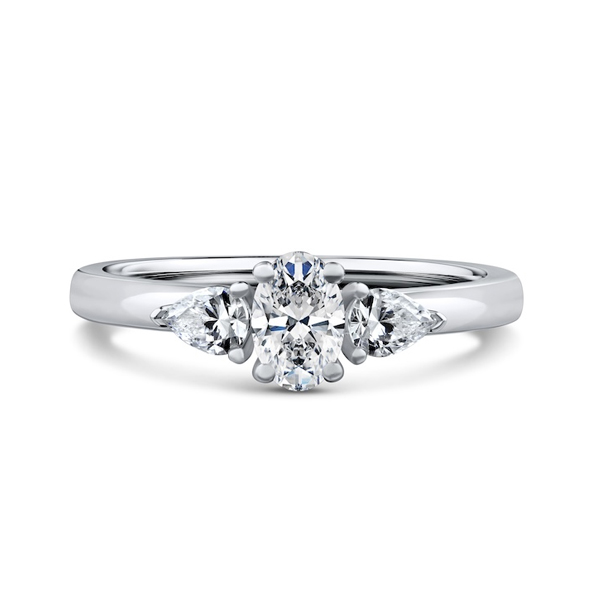
Inside a Kinzy Bridal Set
See how Kinzy balances proportion, fit and finishing when two rings are designed as one composition.
Frequently Asked Questions
What defines this Kinzy ring pairing?
A 1.5-carat E-colour, VS1, GIA-certified oval sits in yellow gold with a wedding band designed around the engagement ring.
Why design both rings together?
Planning the pair together allows setting height, contact points, band shape and visual weight to be resolved before making begins.
Must a wedding band sit flush?
No. A considered gap or fitted contour can be equally intentional when it protects the rings and suits the design.
Can a straight band damage an engagement ring?
It can if a hard edge repeatedly rubs claws or a vulnerable part of the setting. Contact points should be reviewed professionally.
Should both rings use the same metal?
Matching metals can support consistent colour and wear. Mixed metals can also work when their relationship is considered from the start.
Final Thoughts on an Engagement Ring and Wedding Band Together
Final Thoughts on an Engagement Ring and Wedding Band Together
Designing an engagement ring and wedding band together turns fit into an intentional part of the jewellery. This Kinzy ring study examines a documented yellow-gold oval ring with a band made specifically to accompany it.
The strongest lesson is not a hidden detail we cannot verify. It is the visible discipline of treating two lifetime rings as one system.
×
RING PAIRING & FIT BRIEF
Let us consider the two rings together.
A short, considered brief. Nothing needs to be certain yet.
This site is protected by reCAPTCHA and the Google Privacy Policy and Terms of Service apply.
RING PAIRING & FIT
Review the pair before you decide.
A considered wedding-ring choice begins with the engagement ring already on your hand. Send a short brief and receive personal guidance from your Kinzy jeweller.
Related Reading
Articles
Other articles from Kinzy London.
Articles, Bespoke Jewellery, Engagement Rings, Gemstones
How to Add a Hidden Birthstone or Secret Diamond to an Engagement Ring
Articles, Diamond Guides, Engagement Rings, Settings
Does a Bezel Setting Make a Diamond Look Bigger or Smaller?
Articles, Craftsmanship, Engagement Rings, Settings