- Engagement Rings
- Wedding Bands
Shop by style
- Classic
- Diamond Cut
- Two Colour
- Diamond Set
- Shaped
- Vintage
- Gemstone Bands
Shop by metal
- Gemstones
- Ready To WearFine jewelleryMade to be worn.
Made to last.Diamond jewellery for every day and every occasion.Shop all jewellery →Fine jewellery
Diamond earringsPendantsBraceletsRingsShop allShop by occasion
Gifts under £1,000AnniversaryBirthdayBridal jewelleryAvailable sooner
Ready to dispatchNew arrivalsBestsellersBook an appointmentFine Jewellery
- About UsMade in LondonCrafted by people you can meet.Discover the people, workshop and personal service behind every Kinzy London piece.Meet KinzyRead our story →
About Kinzy
About KinzyOur storyClient storiesMeet your sales associateCraft & care
Our workshopDesign processLifetime Atelier CareOur guaranteesMade in our London workshopCertified diamondsLifetime carePersonal guidance - Education
Learn with Kinzy Diamond guideUnderstand the details that matter→Fit & setting guideChoose comfort and proportion→Behind the craftHow your jewellery is made→Expert guidance, clearly explained.
Practical diamond, gemstone and ring guidance to help you make a confident decision.
Explore all guides →
 Round
Round Oval
Oval Heart
Heart Marquise
 Cushion
 Pear
Pear Emerald
 Asscher
 Radiant
26 September 2026
Talon Claws vs Rounded Claws: The Small Detail That Changes a Ring’s Character
Compare talon claws vs rounded claws on the same engagement-ring design and the centre diamond can seem to change character. Talons taper to fine visual points. Rounded claws finish in softer beads or domes. The difference is measured in fractions, yet it alters the rhythm around the stone.
Claw-tip shape is an aesthetic and craft decision. It should never be treated as a stand-alone promise of security. The quality of the seat, contact, metal, proportions, setting work and later inspection all matter more than the nickname given to the tip.
What Are Talon Claws?
A talon claw is drawn or finished into a tapered point when viewed from above. The form resembles a small nail or talon directed towards the centre of the stone. Well-proportioned talons can make the setting feel lean, graphic and contemporary.
The point is visual; it should not be a sharp spike that catches skin or fabric. Its upper surface, contact with the diamond and polished finish still need to function as part of a properly made setting. Kinzy’s engagement-ring settings guide gives the wider setting context.
What Are Rounded Claws?
Rounded claws finish as small circular or softly oval beads above the stone. They can feel classic, gentle and less directional. On a round brilliant, the repeated dots may reinforce the stone’s curved outline; on an angular shape, they can soften the contrast.
“Rounded” does not mean bulky. A skilled setter can make a compact, even bead. Conversely, a poorly proportioned round claw can cover more diamond than intended. Ask to approve the desired visual size, not only the style name.
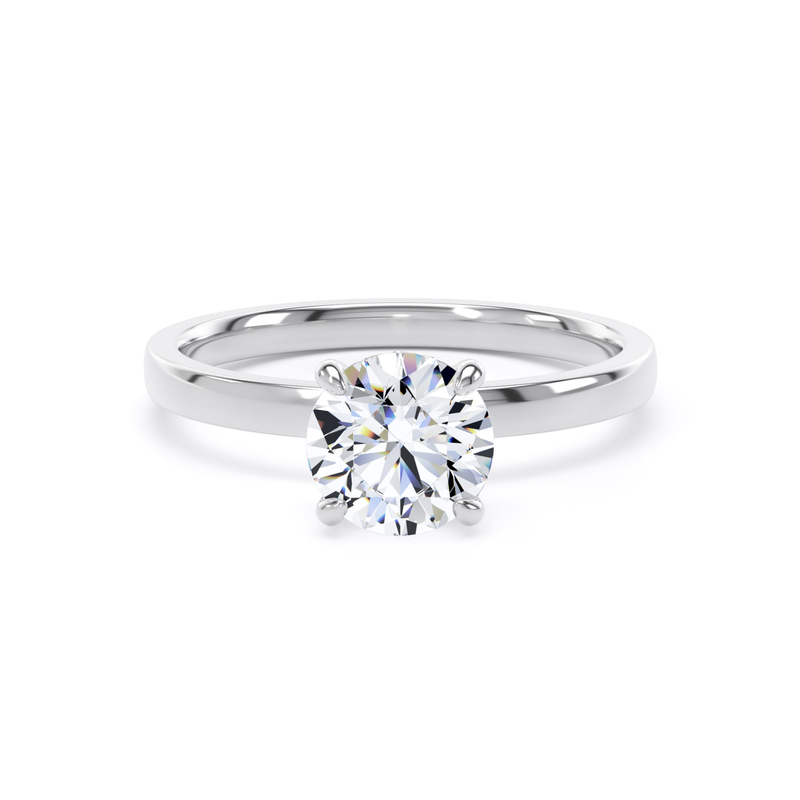
The Character Difference at a Glance
- Talon claws: directional, crisp, tapered and often visually elongating.
- Rounded claws: soft, balanced, traditional and visually dot-like.
- Neither: automatically more secure, lower, less snag-prone or better made.
View both at normal distance. Macro photography magnifies the claws far beyond the way a ring is seen on the hand and can make a fine point appear aggressive or a rounded bead appear oversized.
How Claw Shape Interacts with Diamond Shape
Round brilliant
Rounded claws echo the circumference and create an even, classical rhythm. Talons point inward and may make the same round stone feel sharper. Neither changes the diamond’s actual measurements.
Oval, pear and marquise
Tapered talons can reinforce length, especially when aligned along an elongated outline. A pear or marquise tip may require specialised protection; do not confuse a decorative talon tip with the structural solution appropriate to a vulnerable point.
Review the complete setting type and the setting height rather than specifying every claw identically.
Emerald and radiant cuts
Talon tips can repeat the crisp steps or clipped corners, while rounded claws introduce contrast. The stone’s actual corners, girdle and seat determine the setting approach. A render cannot replace assessment of the selected diamond.
Does One Style Show More Diamond?
A visually narrow talon may appear to reveal more of the outline than a broad rounded bead. Yet coverage depends on the finished dimensions and how far each claw extends over the crown, not the label. A small rounded claw may cover less than an oversized talon.
If face-up visibility matters, ask for close views at consistent scale and a plain-language description of the intended finish. Then compare the diamond rather than chasing minimal metal at any cost. Kinzy’s diamond-certification guide explains which properties belong to the stone report and which require visual judgement.
Security Comes from the Whole Setting
GIA’s quality-assurance material on platinum prong settings illustrates that contact, angle and structural support are engineering questions. A fashionable tip shape cannot compensate for inadequate contact or weak support.
Ask how the claws connect to the head, whether a gallery rail supports them, how the diamond is seated and how the finished ring will be inspected. Kinzy’s handcrafted-jewellery page and craftsmanship overview show why final bench work matters after CAD.
Four or Six Claws Is a Separate Decision
The number of claws changes the spacing and visual frame; the tip shape changes how each contact point reads. You can encounter four rounded claws, six rounded claws, four talons or six talons. Do not collapse the two questions.
First approve the ring architecture and number of supports. Then use talon or rounded finishing to refine character. This keeps the choice distinct from a general setting-style comparison.
Metal Colour Changes the Effect
White-metal claws can merge visually with a colourless diamond, while yellow-gold claws make the frame more visible and may create deliberate warmth. Some rings combine a yellow shank with a white-metal head. Confirm the actual metal and fineness of each component.
The platinum versus gold guide explains broader differences. Metal choice should be made for the entire structure, appearance and care plan—not only to make a talon seem finer.
Will Talon Claws Catch More?
A properly finished talon should not feel like an exposed needle. Even so, every raised claw setting can meet fibres, hair or gloves. Catching can also be a warning that a claw is lifted, worn or damaged.
Run a clean fingertip gently around the setting during normal care; do not pick or press the claws. If the ring suddenly snags, moves or sounds different, stop wearing it and arrange an inspection. Kinzy’s engagement-ring care guide and lifetime atelier care page explain the current care route for Kinzy creations.
What CAD Can and Cannot Show
CAD is valuable for spacing, alignment and overall intention. It may display claws before final setting and polishing, so the tips can look heavier than the finished ring. Ask which details are schematic and which are intended to match the final silhouette.
Kinzy’s documented design process includes CAD and, on request where appropriate, a wax stage. The bespoke-design page explains the approval journey. Use it to agree character without pretending a screen render is a microscope-accurate promise.
How to Approve the Detail
- State “talon” or “rounded” and provide one clear visual reference.
- Confirm the number and positions of the claws separately.
- Ask whether a vulnerable stone point needs a different treatment.
- Review the ring from above and from the side.
- Confirm metal and fineness for the head and shank.
- Ask how CAD claw thickness relates to final finishing.
- Agree that security and stone seating take priority over extreme delicacy.
- Record the approved intention in the final design brief.
Consistency Matters as Much as the Chosen Shape
Claw tips form a repeated pattern around the centre stone. Small differences in length, angle or visual weight can make that pattern feel unsettled, particularly on a simple solitaire. Ask to view the finished ring under normal magnification and from directly above. The aim is not machine-like sameness at any cost; it is an even, intentional relationship that supports the diamond’s own outline.
See the Choice on a Real Hand
A large isolated rendering can make either option feel dominant. Ask to see comparable finished rings and view them at normal distance. Look at the outline first, then the claw tips. If the claws are the first thing you notice when you want the diamond to lead, reduce or soften the visual emphasis rather than simply changing labels.
A private Kinzy consultation at the Greville Street showroom lets you discuss those proportions with the stone shape and setting architecture in view. The sales-associate page helps you prepare useful references.
The Character Is in the Detail
Talon and rounded claws bring a different character to the same stone. Compare the final profile at true scale before the setting is approved.
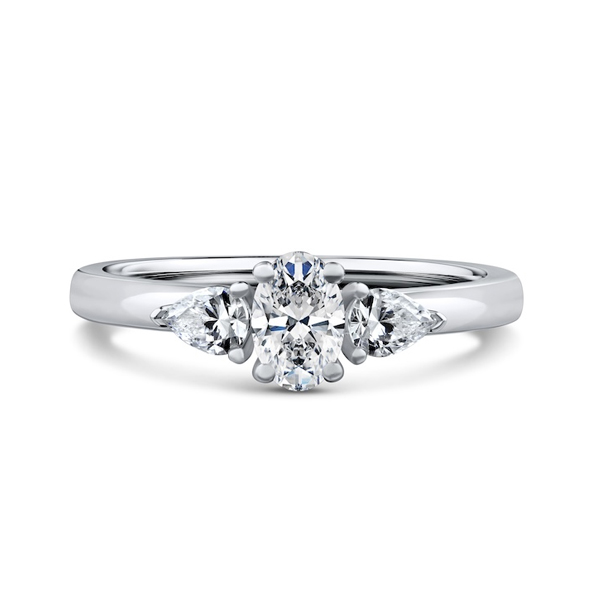
From CAD to Final Setting
See how the details approved in CAD are carried through setting and final polish.
Frequently Asked Questions
Are talon claws more secure than rounded claws?
Not inherently. Security depends on stone seating, contact, structure, metal, workmanship, wear and inspection. Tip style mainly changes appearance.
Do talon claws make a diamond look larger?
They can create a finer, more directional outline, but they do not change the diamond’s dimensions. Finished claw size determines visual coverage.
Can rounded claws still look modern?
Yes. Compact, evenly finished rounded claws can look restrained and contemporary, particularly in a clean setting.
Can I choose talons for any diamond shape?
The design can be considered, but corners and points may need shape-specific protection. Let the selected stone and setting engineering guide the final treatment.
Can worn claws be reshaped?
Possible work depends on their condition, metal and setting. Arrange an inspection rather than assuming routine polishing can recreate lost metal.
Choose Character, Then Confirm Craft
Choose the claw shape for its visual character, then confirm that the complete setting is properly proportioned and easy to inspect.
Discuss the detail through a bespoke Kinzy brief, book a consultation and use the wedding-band builder when planning the ring that will sit beside it.
Related Reading
Articles
Other articles from Kinzy London.
Articles, Bespoke Jewellery, Engagement Rings, Gemstones
How to Add a Hidden Birthstone or Secret Diamond to an Engagement Ring
Articles, Diamond Guides, Engagement Rings, Settings
Does a Bezel Setting Make a Diamond Look Bigger or Smaller?
Articles, Craftsmanship, Engagement Rings, Settings