- Engagement Rings
- Wedding Bands
Shop by style
- Classic
- Diamond Cut
- Two Colour
- Diamond Set
- Shaped
- Vintage
- Gemstone Bands
Shop by metal
- Gemstones
- Fine Jewellery
Fine Jewellery
- About Us
- Education
6 September 2026
Shaped Wedding Bands Explained: Curved, Wishbone and Contoured Rings
Shaped wedding bands are designed with a deliberate change in outline so they can sit around, echo or balance an engagement ring. The shape may be a restrained curve, a distinct V or a contour made for one particular setting. Each solution creates a different relationship between the two rings.
The most important point is not the label. Terms vary between jewellers. What matters is the actual geometry: where the band changes direction, how closely it follows the engagement ring and whether the composition still feels beautiful when the wedding ring is worn by itself.
Why Shaped Wedding Bands Exist
A straight wedding ring cannot always move close to an engagement ring. A low gallery, prominent setting, halo or decorative under-gallery may occupy the space where a straight band would otherwise sit. The result can be a gap, a contact point or a band that rotates away from its natural position.
A shaped band creates room without asking the engagement ring to change. Before choosing one, examine the ring from above and from the side. Kinzy’s guide to engagement-ring settings shows why the architecture beneath the centre stone is as important as its face-up appearance.
Curved Wedding Bands: The Gentle Solution
A curved band usually introduces one smooth arc across the upper section. It can make space for a round, oval or softly shaped centre setting while keeping the rest of the circumference visually quiet. A shallow curve may almost disappear beneath the engagement ring; a deeper curve becomes a feature in its own right.
The curve should be assessed at finger level, not only in a flat product photograph. Check where it begins, its highest point and how it returns to the straight portion of the band. If those transitions are abrupt, the ring may look pinched when worn alone.
Curved wedding bands suit clients who want a fitted appearance without a strongly pointed silhouette. They can also frame a centre stone elegantly when two matching curved bands are placed above and below, although the width of the complete stack should be considered before ordering a second ring.
Wishbone Wedding Bands: A Deliberate V
A wishbone wedding band forms a V or chevron. The point may be soft and rounded or crisp and architectural. Because the direction is obvious, this style often reads as an intentional design rather than a purely practical accommodation.
The depth of the V controls both fit and character. A shallow wishbone can sit around a modest setting and remain understated. A deeper point creates more space and can lengthen the visual line of the finger. However, it may also leave a more pronounced shape when worn without the engagement ring.
Check that the point is comfortable and sufficiently substantial for everyday wear. Also decide whether the apex should align exactly with the centre stone or sit slightly below it. Small differences become highly visible because the eye naturally follows the V towards the engagement ring.
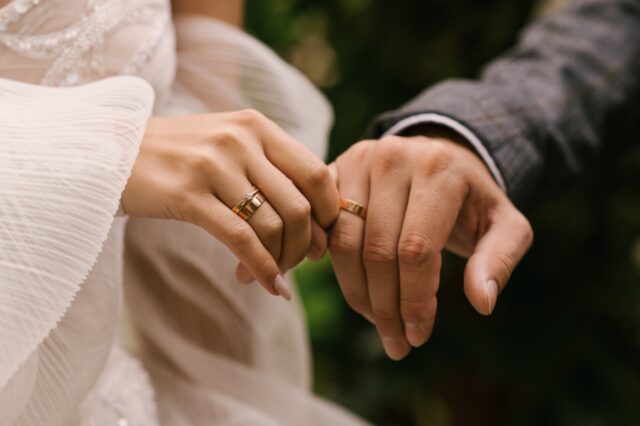
Contoured Wedding Rings: Made Around the Setting
A contoured band follows more of the engagement ring’s outline. It may combine curves, angles or an asymmetric sweep to accommodate a distinctive gallery, cluster or side-stone arrangement. This is the most specific of the three approaches.
Some contoured rings are developed for a collection. Others are made around the exact engagement ring. A close bespoke contour can create a composed, almost interlocking silhouette. The trade-off is reduced flexibility: it may not sit as naturally with a future replacement ring or on the opposite hand.
If the engagement ring is highly individual, a bespoke design conversation allows the outline to respond to the real piece rather than an assumed measurement. Kinzy’s design process explains how proportions can be reviewed before manufacture.
Curved, Wishbone or Contoured: The Practical Difference
- Curved: a smooth arc that gives space while retaining a soft outline.
- Wishbone: a visible V that creates both clearance and a directional design.
- Contoured: a more exact outline developed to follow a particular engagement-ring setting.
None is automatically more luxurious or secure. The right choice depends on the setting, desired gap, finger coverage and whether the wedding band should look independent. Use Kinzy’s low-set and high-set ring guide to understand why two engagement rings can demand very different companions.
Does a Shaped Wedding Band Need to Sit Completely Flush?
No. A shaped outline can reduce a gap without eliminating it. A narrow, even line of space may give both rings visual definition. The goal is not to force every stack into an interlocking appearance; it is to make the relationship look considered.
Inspect actual contact points. Metal or diamonds from one ring should not repeatedly press against vulnerable claws or delicate setting edges without a jeweller assessing the arrangement. A beautiful top view does not compensate for avoidable friction underneath.
Begin with the Exact Engagement Ring
Measurements from a photograph are rarely enough for a close contour. Setting width, gallery projection, shoulder height and finger size all affect the line. Even two engagement rings with the same centre shape can require different wedding bands.
Whenever possible, take the engagement ring to the appointment. If it is still being made, consider both rings together before final approval. The Kinzy bespoke-ring process shows why decisions made before production offer greater control than late adjustments.
Width, Profile and Metal Still Matter
Shape solves only one part of the design. Width controls presence. Profile determines how the inner and outer surfaces feel. Metal colour either unifies the stack or creates contrast. A delicate curve in a deep band can feel visually heavier than a wider but lower profile.
Compare platinum and gold through Kinzy’s precious-metal guide. In the UK, qualifying precious-metal articles must meet hallmarking requirements; the British Hallmarking Council’s consumer guidance on hallmarking explains why the marks matter.
Plain or Diamond-Set Shaped Wedding Bands
A plain shaped band lets geometry lead. A diamond-set version introduces light along the curve or V, drawing attention to its outline. Neither is a minor variation: the setting method, diamond coverage and available metal influence future sizing and maintenance.
If the engagement ring already has diamond-set shoulders, compare whether continuity or contrast feels more balanced. The existing Kinzy diamond wedding-band guide provides a broader foundation before you decide how much sparkle the shaped ring should carry.
Think About Wearing the Band Alone
Many people occasionally remove an engagement ring for travel, work or practical tasks while continuing to wear the wedding band. Try the shaped ring alone. A soft curve may look understated; a strong contour may appear intentionally sculptural. Neither result is wrong, but it should be chosen rather than discovered later.
Also consider a future anniversary band. A highly specific contour can make later stacking more complex. If flexibility matters, a slightly less exact curve or a deliberate gap may create more options.
How to Order a Shaped Wedding Ring
- Bring the engagement ring or its confirmed technical specifications.
- Decide whether the desired relationship is close-fitting, lightly spaced or visibly separated.
- Compare curved, wishbone and contoured outlines on the hand.
- Choose width, profile, metal, finish and any diamond setting as one composition.
- Check comfort, rotation and contact points from every angle.
- Review how the band looks without the engagement ring.
You can begin with Kinzy’s custom wedding-band builder, then book a private consultation when the fit needs to be assessed against an existing ring.
Aftercare for a Fitted Pair
Two rings worn together should be checked as a pair because their points of contact can change as surfaces wear. Keep them clean, look for movement in stone settings and ask for professional advice if either ring begins to catch or rotate differently.
GIA’s jewellery-care guidance explains why cleaning methods must suit the gems and treatments in a piece. Kinzy clients can also review the house’s Lifetime Atelier Care information and current terms.
Shaped Around Your Engagement Ring
A shaped wedding ring should respond to the real engagement-ring profile, not only a category name. Begin online, then refine the fit with the Kinzy team.
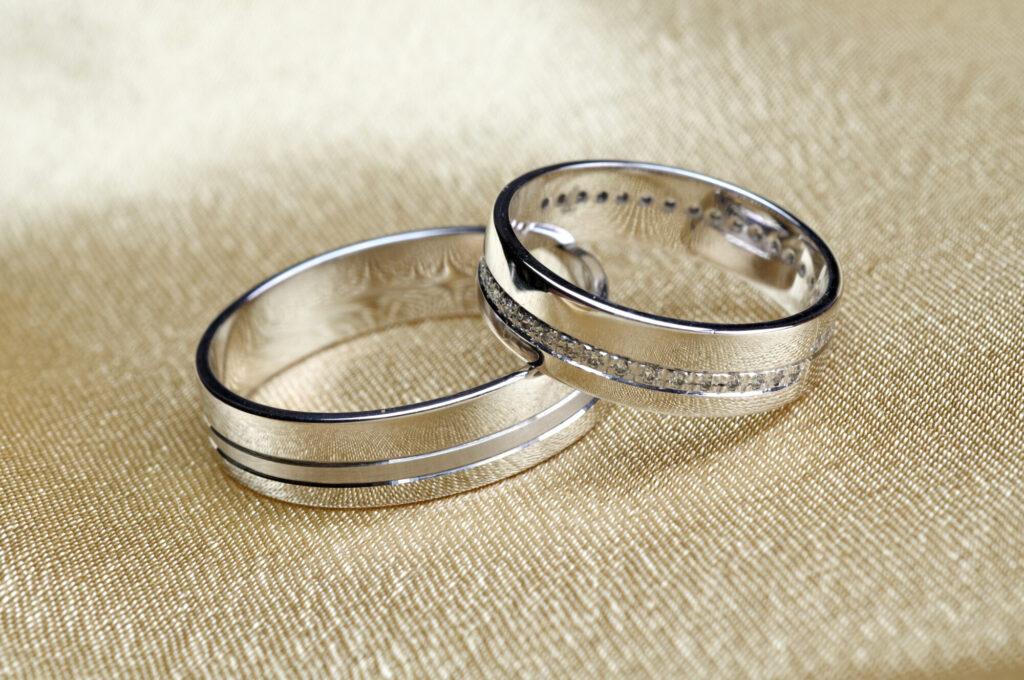
A Kinzy Bridal Pairing
See how a wedding band can follow an engagement ring’s silhouette while retaining its own character.
Frequently Asked Questions
What is a shaped wedding band?
It is a wedding ring whose outline curves, angles or contours to relate to an engagement-ring setting or to create a chosen silhouette.
Is a wishbone ring the same as a curved wedding band?
Not exactly. A wishbone has a recognisable V or chevron, while a curved band usually uses a smooth arc. Retail terminology varies, so compare the physical shape.
Can a shaped wedding ring be worn alone?
Yes. Try it without the engagement ring before ordering because a subtle curve and a deep contour create very different standalone looks.
Must a shaped band touch the engagement ring?
No. It can sit close or preserve a deliberate line of space. A jeweller should assess any repeated contact around claws, diamonds or fine edges.
Can Kinzy design around my existing engagement ring?
Use the wedding-band builder to begin, then arrange a consultation so the existing ring and desired fit can be reviewed directly.
Final Thoughts on Shaped Wedding Bands
Shaped wedding bands are most successful when the curve, V or contour feels intentional both beside the engagement ring and on its own. Start with geometry, then refine width, profile, metal and detail around the wearer.
Explore the Kinzy wedding-band builder or book a Kinzy consultation to compare the options around your actual ring.
×
RING PAIRING & FIT BRIEF
Let us consider the two rings together.
A short, considered brief. Nothing needs to be certain yet.
This site is protected by reCAPTCHA and the Google Privacy Policy and Terms of Service apply.
RING PAIRING & FIT
Review the pair before you decide.
A considered wedding-ring choice begins with the engagement ring already on your hand. Send a short brief and receive personal guidance from your Kinzy jeweller.
Related Reading
Articles
Other articles from Kinzy London.
Articles, Bespoke Jewellery, Engagement Rings, Gemstones
How to Add a Hidden Birthstone or Secret Diamond to an Engagement Ring
Articles, Diamond Guides, Engagement Rings, Settings
Does a Bezel Setting Make a Diamond Look Bigger or Smaller?
Articles, Craftsmanship, Engagement Rings, Settings