- Engagement Rings
- Wedding Bands
Shop by style
- Classic
- Diamond Cut
- Two Colour
- Diamond Set
- Shaped
- Vintage
- Gemstone Bands
Shop by metal
- Gemstones
- Fine Jewellery
Fine Jewellery
- About Us
- Education
5 September 2026
Comfort-Fit vs Standard-Fit Wedding Rings: Which Feels Better Every Day?
A comfort fit vs standard fit wedding ring comparison is really a decision about the surface touching your finger. Two bands can share the same metal, width, finish and nominal size yet feel noticeably different because their inner curves are not the same.
Before you create your own wedding ring online, understand each fit description and why a full-width sizing sample matters more than a label alone.
The Difference Is on the Inside
A standard-fit wedding ring normally has a comparatively flat inner surface across most of its width. Its inside edges should still be smoothly finished, but more of the band can sit in contact with the finger.
A comfort-fit ring has a more pronounced curve on the inside. The interior rises gently towards the centre, reducing the broad, flat contact area and creating a softer transition at the edges. From above, the two rings could look identical; in profile or cross-section, they are not.
For diamond coverage and decorative styles, use Kinzy’s separate guide to diamond wedding bands in London.
Comfort Fit Is Not a Universal Measurement
“Comfort fit” and “standard fit” are useful trade descriptions, but they do not guarantee one universal radius or thickness. One maker’s gentle comfort curve may resemble another maker’s fuller court interior. The outer profile can also be flat, rounded or D-shaped independently of the inside.
Ask to see the actual cross-section or a representative sample. Confirm the finished width and depth as well as the fit description. Kinzy’s design process explains why proportion decisions need to be resolved before manufacture rather than assumed from a name.
Start with Ring Size, Then Compare the Interior
Ring size describes an internal measurement; it does not describe the whole wearing experience. The current ISO 8653 ring-size standard specifies ring-size measurement using a defined ring stick and notes that consumer finger gauges should correspond to those dimensions.
However, a narrow sizing gauge cannot fully predict a broad wedding band. Width, inside curvature, depth, knuckle size and the shape of the finger below the knuckle all influence the result. Establish a reliable baseline size, then test the proposed band geometry at that size and immediately around it.
If you are comparing metals at the same appointment, Kinzy’s guide to platinum versus gold separates appearance and maintenance from the question of fit.
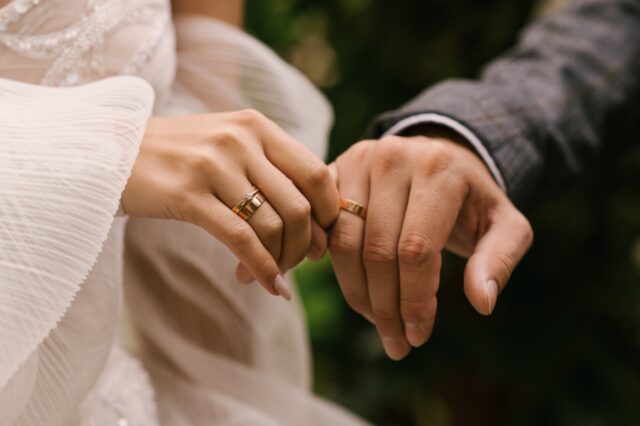
Comfort Fit vs Standard Fit Wedding Ring at a Glance
- Inside surface: standard fit is comparatively flatter; comfort fit is more rounded through the interior.
- Contact: standard fit can place more surface against the finger; comfort fit can concentrate contact nearer the centre.
- Passing the knuckle: a rounded interior may feel smoother for some hands, but the correct size still controls security.
- Broad bands: the difference often becomes easier to notice as width increases.
- Appearance: either interior can sit beneath several exterior profiles, metals and finishes.
- Best test: compare full-width samples rather than choosing from terminology alone.
How a Standard-Fit Wedding Ring Feels
A well-made standard-fit band should not feel sharp. Its edges are refined and its interior is polished, but the flatter inner plane gives the ring a more continuous seat on the finger. Some wearers enjoy that settled, connected sensation, particularly in a slim or moderately proportioned band.
It should not be chosen merely because it sounds traditional. Test it while bending the finger, making a loose fist and letting the hand rest naturally. Setting height is a separate decision, explained in Kinzy’s guide to low-set and high-set rings.
How a Comfort-Fit Wedding Ring Feels
The rounded interior of a comfort-fit band can soften the sensation at the edges and may make a substantial band feel less broad against the skin. Some people also find the curved inside easier to guide over a prominent knuckle.
That does not mean the band should be ordered loose. A ring still needs enough security below the knuckle, and an excessively large comfort-fit band can rotate or slip. The correct result passes the knuckle with controlled resistance, settles without pinching and remains comfortable through ordinary movement.
Comfort is personal. Hand shape, work and intended width matter more than gendered marketing.
Width Can Change the Answer
A slim band covers less skin, so the distinction between two interiors may feel subtle. As a band becomes wider, the inside surface and edge transitions become more noticeable. A wide ring can also feel tighter than a narrow sizing gauge carrying the same nominal size.
Do not apply an automatic “half a size larger” rule. The correct adjustment depends on the finger and the finished ring. Compare samples at the actual planned width, then test neighbouring sizes without being told which one you are wearing.
When the wedding band will sit beside an engagement ring, assess the combined width too. Kinzy’s engagement-ring settings guide and comparison of solitaire and shoulder-set rings help identify the neighbouring structure, but the two rings should still be tried together.
Depth and Weight Are Separate from Comfort Fit
Inside curvature needs enough material to be formed cleanly, yet a comfort-fit label does not tell you whether a ring is light, medium or substantial. A shallow band and a deep band can both be rounded inside, although their balance on the hand will differ.
More metal usually changes physical weight and can affect price, but neither heaviness nor lightness guarantees comfort. Ask for the finished depth, not only a general weight category. Then consider whether the outer proportions still look intentional beside the hand and any other ring.
As Kinzy’s behind-the-scenes bespoke guide shows, visible design and supporting geometry must be considered together.
Metal and Finish Do Not Replace a Fit Decision
Platinum, yellow gold, white gold and rose gold create different colours, weights and maintenance expectations. They do not automatically determine whether the interior should be standard or comfort fit. Keep the comparisons separate so a preference for a warm metal is not mistaken for a preference about inside curvature.
The World Gold Council explains that 18-carat gold contains 75 per cent gold. Whatever the alloy, specify the inner profile separately from the polished, brushed or textured exterior.
Use This Seven-Step Wearing Test
- Match the width. Begin with samples close to the band width you intend to order.
- Control the variables. Compare similar depths and the same nominal size before changing size.
- Pass the knuckle slowly. Notice pressure at the widest point and whether removal requires force or only a steady turn.
- Rest the hand. Check whether an edge presses into the neighbouring fingers when the hand is relaxed.
- Move naturally. Bend the fingers, make a loose fist and pick up an everyday object.
- Test the stack. If another ring will sit beside it, wear both for the comparison.
- Repeat later. Finger size can change during the day, so avoid making a permanent decision from one hurried minute.
Record the winning sample’s size, width, depth and interior description. A photograph of two rings from above cannot preserve those facts.
Account for Knuckles and Natural Finger Changes
Some fingers taper steadily; others have a larger knuckle and a narrower resting position. A comfort interior may help one band move across the knuckle, but security still needs to be judged where the ring settles. The aim is controlled movement, not an absolutely fixed ring.
Temperature, activity and time of day can change finger size. Avoid measuring when your hands are unusually cold or swollen, and seek appropriate advice if a health concern affects them. Kinzy’s article on common ring-buying mistakes reinforces the value of testing real proportions.
Consider Work, Sport and Daily Habits
An interior profile cannot make every activity suitable for wearing fine jewellery. Remove rings where machinery, heavy impact, chemicals or exercise create a risk to the hand or the ring. Comfort during normal wear should never be treated as protective equipment.
For ordinary routines, notice how often you wash and dry your hands, whether the edges catch when reaching into a pocket and whether moisture remains beneath a very broad band. Kinzy’s ring care guide covers sensible cleaning and inspection, while Lifetime Atelier Care explains Kinzy’s published ongoing-care provision.
Engraving, Hallmarks and Future Resizing
A fuller comfort curve can reduce the broad flat area available for long internal engraving. It does not prevent engraving, but the message, font and placement should be considered alongside the interior geometry. Ask to see the proposed location rather than assuming every inscription will fit identically.
Hallmarks and engraving are different. UK hallmarking protects the stated precious-metal fineness, subject to legal exemptions; the British Hallmarking Council’s consumer guidance explains what buyers should check when purchasing in a shop or online.
Resizing may alter the interior around the worked section. Before ordering, ask how the chosen profile, width, finish and engraving affect future adjustment. Kinzy’s consultation team can review those decisions against the actual hand rather than an estimated size.
How to Make the Decision in the Kinzy Builder
Begin on the Kinzy wedding-ring builder with the visible design: metal, width, outer profile and finish. Save or note the exact configuration you prefer. Those choices define the aesthetic brief but should not replace the physical fit check.
Next, confirm how the selected design’s interior is described and whether its dimensions change with width or weight. If the online wording does not answer that question, take the configuration to a Greville Street appointment or contact your Kinzy sales associate before committing.
This keeps the decision precise: choose the ring you want to see online, then approve the geometry you want to feel.
Choose Comfort Through Proportion
A clean Kinzy solitaire offers a useful reference when testing how a wedding band’s interior, width and exterior line feel beside an engagement ring.
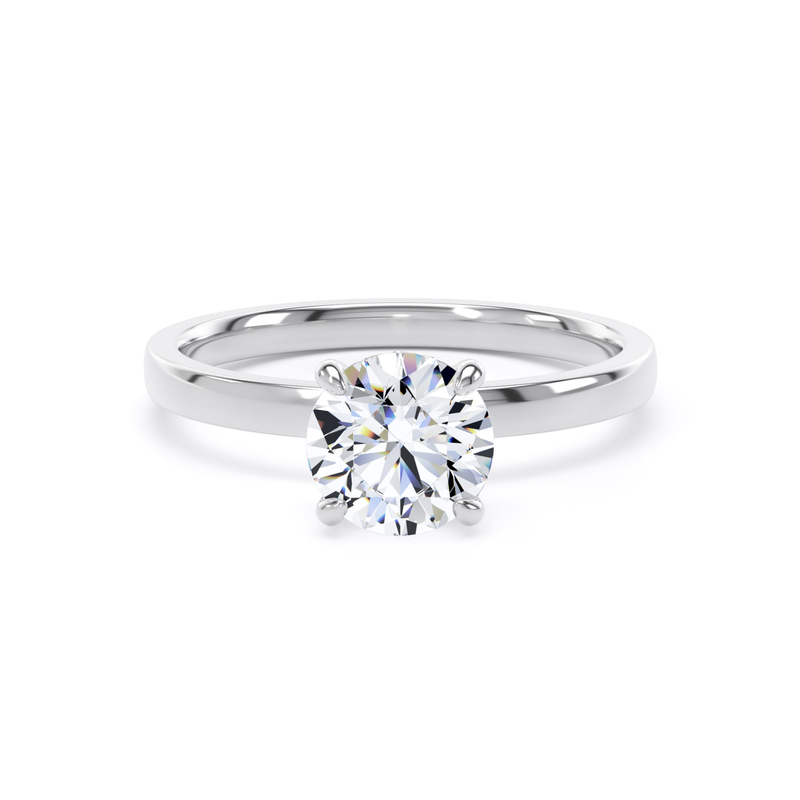
A Bridal Pair, Beautifully Balanced
See how profile, width and spacing work together when an engagement ring and wedding band are worn as one.
Frequently Asked Questions
Is a comfort-fit wedding ring always more comfortable?
No. Many people prefer the rounded interior, particularly in a wider band, but others like the settled contact of a standard fit. The better option is the one tested at the intended width, depth and size.
Should a comfort-fit ring be a different size?
Sometimes a neighbouring size feels better, but there is no reliable automatic adjustment. Compare full-width samples in the baseline size and adjacent sizes before approving the order.
Can a flat wedding ring have a comfort-fit inside?
Yes. “Flat” may describe the outside profile, while comfort fit describes the interior. Always confirm both sides of the cross-section because exterior and interior terminology can be combined.
Is comfort fit better for a wide wedding band?
The rounded interior often becomes more noticeable as width increases, so it is especially worth comparing. It is not compulsory: finger shape and personal preference still decide the result.
Can a comfort-fit wedding ring be engraved or resized?
Often yes, but the available engraving area and resizing approach depend on the ring’s material, width, depth, finish and decoration. Confirm both before manufacture.
Can I decide the fit entirely online?
You can use the builder to establish metal, width, outer profile and finish. For the most reliable result, confirm size and inner geometry with representative samples or a Kinzy consultation.
Final Thoughts on Comfort Fit vs Standard Fit
The right comfort fit vs standard fit wedding ring is not the one with the more reassuring name. It is the ring whose inner curve, width, depth and size work together on the hand that will wear it.
Start with Kinzy’s create-your-own-ring builder, record the exact configuration, then book a private consultation to compare the fit before the design moves forward.
×
WEDDING RING CONSULTATION
Tell us what you are considering.
A short, considered brief. Nothing needs to be certain yet.
This site is protected by reCAPTCHA and the Google Privacy Policy and Terms of Service apply.
WEDDING RING CONSULTATION
Choose a wedding ring that feels entirely yours.
From proportion and comfort to finish and fit, a short brief lets your Kinzy jeweller prepare considered options before your consultation.
Related Reading
- Diamond Wedding Bands London: How to Choose the Perfect Ring to Wear for Life
- Platinum vs Gold Engagement Rings: Which Metal Should You Choose?
- Low-Set vs High-Set Engagement Rings: Comfort, Presence and Wedding-Band Fit
- Tom Holland and Zendaya Wedding Rings: Why Their Quietly Coordinated Gold Bands Matter
- Cristiano Ronaldo and Georgina Rodríguez Wedding Rings: The Expert Kinzy Analysis
Articles
Other articles from Kinzy London.
Articles, Bespoke Jewellery, Engagement Rings, Gemstones
How to Add a Hidden Birthstone or Secret Diamond to an Engagement Ring
Articles, Diamond Guides, Engagement Rings, Settings
Does a Bezel Setting Make a Diamond Look Bigger or Smaller?
Articles, Craftsmanship, Engagement Rings, Settings