- Engagement Rings
- Wedding Bands
Shop by style
- Classic
- Diamond Cut
- Two Colour
- Diamond Set
- Shaped
- Vintage
- Gemstone Bands
Shop by metal
- Gemstones
- Fine Jewellery
Fine Jewellery
- About Us
- Education
29 August 2026
A Kinzy Marquise Trilogy Ring: Design and Proportion Analysis
This Kinzy marquise trilogy ring pairs a distinctive marquise centre with precisely angled trillion side stones, creating a one-of-one composition made for its owner. Kinzy shared the finished commission as an example of proportion, balance and considered bespoke design.
The exact carat weights and private brief remain personal to the client, so this ring study focuses on the design principles visible in the finished piece.
The Design at a Glance
Kinzy’s original commission post shows:
- A marquise centre stone that establishes the ring’s length and central axis.
- Trillion side stones selected to complement its outline.
- A setting balanced around the exact dimensions of all three stones.
- A one-of-one piece created through the Kinzy bespoke process.
Together, these elements create a trilogy that feels elongated, architectural and individual to its wearer.
Why the Marquise Sets the Direction
A marquise centre creates length, pointed tips and a strong central axis. It can offer impressive finger coverage for its weight, but the outline must feel balanced. Flat shoulders, uneven curves or a heavy bow tie become highly visible in a design with symmetrical side stones.
The centre therefore needs to be selected before the final mounting. Its exact length, width, depth and tip geometry determine where the trillions begin and how the claws protect it.
Read pear versus marquise engagement rings, diamond ratios and the bow-tie effect to understand the centre-stone checks.
Why Trillion Side Stones Are a Demanding Choice
Trillion diamonds have straight edges, sharp points and a geometric facet pattern. Beside a marquise, they can create a graceful transition from the long centre towards the band. They can also look abrupt if their angle, height or scale is wrong.
The pair needs close visual matching. Length, width, outline and brightness should relate, even when laboratory grades are not identical. Their inner edges must sit close enough to feel connected without creating an unsafe trap for dirt or pressure.
The wider symbolism of three-stone rings appears in Kinzy’s guide to trilogy engagement rings.
The Central Design Problem: Three Shapes, One Line
The finished ring must read as one composition rather than a marquise with two separate triangles. The trillions need to echo the centre’s outward movement while preserving its authority.
Three variables are especially important:
- Scale: side stones should support the centre without competing with it.
- Angle: their outer edges should lead naturally into the shoulders.
- Height: all three stones need a coherent top line and side profile.
These relationships explain Kinzy’s published emphasis on proportion, angle and detail. They also make this commission distinct from a standard trilogy ring category.
What the Diamond Report Tells You
A laboratory report confirms the centre stone’s measurements, carat weight, colour, clarity and other assessed characteristics. Those measurements help shape the mounting, but the balance between a marquise and two trillions must also be judged visually and at true scale.
Use the GIA versus IGI guide and Kinzy’s diamond-selection overview to understand the report alongside the character of the stone.
How Kinzy Develops the Proportions
Kinzy bespoke clients personally select their diamond or gemstone, review CAD and see a wax model before manufacture. For a marquise trilogy, those stages bring the following details into focus:
- Centre-to-side-stone spacing.
- Tip protection and claw position.
- Band taper after the trillions.
- Gallery height and wedding-band clearance.
- Life-size finger coverage.
Explore the Kinzy design process for the complete route.
CAD: Preserving the Marquise’s Authority
An enlarged CAD can make the side stones appear more dominant than they will at life size. The client should review actual millimetres and a top view that shows the complete finger span.
The side view needs equal attention. If the trillions sit too low, the three-stone line can break. If they sit too high, their points may feel exposed. The shoulders should support the composition without adding unnecessary width.
A bespoke setting differs from a made-to-order mounting because these dimensions respond to the selected stones. See Kinzy bespoke designs for the stone-led approach.
Wax: Testing Presence Before Precious Metal
A wax model cannot reproduce diamond light, but it can reveal the physical footprint of three stones. The wearer can judge whether the marquise length, side-stone spread and band taper feel elegant on the hand.
It can also expose a gallery that is taller or broader than expected. Those observations belong before casting, when changes remain controlled.
Setting the Marquise and Trillions
The marquise tips need dedicated protection. Trillion points need secure seats without heavy metal obscuring their geometry. Each claw should relate to the stone rather than forming an arbitrary repeated pattern.
The mounter and setter must coordinate because the setting of one stone affects access to the next. The structure should also avoid an exposed hard edge where a future wedding ring could rub.
Compare the design principles in engagement-ring settings explained.
Why the Setting Must Use the Actual Three Stones
Small dimensional differences become visible across a symmetrical trilogy. If a trillion is slightly deeper, wider or angled differently, a generic seat can break the top line. The mounting should therefore follow the measurements of the centre and both companions.
That stone-led method also protects the points. Claws and rails can be positioned around real girdle features rather than an idealised model. It is one reason the finished proportions can be genuinely individual even when another client chooses the same three shapes.
Aftercare for a Three-Stone Ring
A trilogy creates more claws, junctions and contact areas than a single-stone ring. Each stone should be checked for movement, and residue should be removed from the spaces between the centre and side stones.
Avoid pressing a brush aggressively into pointed settings. Arrange professional inspection after an impact or when a claw catches. Kinzy’s engagement-ring care guide explains daily cleaning and the value of annual atelier checks.
Why This Ring Is One of One
The character of this ring comes from one marquise centre stone, one carefully matched pair of trillions and the proportions created between them. Another set of stones would require a new balance, even if the wider trilogy idea remained the same.
Design Lessons from a Marquise Trilogy
- Select the marquise for its outline and movement, not carat weight alone.
- Match the side stones visually as well as geometrically.
- Review the full three-stone span at true scale.
- Protect each pointed stone through deliberate setting design.
- Plan wedding-band clearance through the side profile.
To begin a commission shaped around your own stones and proportions, reserve a private consultation or visit the Kinzy Greville Street showroom.
The Marquise Trilogy, Reconsidered
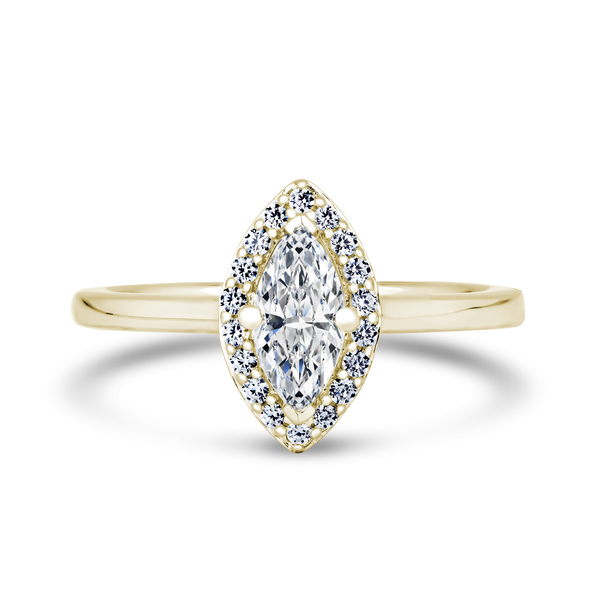
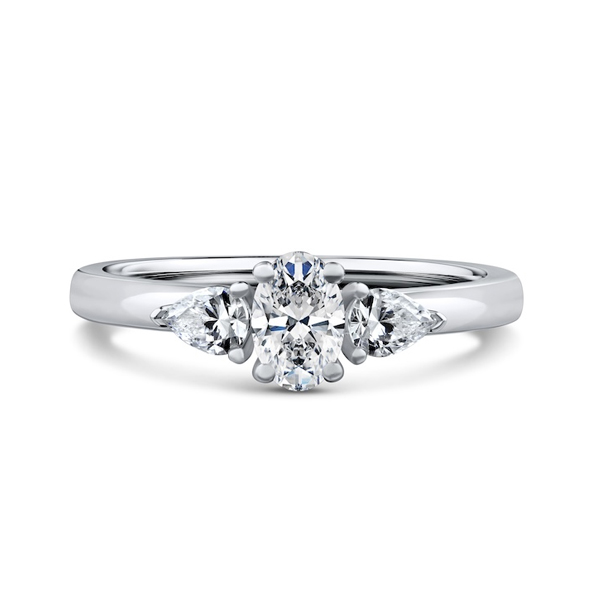
Kinzy's marquise and trilogy collection routes complement the official commission reel without inventing private stone grades or prices.
Inside a Kinzy Marquise Commission
Explore the proportions, stone relationships and hand finishing behind a Kinzy marquise trilogy ring.
Frequently Asked Questions
What defines this Kinzy marquise trilogy?
Its character comes from a marquise centre, matched trillion side stones and a setting proportioned around all three.
Can another client commission a marquise trilogy?
Yes. A new centre stone, new side stones and a different wearer would require fresh proportions rather than a literal copy.
Why review a wax model?
Wax brings the three-stone span, setting height and finger coverage to true scale before precious metal is committed.
How should a marquise tip be protected?
The setting should use deliberate tip protection and suitable metal support. The exact solution depends on the individual stone and design.
Final Thoughts on the Marquise Trilogy Ring
Final Thoughts on the Marquise Trilogy Ring
This Kinzy marquise trilogy ring shows why a trilogy is an exercise in proportion. The marquise establishes direction; the trillions control the transition; the setting unites them into one line.
It is a useful study in how three distinctive stones can feel balanced, elegant and unmistakably individual.
×
BESPOKE DESIGN BRIEF
Begin with what you know so far.
A short, considered brief. Nothing needs to be certain yet.
This site is protected by reCAPTCHA and the Google Privacy Policy and Terms of Service apply.
PERSONAL BESPOKE GUIDANCE
Shape the next detail with your Kinzy jeweller.
A short design brief gives our Hatton Garden atelier a thoughtful starting point—whether you have a clear idea or are still comparing possibilities.
Related Reading
Articles
Other articles from Kinzy London.
Articles, Bespoke Jewellery, Engagement Rings, Gemstones
How to Add a Hidden Birthstone or Secret Diamond to an Engagement Ring
Articles, Diamond Guides, Engagement Rings, Settings
Does a Bezel Setting Make a Diamond Look Bigger or Smaller?
Articles, Craftsmanship, Engagement Rings, Settings