- Engagement Rings
- Wedding Bands
Shop by style
- Classic
- Diamond Cut
- Two Colour
- Diamond Set
- Shaped
- Vintage
- Gemstone Bands
Shop by metal
- Gemstones
- Fine Jewellery
Fine Jewellery
- About Us
- Education
12 June 2026
How to Create a Bespoke Ring That Feels Truly Personal
The Kinzy Expert Guide
The Kinzy Engagement Ring Guide
A considered guide to choosing a diamond, refining the setting and creating a bespoke engagement ring that feels personal from every angle.
Diamond-led designNatural and laboratory-grown options
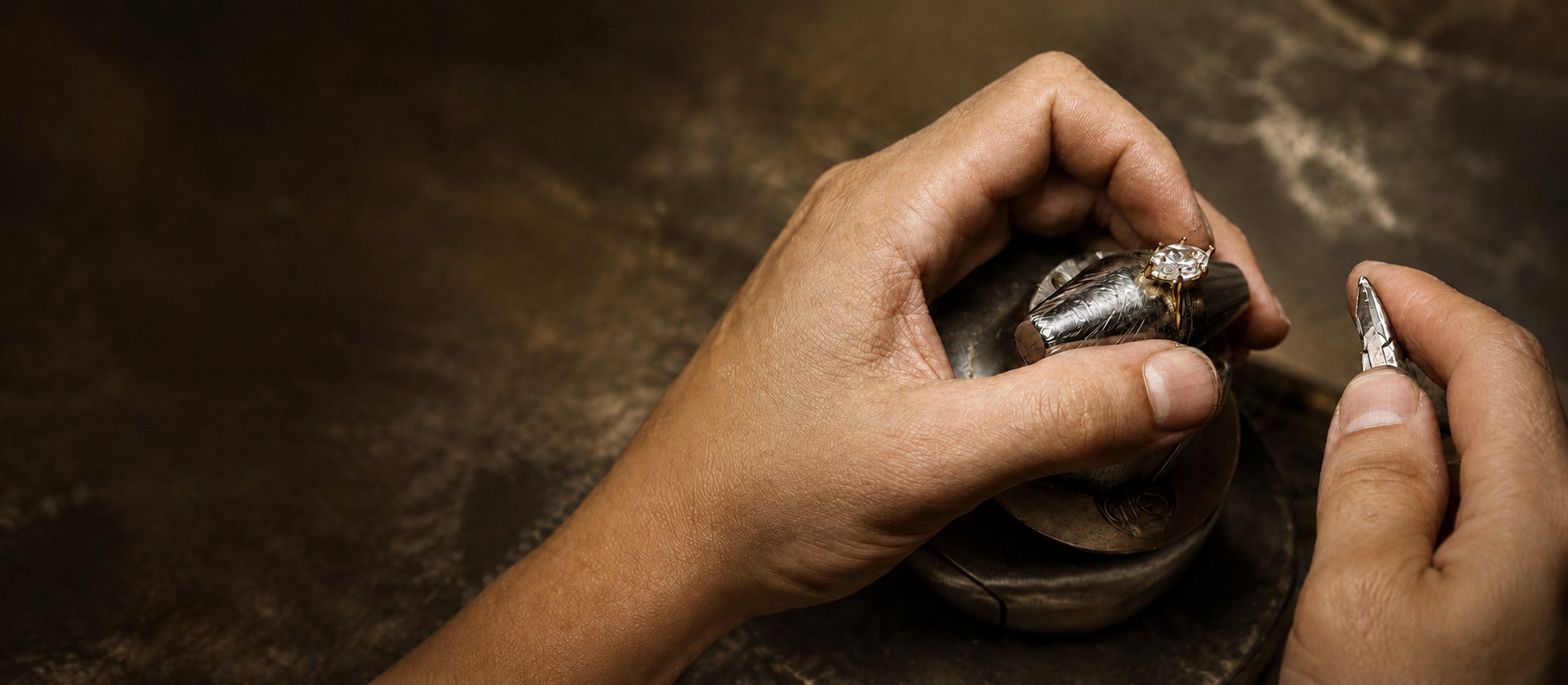
Made in Hatton GardenCrafted with our London workshop
Designed around youFrom first sketch to final polish
The quick answer
A bespoke engagement ring is designed around your chosen diamond, personal style, budget and practical needs. The strongest result balances beauty with proportion, security, comfort and the way a future wedding band will sit.
What Is a Bespoke Engagement Ring?
A bespoke engagement ring is designed and made especially for you. Rather than selecting a finished piece, you shape the ring from the beginning: the diamond, precious metal, setting, band profile, hidden details and final finish.
The result can be quietly classic, architectural, romantic or entirely individual. What matters is that each decision belongs to the same design and works for the person who will wear it every day.
The centre stone
Choose the shape, origin and specification of a natural or laboratory-grown diamond with guidance that goes beyond the basic 4Cs.
The setting
Refine the height, claws, basket, shoulders and hidden details around the proportions of the chosen stone.
The finishing details
Consider engraving, a fitted wedding band and the metal colour that feels most natural on the hand.
Why Choose a Bespoke Engagement Ring in London?
London is one of the world’s established jewellery centres, and Hatton Garden remains at the heart of the UK diamond trade. Working with a London atelier gives you access to experienced diamond specialists, skilled craftspeople and the chance to compare ideas and stones in person.
At Kinzy London, our showroom and workshop relationships allow us to guide the ring from the first conversation through to the final finish. Details such as setting height, band width, claw shape and wedding-band fit are considered as part of one piece, not as afterthoughts.
If you are planning around a proposal date, read how long a bespoke engagement ring takes to make before setting your timeline.
The Bespoke Engagement Ring Process
Every bespoke ring begins with a conversation. Some clients arrive with a clear reference; others only know how they want the ring to feel. Both are useful starting points.
- Define the brief. We discuss personal style, lifestyle, budget, preferred diamond shapes and any details with particular meaning.
- Choose the diamond. Suitable natural or laboratory-grown diamonds are compared for cut, proportion, character and value, with the grading report used as one part of the decision.
- Design the setting. The ring is developed around the selected stone, including its profile, basket, claws, shoulders, band and future wedding-band fit.
- Review the CAD. A computer-aided design shows the ring’s structure and proportions before production. Two complimentary CAD revisions are included in Kinzy’s bespoke process.
- Approve and handcraft. A wax model can be produced where useful. Once approved, the ring is made, set, polished and checked for finish and security.
How to Choose the Centre Diamond
The centre diamond sets the rhythm of the whole ring. Shape affects more than appearance: it changes how large the diamond looks, how it sits across the finger and the type of setting protection it may need.
| Diamond shape | Visual character | Design consideration |
|---|---|---|
| Round brilliant | Classic, balanced and highly brilliant | Works with almost every setting style |
| Oval | Soft, elegant and finger-lengthening | Compare outline and bow-tie appearance in person |
| Emerald cut | Refined, architectural and understated | Clarity and step-cut pattern are especially visible |
| Radiant or cushion | Bright with a modern or romantic outline | Corner shape influences the claw and halo design |
| Pear or marquise | Distinctive and elongated | Pointed ends should be properly protected |
Our Diamond Guide explains the 4Cs, shapes, grading reports and how to judge the whole stone rather than one number in isolation.
How to Choose the Setting
A setting should secure the diamond, complement its outline and feel comfortable in daily wear. The design can be minimal or detailed, but the structure must remain coherent from above, from the side and beside a wedding band.
- A solitaire gives the centre stone maximum visual focus.
- A hidden halo adds sparkle beneath the centre without changing the top view dramatically.
- A trilogy uses side stones to create width and symbolism.
- Diamond-set shoulders add light across the band, while a plain band keeps the silhouette quieter.
- A tulip or custom basket can make the side profile feel as considered as the face of the ring.
Think ahead to the wedding band. If you want a straight band to sit flush, the engagement-ring profile needs enough clearance. A fitted or shaped band can instead follow a low or sculptural setting.
Luxury is not simply size. It is the balance of proportion, finish, comfort and detail.
Natural or Lab-Grown Diamond?
Natural and laboratory-grown diamonds share the same essential chemical composition and can both be beautiful in a bespoke ring. Their origin, rarity and market context differ, so the right choice depends on what you value most.
A natural diamond may appeal for geological rarity and tradition. A laboratory-grown diamond may allow a larger or higher-specification stone within the same budget. Kinzy can show both options clearly so you can compare appearance, certification and cost without pressure. For a deeper comparison, read lab-grown vs natural diamonds.
How Much Does a Bespoke Engagement Ring Cost?
The final cost depends on the centre diamond, precious metal, setting style, total diamond weight and design complexity. The centre stone is usually the largest part of the budget; carat weight, cut, colour, clarity and certification all influence its price.
A considered brief helps allocate the budget where it is most visible. A refined solitaire may prioritise the centre stone, while a trilogy, hidden halo or intricate custom basket directs more of the spend towards setting and side stones. Bespoke design allows those decisions to be made together rather than forcing a compromise later.
Should You Design the Ring Alone or Together?
Both approaches can work beautifully. For a surprise, look at the jewellery your partner already wears, notice their preferred metal colour and gather ring-size clues discreetly. Our Ring Size Guide explains safe ways to estimate while making clear when professional sizing is best.
If your partner has a very specific style, proposing with a temporary ring and designing the final piece together can make the process part of the story. Choosing together also makes it easier to test proportions, height and comfort on the hand.
Why Choose Kinzy London?
Kinzy creates bespoke engagement rings in Hatton Garden with close attention to diamond selection, design, setting and aftercare. Working with an in-house jewellery workshop means the process can be overseen from the first brief to the final polish.
Whether you are drawn to a timeless solitaire, an oval hidden halo, an emerald-cut trilogy or a completely individual design, the aim is the same: a ring that feels personal, beautifully resolved and made for long-term wear.
Begin your ring
Create Something Entirely Personal
Meet with Kinzy at our Hatton Garden showroom to compare diamonds, discuss your ideas and shape a bespoke ring around the person who will wear it.
Articles
Other articles from Kinzy London.
Articles, Bespoke Jewellery, Engagement Rings, Gemstones
How to Add a Hidden Birthstone or Secret Diamond to an Engagement Ring
Articles, Diamond Guides, Engagement Rings, Settings
Does a Bezel Setting Make a Diamond Look Bigger or Smaller?
Articles, Craftsmanship, Engagement Rings, Settings