- Engagement Rings
- Wedding Bands
Shop by style
- Classic
- Diamond Cut
- Two Colour
- Diamond Set
- Shaped
- Vintage
- Gemstone Bands
Shop by metal
- Gemstones
- Ready To WearFine jewelleryMade to be worn.
Made to last.Diamond jewellery for every day and every occasion.Shop all jewellery →Fine jewellery
Diamond earringsPendantsBraceletsRingsShop allShop by occasion
Gifts under £1,000AnniversaryBirthdayBridal jewelleryAvailable sooner
Ready to dispatchNew arrivalsBestsellersBook an appointmentFine Jewellery
- About UsMade in LondonCrafted by people you can meet.Discover the people, workshop and personal service behind every Kinzy London piece.Meet KinzyRead our story →
About Kinzy
About KinzyOur storyClient storiesMeet your sales associateCraft & care
Our workshopDesign processLifetime Atelier CareOur guaranteesMade in our London workshopCertified diamondsLifetime carePersonal guidance - Education
Learn with Kinzy Diamond guideUnderstand the details that matter→Fit & setting guideChoose comfort and proportion→Behind the craftHow your jewellery is made→Expert guidance, clearly explained.
Practical diamond, gemstone and ring guidance to help you make a confident decision.
Explore all guides →
 Round
Round Oval
Oval Heart
Heart Marquise
 Cushion
 Pear
Pear Emerald
 Asscher
 Radiant
11 September 2026
Two-Tone Wedding Bands: How to Combine Yellow Gold, White Gold and Platinum
Two tone wedding bands solve a very modern design problem: you may love the warmth of yellow gold, wear a white-metal engagement ring and still want one wedding ring that belongs with both. The answer is not simply to place two colours together. A successful band gives each metal a clear role.
Begin with proportion, construction and the jewellery already on your hand. Once those decisions are settled, finish and detail can make the contrast quiet, architectural or deliberately bold.
What Counts as a Two-Tone Wedding Band?
A true mixed-metal band contains distinguishable precious-metal components. That is different from a ring made in one alloy with a surface plating that creates another colour. The distinction matters because plating wears, while solid-metal sections form part of the ring’s construction.
Ask for the specification in writing: which section is yellow gold, white gold or platinum; the fineness of each metal; whether any surface is rhodium plated; and how the sections are joined. Kinzy’s precious-metal comparison provides further context on how gold and platinum differ.
Choose the Dominant Metal First
Two colours do not have to occupy equal space. A yellow-gold band with narrow white edges feels warmer than a white-metal band with a fine yellow groove, even when both use the same materials. Decide which colour should be read first from normal conversation distance.
The dominant metal can connect to an engagement ring and wedding band worn together. The accent can then echo a watch, other jewellery or a partner’s ring. This creates continuity without forcing every piece to match.
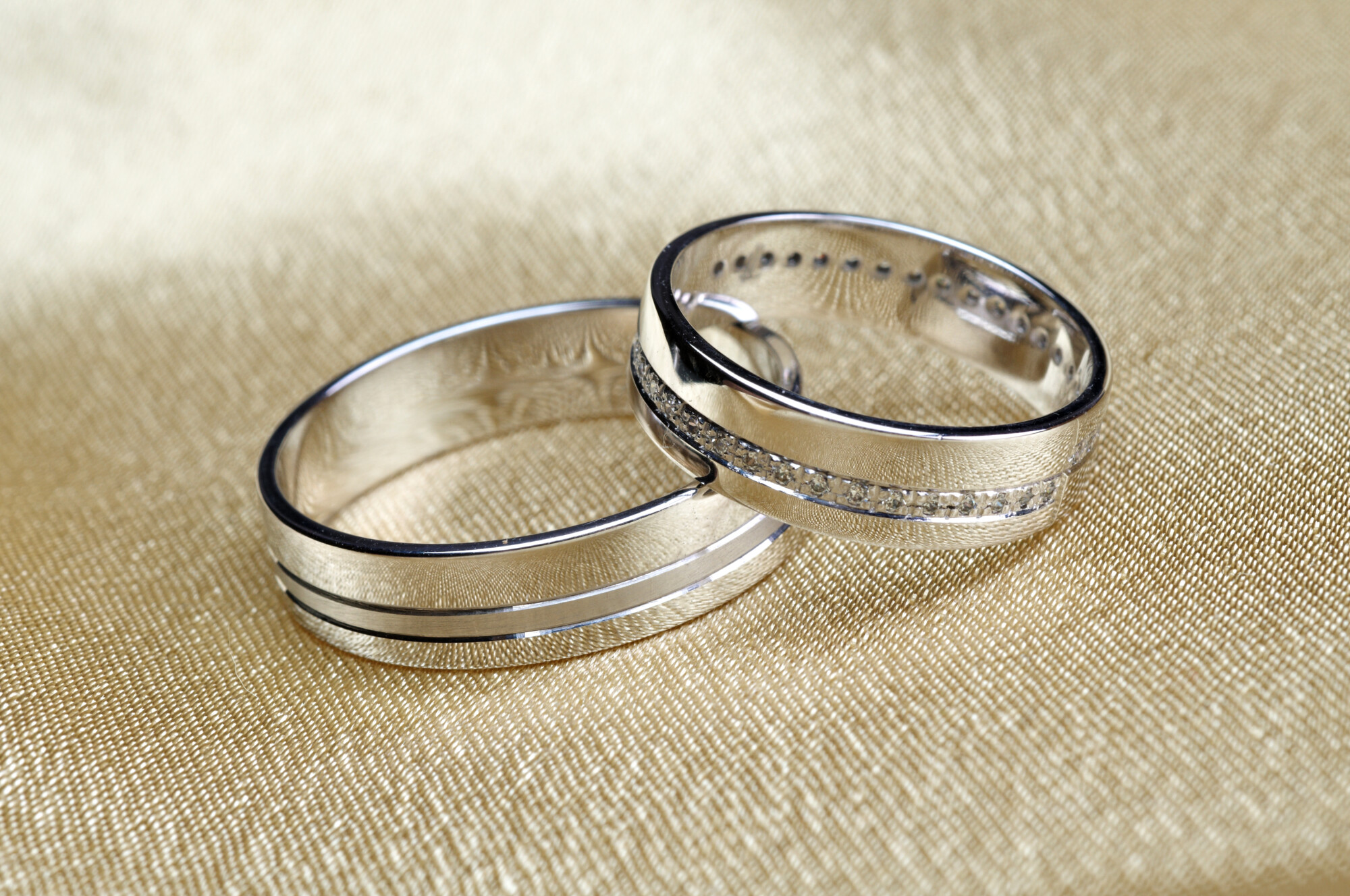
Yellow Gold and White Gold
Yellow and white gold offer the clearest like-for-like combination because both are gold alloys, although their recipes and appearance differ. The World Gold Council’s overview of gold colour and caratage explains that alloying changes both colour and working properties.
A yellow centre with white borders makes the centre look visually broader. Reversing the scheme can make a white centre feel crisp while a yellow edge provides warmth. White gold is commonly rhodium plated for a brighter white surface, so ask how that finish will be maintained and how polishing will affect the junction between colours.
If the engagement ring is white gold, repeating a white-gold edge beside it can create a continuous line. A wider yellow area can still give the wedding band its own identity. Review the broader choices in Kinzy’s platinum and gold comparison before deciding which appearance should lead.
Yellow Gold and Platinum
Yellow gold and platinum create a strong temperature contrast. Platinum is naturally white; it does not rely on rhodium plating for its colour. The two metals also behave differently as they acquire wear, so the boundary can become more characterful over time rather than remaining showroom-perfect.
That difference makes construction important. A mixed-metal ring should be designed as a coherent object, not treated as two standard bands pressed into one. A conversation about how fine jewellery is handcrafted helps reveal why joints, proportions and finishing order matter.
White Gold and Platinum
White gold and platinum are closer in colour, yet they are not visually identical. The combination is subtle and works best when texture, level or geometry makes the distinction legible. A polished platinum centre beside satin white-gold edges, for example, may create more interest through light than through colour.
If your aim is an almost monochrome band, compare the pair in daylight and indoor light. Also ask whether the white gold is plated. Otherwise a sample’s brilliant surface may suggest a degree of colour uniformity that changes as it is worn.
Five Ways to Divide the Colours
1. Central stripe
A narrow central stripe is ordered and symmetrical. It suits someone who wants the second colour to register without dominating the ring.
2. Contrasting rails
Edges in one colour frame a broader centre in another. Rails can make a simple band feel precise, but their thickness must remain deliberate after finishing.
3. Offset groove
An asymmetric line feels contemporary. It also avoids the expectation that both colours must be perfectly equal. The offset should relate to the chosen wedding-band width and profile.
4. Rotating or diagonal division
A diagonal or flowing boundary introduces movement around the finger. Because only part of the composition is visible at once, CAD views are particularly useful for understanding the whole ring.
5. Contrasting interior
A different-colour inner section creates a private detail. Ask how much of it will be visible at the edges and how the construction affects future sizing.
Let Profile and Finish Do Separate Jobs
Colour is only one layer of the design. A court, flat or softly rounded profile changes how broad the ring appears and how the edge catches light. Compare the profiles in the live wedding-band builder before using finish to compensate for a shape you do not enjoy.
Polished surfaces sharpen the colour contrast. Satin or brushed surfaces soften it and may make a broader ring feel quieter. Mixed finishes can create another boundary, but adding two metals, multiple levels and several textures risks visual noise. Usually one strong contrast and one supporting detail are enough.
Design Around the Engagement Ring
Place the bands together and inspect them from above, from the side and with the hand relaxed. The metal colour nearest the engagement-ring shank often controls whether the set feels linked. Width and height are just as important as colour.
A straight band may leave a gap around a low or projecting setting. Use Kinzy’s guides to low-set and high-set rings and engagement-ring settings to identify why it happens. A curve should solve fit, not be added merely to make two metals look more bespoke.
Understand the Hallmark on Mixed Metals
The Goldsmiths’ Company Assay Office publishes specific rules for hallmarking mixed metals. In broad terms, distinguishable components can be marked according to a defined hierarchy, with a full hallmark and, where practicable, additional fineness marks. Tiny construction details can affect what can physically be marked.
This is also why “two tone” should not be allowed to hide an unclear specification. Confirm whether the colour is produced by solid precious metal or plating and read the finished hallmark with the maker’s explanation.
Plan for Wear and Future Work
Every wedding band will collect evidence of daily wear. Polished and matt sections change differently, and the two alloys may not acquire the same surface character. This is normal, not proof that the ring has failed.
Future sizing can be more involved when colour boundaries or continuous detail must be preserved. Discuss likely sizing access before approving the design, especially for a patterned ring. Kinzy’s lifetime atelier care page explains the current assessment and servicing framework for Kinzy creations; additional work is assessed and quoted where required.
Use the Builder as a Design Brief
The Kinzy wedding-band builder is the best place to review the options currently offered online. Use it to establish width, profile, finish and the closest available two-colour direction. Save the choices that matter rather than relying on memory.
If the exact metal pairing or division is not displayed, do not assume it is available. Send the reference through the Kinzy contact page and ask what can be made, how it would be hallmarked and what the current lead time would be. A bespoke design consultation can then test the idea through the documented design process.
A Two-Tone Wedding Band Checklist
- Name the dominant metal and the accent metal.
- Confirm each metal and fineness in writing.
- Ask whether any white-gold surface is rhodium plated.
- Choose one clear colour division.
- Review width, profile and inside fit independently.
- View the band beside the engagement ring.
- Ask how sizing and refinishing would preserve the design.
- Confirm the hallmark, quote and current completion estimate before ordering.
Design a Two-Tone Wedding Band with Kinzy
Use the builder to settle the band’s width, profile and finish, then bring your preferred metal pairing to a consultation for a precise construction and hallmarking brief.
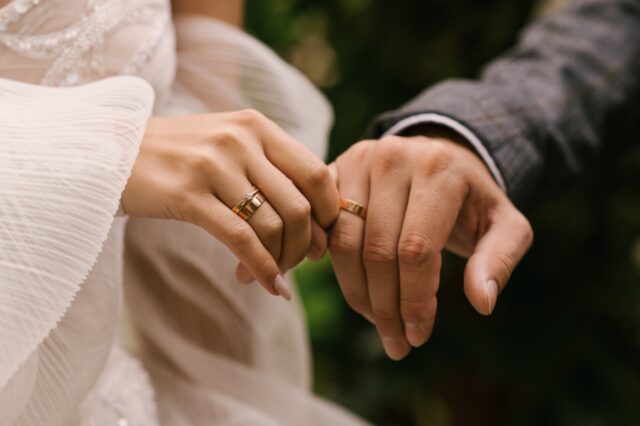
See Two-Tone Proportion on the Hand
This Kinzy wedding-ring detail shows how colour, edge definition and proportion work together at the scale the ring will be worn.
Frequently Asked Questions
Can a wedding band combine gold and platinum?
Yes, a mixed-metal design can combine distinguishable gold and platinum components. Construction, hallmarking, future sizing and the precise finenesses should be agreed before manufacture.
Does a two-tone ring have to be half one colour and half another?
No. A narrow rail, central stripe, offset groove or contrasting interior may provide a more balanced result than equal halves.
Will white gold stay the same colour as platinum?
Not necessarily. Platinum is naturally white, while white gold is an alloy and is commonly rhodium plated. Compare actual samples and ask about the finishing specification.
Can two-tone wedding bands be resized?
Some can, but colour boundaries, repeating patterns and construction can make the work more involved. Ask how the proposed design allows for future sizing before approval.
Should both partners choose the same two metals?
Only if both want to. Shared width, finish or a fine accent line can link two different rings without making them identical.
Choosing a Two-Tone Wedding Band
Two tone wedding bands look most resolved when one metal leads and the other has a specific purpose. Decide the colour relationship first, then allow profile, finish and proportion to support it.
Explore the current choices in the Kinzy wedding-band builder. For a combination not shown online, book a consultation and ask for a written construction, hallmark and care specification.
×
WEDDING RING CONSULTATION
Tell us what you are considering.
A short, considered brief. Nothing needs to be certain yet.
This site is protected by reCAPTCHA and the Google Privacy Policy and Terms of Service apply.
WEDDING RING CONSULTATION
Choose a wedding ring that feels entirely yours.
From proportion and comfort to finish and fit, a short brief lets your Kinzy jeweller prepare considered options before your consultation.
Related Reading
Articles
Other articles from Kinzy London.
Articles, Buying Guides, Engagement Rings, Ring Settings
Cathedral vs Non-Cathedral Engagement Rings: What Changes from the Side?
Articles, Buying Guides, Engagement Rings, Ring Settings
Full Bezel vs Half Bezel: Which Setting Is Right for Your Diamond?
Articles, Buying Guides, Engagement Rings, Ring Settings