- Engagement Rings
- Wedding Bands
Shop by style
- Classic
- Diamond Cut
- Two Colour
- Diamond Set
- Shaped
- Vintage
- Gemstone Bands
Shop by metal
- Gemstones
- Ready To WearFine jewelleryMade to be worn.
Made to last.Diamond jewellery for every day and every occasion.Shop all jewellery →Fine jewellery
Diamond earringsPendantsBraceletsRingsShop allShop by occasion
Gifts under £1,000AnniversaryBirthdayBridal jewelleryAvailable sooner
Ready to dispatchNew arrivalsBestsellersBook an appointmentFine Jewellery
- About UsMade in LondonCrafted by people you can meet.Discover the people, workshop and personal service behind every Kinzy London piece.Meet KinzyRead our story →
About Kinzy
About KinzyOur storyClient storiesMeet your sales associateCraft & care
Our workshopDesign processLifetime Atelier CareOur guaranteesMade in our London workshopCertified diamondsLifetime carePersonal guidance - Education
Learn with Kinzy Diamond guideUnderstand the details that matter→Fit & setting guideChoose comfort and proportion→Behind the craftHow your jewellery is made→Expert guidance, clearly explained.
Practical diamond, gemstone and ring guidance to help you make a confident decision.
Explore all guides →
 Round
Round Oval
Oval Heart
Heart Marquise
 Cushion
 Pear
Pear Emerald
 Asscher
 Radiant
21 September 2026
Thin-Band vs Wide-Band Engagement Rings: How Proportion Changes the Entire Design
Thin-band vs wide-band engagement rings create different proportions and change far more than the amount of metal visible on the finger. Band width influences how large the centre stone appears, how the setting meets the hand, how much visual space the ring occupies and how a future wedding band completes the composition.
There is no universal width that counts as delicate or substantial. The same band can look fine beside a broad halo and pronounced beside a modest solitaire. A useful comparison therefore begins with the whole ring, the wearer’s hand and the intended bridal stack—not an isolated millimetre measurement.
Thin-Band vs Wide-Band Engagement Rings: Start with Proportion
Viewed from above, the eye reads three elements together: the centre setting, the shoulders and the lower shank. A narrow band creates more contrast between diamond and metal. A wider one lets the line of the ring carry greater visual weight.
The choice should remain coherent from every angle. A delicate face-up line can still have thoughtful depth underneath, while a broad top surface can taper towards the palm. Kinzy’s overview of engagement-ring settings is a useful foundation because band width only makes sense beside the head, gallery and shoulder architecture it supports.
What a Thin Band Does Visually
A thin band tends to separate the centre stone from the finger with minimal visual interruption. That contrast can make a diamond appear more prominent, particularly in a clean solitaire. The look may feel light, refined and contemporary, but “thin” should never be treated as a synonym for better.
Very fine proportions leave less room for future polishing, some sizing work and certain setting styles. A design also needs enough material where the shoulders meet the head and where the palm receives daily contact. The right lower limit depends on the metal, finger size, centre setting and construction, so it should be resolved for the actual ring.
What a Wide Band Does Visually
A wider band makes the shank a deliberate part of the design. It can give a large centre setting a confident foundation, create pleasing coverage on a longer finger or support bold surface detail. Rather than making every diamond look smaller, it changes the balance: stone and band read more as one architectural object.
Width can remain constant or taper as it approaches the setting. A broad lower shank with refined shoulders feels different from a uniformly wide ring. Likewise, a flat outer profile looks sharper than a rounded one at the same measured width. Compare Kinzy’s guide to low-set and high-set engagement rings to see how vertical proportion alters the same face-up decision.
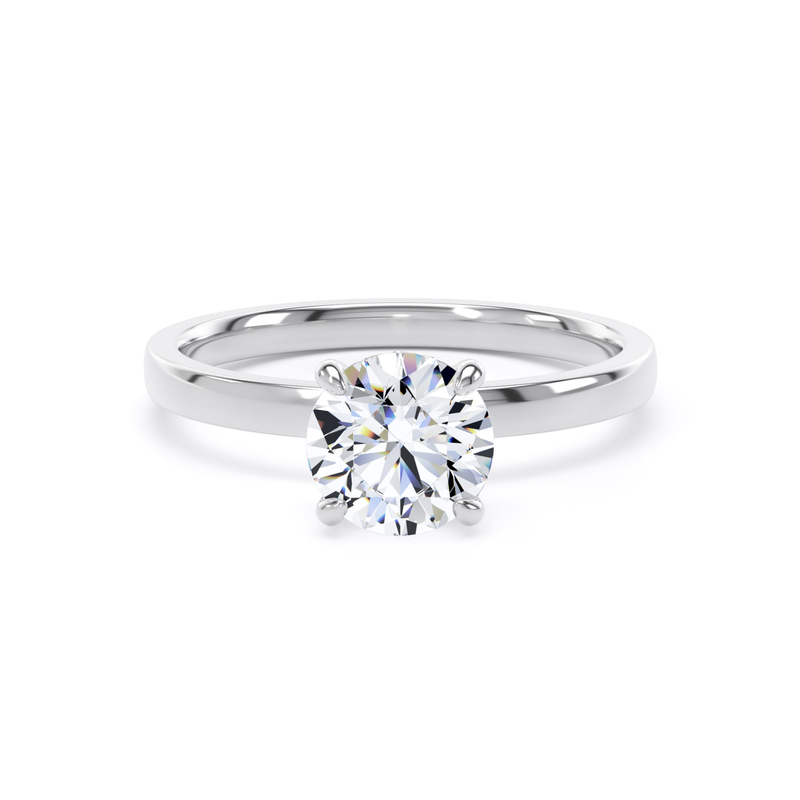
Start with the Centre Stone’s Outline
Round diamonds create a compact point of focus, whereas elongated ovals, emerald cuts and marquises already cover more of the finger. A narrow band can accentuate that length. A broader or gently tapering band may balance it. Square and rectangular stones can work beautifully with either, but the shoulder line should meet their geometry deliberately.
Browse Kinzy’s round, oval and emerald-cut engagement rings side by side. Keep the apparent spread and setting style consistent while comparing band proportions; otherwise several variables change at once.
Solitaire, Shoulder-Set and Halo Rings Need Different Balance
In a solitaire engagement ring, the polished band is a strong visual line, even when it is fine. A shoulder-set design uses diamonds to extend light away from the centre, which can make the same physical width feel less metal-heavy. A halo adds breadth around the stone and may invite a stronger shank for balance.
Do not judge width from a front-facing render alone. Inspect where the shoulders rise, split or narrow, and whether pavé finishes before the palm. Kinzy’s behind-the-scenes bespoke guide shows why proportion should be developed around the selected diamond rather than a generic silhouette.
Width and Depth Must Be Designed Together
A band is three-dimensional. Width is what you see across the finger; depth is the distance from the inner surface to the outer surface. Changing one without considering the other can alter comfort, visual weight and the room available for setting or finishing.
A very wide, very deep band may feel substantial between neighbouring fingers. A fine band that is too shallow for its construction may not deliver the intended longevity. Rounded edges, a softened inner surface and a considered transition at the palm can make meaningful differences. This is why trying the proportion on the hand is more informative than selecting from a diagram.
Finger Size and Hand Proportion Change the Result
The same measured width occupies a different percentage of a smaller or larger finger. Knuckle shape, finger length and the space between fingers also influence comfort and scale. There is no need to follow rules that prescribe a particular width for a particular hand; use them, at most, as prompts for comparison.
Try at least two meaningfully different widths in the same metal colour and setting family. Look at the hand from normal conversational distance, not only through a magnified phone photograph. A private appointment at Kinzy’s Hatton Garden shop allows those comparisons to happen in real scale.
Diamond-Set Bands Need Space for Their Setting
When shoulders carry diamonds, the chosen stones, setting method and borders all have to fit within the band. Reducing width is not simply a matter of shrinking the same arrangement. It can change the size of the accents, the visible metal between them and the transition into the centre setting.
Compare polished solitaires with shoulder-set engagement rings. Decide whether the band should recede, sparkle as a continuous line or provide a stronger metal frame. Ask where the accent stones end, because this can affect future sizing options and everyday contact at the palm.
Metal Colour Changes Apparent Width
Bright white metal can blend visually with diamonds, while yellow or rose gold may define the shank more clearly through colour contrast. Finish also matters: a highly polished surface reflects its surroundings, whereas a softer texture can read as a quieter block of colour.
Metal choice is not merely visual, so discuss construction and aftercare for the specific design. Kinzy’s platinum vs gold guide sets out the broader comparison. UK hallmarking provides independent confirmation of precious-metal fineness; the government’s consumer hallmarking guidance explains the statutory framework.
Plan the Wedding Band Before Finalising Width
An engagement ring rarely remains visually alone. A straight wedding band adds another horizontal line, and its width may either echo or contrast with the engagement ring. Two fine bands can create a delicate stack; a wider wedding band can ground a narrow solitaire; equal widths can give calm continuity.
Check total finger coverage and the relationship between profiles, not just two nominal widths. The space created by the engagement-ring gallery also determines whether the rings sit together. Kinzy’s wedding-band builder is a useful next step once the engagement-ring proportions are established.
Think Ahead to Sizing and Long-Term Care
Finger size can change, but no design should be chosen on the assumption that every future alteration will be simple. Broad bands may feel tighter than a narrow sample, while diamond coverage, engraving and shoulder construction can constrain how a ring is adjusted. Obtain a size in the intended width and ask how the exact design would be approached if alteration were needed.
Care also protects the original geometry. The GIA advises removing an engagement ring for activities that could expose it to impact or damaging chemicals in its diamond-ring protection guide. Its broader jewellery-care guidance explains why not every gem or treatment suits the same cleaning method.
A Better Way to Compare Thin and Wide Bands
- Keep the centre shape and approximate face-up size consistent.
- Compare a polished band before adding shoulder diamonds or texture.
- View thin, medium and wider options on the actual hand.
- Inspect the top, profile, palm and transition into the setting.
- Add a wedding-band sample to judge complete finger coverage.
- Confirm size, depth, metal and future-care considerations before approval.
For a made-to-measure result, Kinzy’s bespoke engagement-ring service and design process allow band proportion to be reviewed as part of the whole ring. The bespoke-ring overview also shows why those relationships should be resolved before production.
Find the Proportion That Feels Right
The band should frame the centre stone and sit naturally on the hand. At Kinzy, width, taper and depth are considered together before the design is finalised.
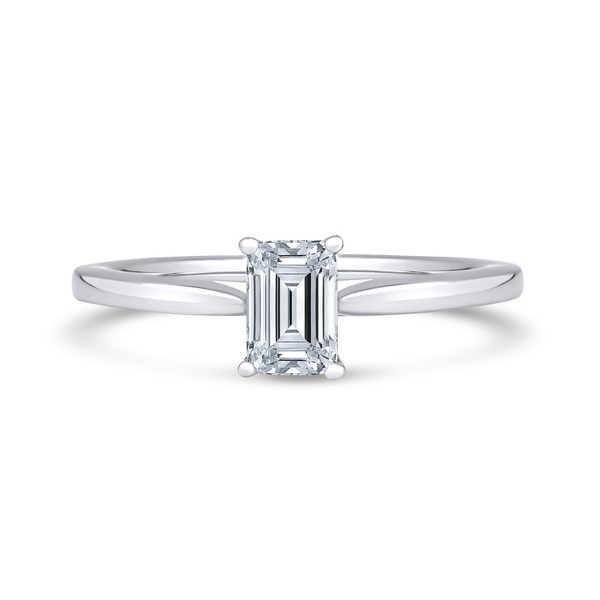
From First Line to Final Polish
See how Kinzy refines proportion through design, making and setting.
Frequently Asked Questions
Does a thin band make a diamond look bigger?
It can increase visual contrast, which may make the centre appear more prominent. Diamond outline, setting, finger size and shoulder detail also affect that impression.
Is a wide engagement-ring band more durable?
Width alone does not determine durability. Depth, metal, construction, setting joins and the wearer’s habits all matter. Compare complete specifications with a jeweller.
Can a wide band be comfortable?
Yes. Accurate sizing, edge shape, inner profile and total finger coverage are important. Try a sample close to the intended dimensions rather than relying on a narrow sizing ring.
Should engagement and wedding bands be the same width?
They can match, but they do not have to. Equal widths feel orderly; deliberate contrast can create hierarchy. Judge both rings together on the hand.
Can Kinzy alter the band proportion of a bespoke design?
Band width, taper and profile can be discussed through the Kinzy design process, subject to what is appropriate for the selected setting and materials.
Balance the Whole Ring
Band width works best when the centre setting, hand and future wedding band feel deliberately connected. Compare the complete composition, not an isolated millimetre.
Book a Kinzy consultation to compare widths in person, or begin by exploring the house’s engagement-ring collection.
×
BESPOKE DESIGN BRIEF
Begin with what you know so far.
A short, considered brief. Nothing needs to be certain yet.
This site is protected by reCAPTCHA and the Google Privacy Policy and Terms of Service apply.
PERSONAL BESPOKE GUIDANCE
Shape the next detail with your Kinzy jeweller.
A short design brief gives our Hatton Garden atelier a thoughtful starting point—whether you have a clear idea or are still comparing possibilities.
Related Reading
Articles
Other articles from Kinzy London.
Articles, Bespoke Jewellery, Buying Guides, Engagement Rings
Thin-Band vs Wide-Band Engagement Rings: How Proportion Changes the Entire Design
Articles, Buying Guides, Engagement Rings, Ring Settings
Pavé vs Channel-Set Diamond Shoulders: Sparkle, Security and Resizing Compared
Articles, Buying Guides, Engagement Rings, Ring Settings