- Engagement Rings
- Wedding Bands
Shop by style
- Classic
- Diamond Cut
- Two Colour
- Diamond Set
- Shaped
- Vintage
- Gemstone Bands
Shop by metal
- Gemstones
- Ready To WearFine jewelleryMade to be worn.
Made to last.Diamond jewellery for every day and every occasion.Shop all jewellery →Fine jewellery
Diamond earringsPendantsBraceletsRingsShop allShop by occasion
Gifts under £1,000AnniversaryBirthdayBridal jewelleryAvailable sooner
Ready to dispatchNew arrivalsBestsellersBook an appointmentFine Jewellery
- About UsMade in LondonCrafted by people you can meet.Discover the people, workshop and personal service behind every Kinzy London piece.Meet KinzyRead our story →
About Kinzy
About KinzyOur storyClient storiesMeet your sales associateCraft & care
Our workshopDesign processLifetime Atelier CareOur guaranteesMade in our London workshopCertified diamondsLifetime carePersonal guidance - Education
Learn with Kinzy Diamond guideUnderstand the details that matter→Fit & setting guideChoose comfort and proportion→Behind the craftHow your jewellery is made→Expert guidance, clearly explained.
Practical diamond, gemstone and ring guidance to help you make a confident decision.
Explore all guides →
 Round
Round Oval
Oval Heart
Heart Marquise
 Cushion
 Pear
Pear Emerald
 Asscher
 Radiant
27 September 2026
Open Gallery vs Closed Gallery Engagement Rings: Light, Cleaning and Support Explained
Comparing open gallery vs closed gallery engagement rings begins beneath the centre stone. An open gallery leaves visible spaces through the side architecture. A closed or more enclosed gallery uses a broader wall, cup or continuous area of metal. Both descriptions cover many designs, so the drawing matters more than the label.
The gallery affects the side profile, access for cleaning, how decorative detail is displayed and how the setting relates to a wedding band. It does not, by itself, tell you which diamond will sparkle more or which ring is stronger.
Where the Gallery Sits in an Engagement Ring
The gallery is the structural and visual area beneath and around the stone setting, seen most clearly from the side. It may include claws, a basket, a gallery rail, supports, decorative motifs or a smoother enclosing wall. Makers do not always use every term in precisely the same way.
Ask the jeweller to point to the element on the actual design or CAD. Kinzy’s engagement-ring settings guide provides a foundation, while the final drawing defines what “open” or “closed” means for your ring.
What an Open Gallery Looks Like
An open gallery shows spaces between structural elements. From the side, you may see the lower part of the diamond and light passing through the setting. The result can feel airy, delicate and architectural.
Open does not mean unsupported. A well-designed open setting can use a rail and carefully placed supports. Nor does it mean low: the head can still be raised. Compare the overall architecture with Kinzy’s low-set and high-set engagement-ring guide.
What a Closed Gallery Looks Like
A closed gallery uses more continuous metal beneath or around the centre. Some are fully cup-like; others are merely less open. The side can feel solid, sculptural, vintage or minimal depending on shape and finish.
Enclosure can conceal parts of the pavilion from side view and offer a surface for engraving or detail. Yet more metal does not automatically mean better support. Thickness, joints, geometry and the way the stone is held remain decisive.
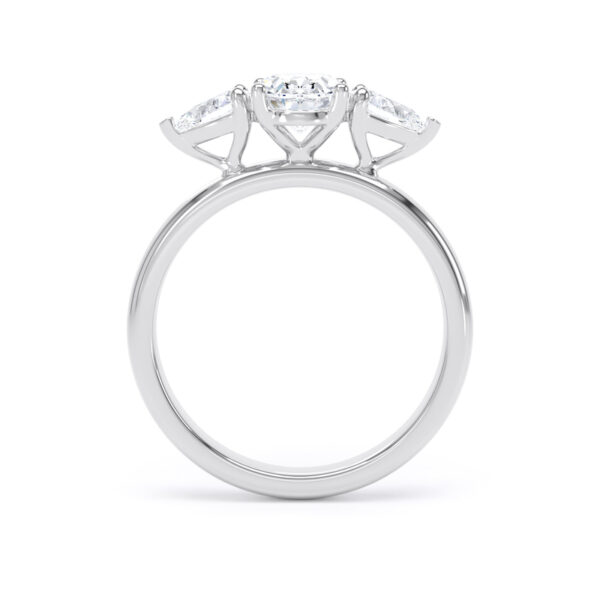
Does an Open Gallery Change What You See?
Side openings can change how a ring looks in profile, but they do not guarantee more face-up brilliance. The diamond’s cut, cleanliness and complete setting all influence what you see.
The grading report can document cut information for relevant shapes, but it does not grade your gallery design. Kinzy’s GIA vs IGI guide helps separate laboratory information from the visual assessment of a finished ring.
A closed gallery can also reflect colour into the stone or create a distinctive dark-and-light frame from the side. Compare the actual diamond in representative settings rather than accepting “more open equals more sparkle” as a rule.
Cleaning Access Is a Real Difference
Open spaces can give a soft brush and rinse water better access to the underside of the centre stone. That can make ordinary cleaning more straightforward. They can also allow lotion, soap and dust to enter from several directions, so openness does not make a ring self-cleaning.
A closed gallery may shield part of the pavilion from direct contact yet make residue harder to reach if there are narrow internal spaces. Ask how the actual design should be cleaned. GIA’s jewellery-care guidance cautions that not every gem or treatment is suitable for ultrasonic cleaning and recommends professional judgement.
Support Depends on Engineering, Not Visual Mass
A broad wall can look reassuring, but appearance alone cannot confirm how forces move through the head and shank. An open basket can be extremely coherent when the claws, rail and supports are correctly proportioned. A closed cup can still be weak if it is too thin or poorly joined.
Ask who controls the transition from CAD to bench. Kinzy’s design process, handcrafted-jewellery overview and craftsmanship page show why finishing and setting cannot be judged from a silhouette alone.
Gallery Rail and Gallery Openness Are Different Questions
A gallery rail is a band of metal that can connect and support claws around the setting. An open gallery can include a rail, with spaces above or below it. A closed gallery may use a broader continuous wall instead.
Therefore, do not ask simply, “Is it open?” Ask where the supports are, how the claws connect and which parts are decorative. That keeps this decision distinct from the separate question of an individual setting style.
How the Gallery Changes Ring Height
Some open designs display a tall, airy basket; others sit low. Some closed cups sit close to the finger; others are elevated. Gallery openness does not set height by itself.
Inspect the distance between finger, lower diamond, support structure and top of the stone. A higher setting can create more space for a straight wedding band, but it also changes projection. The Kinzy height comparison explores that trade-off directly.
Wedding-Band Fit May Decide the Answer
The lower gallery and shoulders determine whether a straight wedding band can approach the engagement-ring shank. A projecting closed wall or low basket may create a gap. An open space does not automatically guarantee clearance because supports can occupy the same path.
Bring the actual engagement ring when selecting a wedding band. Review Kinzy’s wedding-band overview, explore current band profiles in the wedding-band builder and ask for the pair to be assessed from the side.
Open Galleries Can Carry Hidden Detail
The spaces beneath a stone may frame a small motif, a secret diamond or metalwork visible only from the side. A more closed surface may allow engraving or a stronger block of colour. Detail should not crowd cleaning access or weaken structural elements.
If personal meaning is the goal, Kinzy’s personalised engagement-rings article offers context. A bespoke consultation can then test the motif in the actual gallery rather than attaching it as an afterthought.
Which Is Better for Coloured Gemstones?
There is no universal answer. An open gallery may reveal more of the gemstone’s side colour. A reflective or coloured backing can alter appearance, sometimes intentionally. Gem durability, treatments, transparency and cleaning needs also vary.
Ask for the stone identity and treatment information before choosing enclosure. Explore Kinzy’s gemstone selection and use a report or authoritative care source appropriate to the chosen gem.
Questions to Ask at Design Approval
- Which exact part of this drawing is the gallery?
- How much of the pavilion is visible from the side?
- Where are the structural supports and rail?
- How should the underside be cleaned?
- Does the design create inaccessible pockets?
- What is the total setting height?
- Can the intended wedding band approach the shank?
- Are decorative openings large enough to finish cleanly?
- How will the final ring differ visually from CAD?
- What inspection and care schedule applies?
Choose with the Whole Ring in View
Select an open gallery if you enjoy visible architecture, side views and cleaning access, provided the design offers appropriate support. Choose a more closed gallery if you prefer visual mass, a shielded side or a surface for detail, after understanding access and pairing.
Do not decide from a single side-profile image. View the ring from above, side and three-quarter angles. Kinzy’s consultation process and sales-associate guide help organise those questions.
The Architecture Beneath the Stone
The gallery shapes the ring’s side profile, cleaning access and relationship with a wedding band. Kinzy can help you compare those details in a finished design.
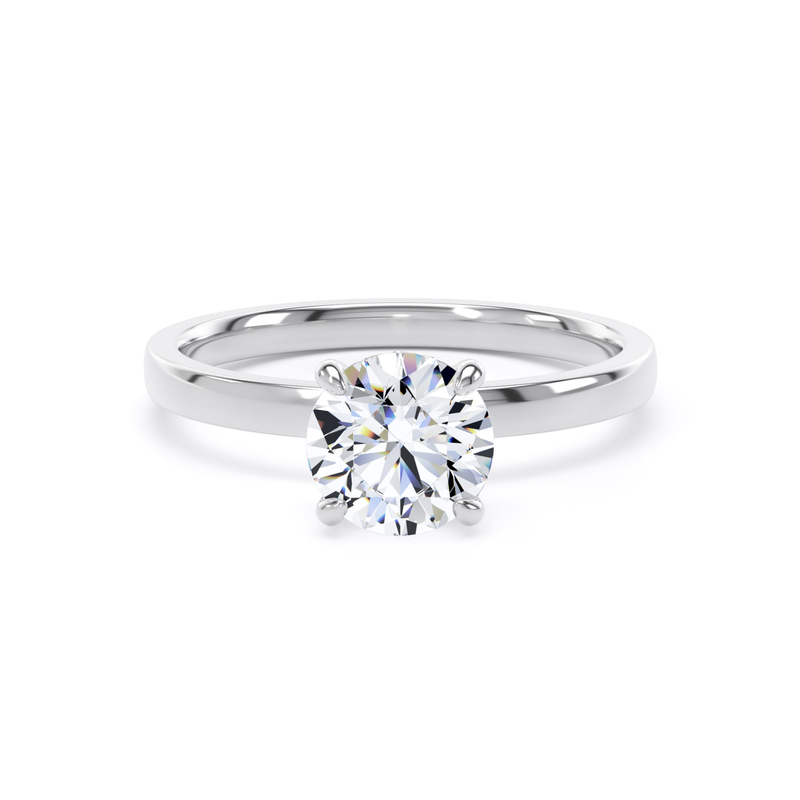
From CAD to Finished Jewellery
See how the gallery is resolved through design, setting and final polish.
Frequently Asked Questions
Does an open gallery make a diamond sparkle more?
Not automatically. Openness changes side access and appearance, while face-up light return depends strongly on diamond cut and the complete setting.
Is a closed gallery stronger?
Not simply because it contains more visible metal. Strength depends on dimensions, supports, joints, alloy, workmanship and the stone-setting design.
Which gallery is easier to clean?
An open gallery often gives better brush and rinse access, but it still admits residue. Follow care advice for the exact stone and setting.
Can a straight wedding band fit beneath an open gallery?
Sometimes, but supports and setting height can still block the band. Assess the real side profile with the intended wedding ring.
Can I add engraving to a closed gallery?
Potentially, if there is suitable visible metal and the detail does not compromise construction. Feasibility must be confirmed in the design.
Choose the Gallery in Profile
Compare open and closed galleries through side character, cleaning access, structural logic, setting height and wedding-band clearance—not a simple “sparkle versus protection” label.
Use Kinzy’s bespoke process to approve the exact architecture, book a consultation and explore the accompanying band in the wedding-ring builder.
Related Reading
Articles
Other articles from Kinzy London.
Articles, Diamond Guides, Engagement Rings, Settings
Does a Bezel Setting Make a Diamond Look Bigger or Smaller?
Articles, Craftsmanship, Engagement Rings, Settings
What Is a Gallery Rail—and Why Can It Matter for Centre-Stone Security?
Articles, Design Guides, Engagement Rings, Settings