- Engagement Rings
- Wedding Bands
Shop by style
- Classic
- Diamond Cut
- Two Colour
- Diamond Set
- Shaped
- Vintage
- Gemstone Bands
Shop by metal
- Gemstones
- Ready To WearFine jewelleryMade to be worn.
Made to last.Diamond jewellery for every day and every occasion.Shop all jewellery →Fine jewellery
Diamond earringsPendantsBraceletsRingsShop allShop by occasion
Gifts under £1,000AnniversaryBirthdayBridal jewelleryAvailable sooner
Ready to dispatchNew arrivalsBestsellersBook an appointmentFine Jewellery
- About UsMade in LondonCrafted by people you can meet.Discover the people, workshop and personal service behind every Kinzy London piece.Meet KinzyRead our story →
About Kinzy
About KinzyOur storyClient storiesMeet your sales associateCraft & care
Our workshopDesign processLifetime Atelier CareOur guaranteesMade in our London workshopCertified diamondsLifetime carePersonal guidance - Education
Learn with Kinzy Diamond guideUnderstand the details that matter→Fit & setting guideChoose comfort and proportion→Behind the craftHow your jewellery is made→Expert guidance, clearly explained.
Practical diamond, gemstone and ring guidance to help you make a confident decision.
Explore all guides →
 Round
Round Oval
Oval Heart
Heart Marquise
 Cushion
 Pear
Pear Emerald
 Asscher
 Radiant
25 September 2026
Compass Claws vs Corner Claws: How Prong Placement Changes a Diamond’s Shape
A compass claws vs corner claws decision can make two four-prong engagement rings feel surprisingly different. The number of claws remains the same; their orientation changes. Place them at the north, south, east and west axes and the setting reads as a compass. Rotate them towards the diagonals or natural corners and the eye reads another outline.
Terminology varies between jewellers, so a name is not enough. Ask to see the actual stone from above. Identify where each claw touches the girdle, how much of the edge remains visible and whether the placement follows—or deliberately challenges—the diamond’s geometry.
What Are Compass Claws?
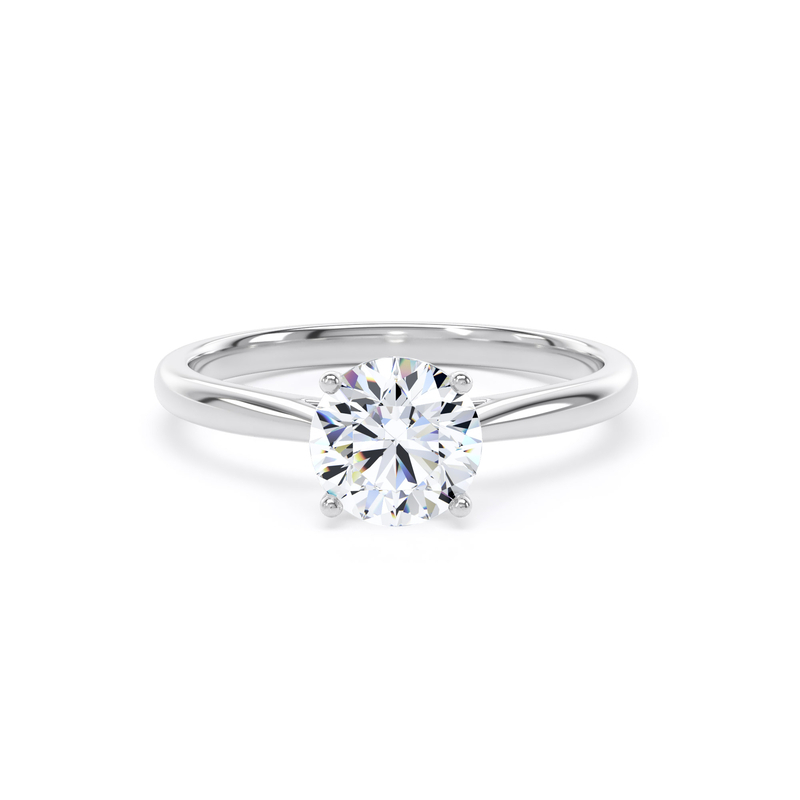
On a round stone, compass claws are positioned at roughly 12, 3, 6 and 9 o’clock. They establish a clear vertical and horizontal axis. On an oval, a related orientation places claws at the two ends and the midpoints of the long sides, although the exact engineering must suit the individual diamond.
The placement creates four open diagonal quadrants. Because the metal marks the cardinal points, a round outline may feel more graphic or subtly squared-off to the eye. The stone has not changed; the visual punctuation around it has.
What Are Corner Claws?
For a round diamond, corner or diagonal claws sit between the cardinal axes—approximately around 1:30, 4:30, 7:30 and 10:30. They frame the stone like the corners of an imagined square while leaving the top, bottom and side midpoints open.
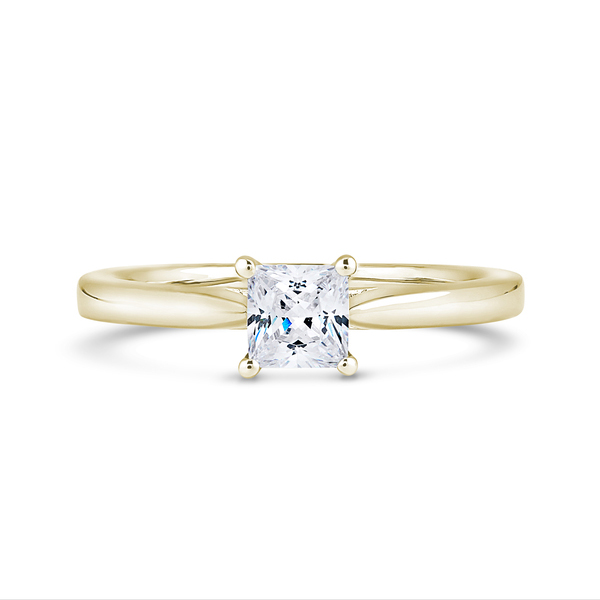
For a princess cut, “corner claws” means something more literal: the claws align with the diamond’s actual pointed corners. Emerald, radiant and Asscher cuts have clipped or softened corners, and their prongs are normally planned around those real edges rather than a clock-face convention.
Four Claws, Two Different Round-Diamond Silhouettes
Compass placement emphasises up-down and side-to-side directions. The four claw tips can interrupt the circle at its widest axes, giving the centre a precise, contemporary rhythm. Diagonal placement leaves those widest points unobstructed, so the eye may follow more of the uninterrupted circular edge.
Neither orientation universally makes a round diamond look larger. Claw thickness, head design, metal colour, stone diameter and contrast against the finger all matter. Compare them at the same viewing distance and with the same apparent claw size.
Compass Claws on an Oval Diamond
An oval has a long axis and a short axis, so cardinal placement makes those directions unmistakable. Claws at the ends can punctuate length, while side claws mark maximum width. The result can feel crisp and symmetrical.
However, an oval’s girdle is not a standard template. Length-to-width ratio, shoulder fullness and girdle variation affect where claws can be seated appropriately. Explore Kinzy’s oval engagement rings, then ensure the head is designed around the selected diamond rather than an assumed outline.
Corner Placement on Princess and Rectangular Diamonds
On a princess cut, the four points define the square. Placing claws at those corners preserves that geometry and provides metal around vulnerable areas. The GIA explains that pointed corners can be more susceptible to chipping and recommends protective settings, including V-shaped prongs, in its research article on protecting diamonds from chipping.
This is why a four-claw princess setting is not simply a rotated version of a round one. The placement responds to functional points in the stone. Browse Kinzy’s princess-cut engagement rings and inspect the corner treatment in close view.
Emerald and Radiant Cuts Need Their Own Reading
Emerald and radiant diamonds usually have four clipped corners rather than four sharp points. Corner-aligned claws can reinforce the octagonal character while leaving the long step-cut or brilliant-faceted sides open. Their width and angle influence whether the setting feels delicate or architectural.
A strict north-south-east-west arrangement may not protect or hold every rectangular outline appropriately. The setting should follow the actual girdle and corner geometry. Kinzy’s emerald-cut engagement-ring collection offers useful examples of how different heads frame the same broad shape family.
Pear, Marquise and Heart Shapes Need Different Claw Positions
Pointed fancy shapes need protection at their vulnerable tips and balanced support around an asymmetric or elongated outline. A pear, for example, combines one point with one rounded end. A marquise has two points. Calling a layout “compass” does not resolve those different needs.
For these shapes, begin with the exact diamond and an appropriate setting plan. View Kinzy’s pear and marquise engagement rings to compare how point protection becomes part of the silhouette.
Claw Shape Amplifies the Placement
Round claws create soft dots of metal. Fine talon claws point inward and can echo angular facets. V-claws wrap a corner or point. Double claws add a paired rhythm. Two rings with identical compass orientation can therefore look quite different if the claw tips change shape.
Ask for close views at realistic scale. A magnified image is useful for judging finish, but it can make every claw look dominant. Return to normal viewing distance to understand the overall balance.
Metal Colour Can Hide or Highlight the Compass
White metal tends to merge visually with a colourless diamond, allowing the outline to remain continuous. Yellow or rose gold claws can create deliberate points of contrast. Some designs use a different metal colour for the head and shank, which changes the apparent prominence again.
Choose metal around the complete construction and desired maintenance, not claw visibility alone. Kinzy’s platinum vs gold engagement-ring guide provides the broader comparison, while UK hallmarking guidance explains independent fineness marks.
Placement Is Not the Same Question as Four vs Six Claws
Compass and corner layouts commonly describe four-claw orientation. Four vs six asks how many holding points surround the stone. Mixing the questions makes comparison difficult because both outline and claw count change at once.
First decide whether four claws are appropriate for the selected stone and design. Then compare their orientation. If considering six, use Kinzy’s separate four-claw vs six-claw guide to evaluate that structural and visual decision on its own terms.
Security Depends on the Complete Head
A symmetrical top view does not prove a secure setting. Claw dimensions, bearings, gallery support, metal, contact with the girdle and quality of execution all contribute. Each claw must suit the actual diamond rather than merely occupy a pleasing clock position.
Kinzy’s behind-the-scenes bespoke guide explains why measured stone dimensions matter. This is particularly important for fancy shapes, whose outlines can vary even when their length-to-width ratios sound similar.
How Claw Orientation Affects the Rest of the Ring
A north-south claw can align with the ring’s long axis and gallery supports. Side claws may meet cathedral shoulders or sit independently above them. In a diagonal arrangement, the open cardinal points can create a clearer sightline from the band into the centre stone.
View the profile as well as the top. A beautiful face-up compass can have a simple basket or an elaborate under-gallery. Kinzy’s setting guide and height comparison help separate these other variables from claw orientation.
Use CAD and Wax for the Right Questions
CAD can rotate the claw layout around a digital model of the chosen centre and reveal how much outline is interrupted. Compare identical views, keeping claw shape and size constant. Ask for both a true top view and a normal perspective.
A wax model can communicate overall scale, but fine claws may be represented differently from their finished metal form. Kinzy’s design-process overview and bespoke-ring guide explain how to use each stage without confusing representation with the finished ring.
A Compass vs Corner Claw Checklist
- Confirm the exact centre stone, including its outline and girdle.
- Keep claw count, thickness and tip shape constant for the first comparison.
- View both orientations directly from above at the same scale.
- Notice whether you prefer defined axes or open cardinal edges.
- Check that corners and points receive appropriate protection.
- Inspect how the claws connect to the gallery and shoulders.
- Review a realistic rendering and the finished setting standard.
Through Kinzy’s design process, these details can be evaluated as part of the whole composition. A private consultation allows you to compare orientation around the actual shape you prefer.
Aftercare for Any Claw Setting
Check for new catching, movement or a visible change in claw alignment. Do not keep wearing a ring if the centre stone appears loose. The GIA recommends regular inspection of prongs in its engagement-ring protection guidance.
GIA’s broader jewellery-care guide explains why different gems and treatments require different cleaning choices. Kinzy clients can review the house’s current Lifetime Atelier Care information.
A Small Rotation, a Different Silhouette
Claw placement can sharpen, soften or lengthen the way a diamond reads. Kinzy refines the orientation around the exact stone, gallery and shoulders.
See the Setting Take Shape
See how a precise setting detail is carried from design to finished Kinzy ring.
Frequently Asked Questions
Are compass claws always north, south, east and west?
That is the usual meaning on a symmetrical stone, but terminology varies. Confirm the actual top-view placement with the jeweller.
Do compass claws make a round diamond look square?
They can give it a more graphic, axis-led impression because the claw tips mark four cardinal points. The underlying diamond remains round, and claw size affects the strength of the effect.
Are corner claws better for princess-cut diamonds?
Princess corners require deliberate protection. Appropriate corner or V-shaped prongs are commonly used, but the complete setting must be made for the actual stone.
Is compass placement more secure?
Not inherently. Security depends on stone shape, correct placement, bearings, claw dimensions, gallery support, metal and workmanship.
Can Kinzy show both orientations before manufacture?
Discuss comparative views through Kinzy’s design process; what is appropriate will depend on the selected stone and setting.
Choose the Claw Map for the Diamond
Compass and corner placements create different outlines. The final arrangement should serve both the shape you want to see and the setting needs of the exact diamond.
Explore Kinzy engagement rings or book a private consultation to compare claw maps around your preferred centre shape.
Related Reading
Articles
Other articles from Kinzy London.
Articles, Diamond Guides, Engagement Rings, Settings
Does a Bezel Setting Make a Diamond Look Bigger or Smaller?
Articles, Craftsmanship, Engagement Rings, Settings
What Is a Gallery Rail—and Why Can It Matter for Centre-Stone Security?
Articles, Design Guides, Engagement Rings, Settings