- Black Friday
- Engagement Rings
- Wedding Bands
Shop by style
- Classic
- Diamond Cut
- Two Colour
- Diamond Set
- Shaped
- Vintage
- Gemstone Bands
Shop by metal
- Gemstones
- Fine Jewellery
Fine Jewellery
- About Us
- Education
17 September 2026
Bezel-Set vs Claw-Set Engagement Rings: Security, Light and Style Compared
Bezel-set vs claw-set engagement rings differ in far more than the line around a diamond. It determines how much of the stone’s girdle is covered, where impacts may reach it, how easily the setting catches, how the outline reads and what must be inspected through years of wear.
Neither construction is automatically right for everyone. A refined bezel can protect more of the edge and create a clean silhouette. Well-proportioned claws reveal more of the diamond and give the setting a lighter visual rhythm. The correct choice begins with the individual stone, the design beneath it and the way the ring will be worn.
Bezel-Set vs Claw-Set Engagement Rings in One Minute
- Bezel setting: a rim of metal is worked over all or part of the diamond’s girdle. A full bezel follows the complete perimeter.
- Claw setting: separate metal claws, also called prongs, contact the diamond at selected points and leave much of the edge and side visible.
GIA’s overview of diamond solitaire settings describes both structures: a bezel surrounds the stone, while prongs rise from the setting to secure it at discrete positions. That simple distinction drives the rest of the comparison.
Security: Coverage Is Not the Whole Answer
A full bezel provides a continuous metal border around the girdle. It can shield more of the diamond’s edge from direct knocks and is particularly useful when a design calls for a smooth perimeter. GIA’s guidance on protecting diamonds from chipping notes that bezels, partial bezels and V-shaped prongs can protect vulnerable points and corners.
Claws protect at chosen locations. Their number, thickness, shape, alignment and contact with the crown all matter. A four-claw setting is not inherently careless, and a bezel is not immune to distortion. Security depends on suitable engineering, accurate setting and continuing inspection.
For a closer claw-only decision, compare four-claw and six-claw engagement rings. The present question is different: whether you want a continuous or interrupted metal boundary around the centre stone.
Does a Claw Setting Let in More Light?
Claws expose more of the diamond’s sides, which can make the ring look open and airy. Yet the common claim that a diamond needs light to enter through every side is too simple. In normal viewing, much of a well-cut diamond’s visible brightness comes from light entering through the crown and returning towards the eye.
A heavy or poorly proportioned bezel can obscure part of the face-up stone. A fine bezel should be designed around the exact diamond and leave the crown and table appropriately visible. Cut quality, cleanliness and viewing conditions often matter more to brightness than the setting label by itself.
Use the diamond certification guide to separate report information from visual assessment, and review why individual diamonds may be rejected. A setting cannot transform weak light performance into an exceptional stone.
How Each Setting Changes Apparent Size
Claws interrupt the outline at a few points, allowing the remaining edge to read directly. Fine claws in a white metal may visually recede, while broader or contrasting claws become more noticeable. The diamond can appear lightly suspended.
A bezel adds a deliberate frame. In a matching white metal it can extend the pale outline; in yellow or rose gold it can create contrast. GIA explains in its guide to settings and apparent diamond size that a bezel can make the circumference appear larger, but proportion is decisive. Too much metal may make a smaller stone feel enclosed rather than amplified.
Style: Airy Definition or Architectural Frame
Claw settings range from traditional to highly sculptural. The claws may be rounded, pointed, tab-like or shared with a wider gallery. They can emphasise symmetry and height without drawing a complete line around the diamond.
A bezel often feels smooth, graphic and contemporary, although the technique is not limited to modern design. Its rim can echo a round, cushion, oval or angular outline. The article on east-west engagement rings shows how orientation and a bezel or half-bezel can make structure part of the visual idea.
Compare both options with Kinzy’s live engagement-ring collection, then use the general settings guide for context. This article remains focused on the metal-to-diamond boundary, not every setting family.
Height, Snagging and Everyday Wear
A bezel can create a smoother edge around the stone and may catch less readily than projecting claws. That does not guarantee a low ring: a bezel may still sit on a raised cathedral or gallery. Conversely, a carefully finished claw setting can sit relatively low.
Separate the holding method from the vertical architecture. Kinzy’s low-set versus high-set guide explains the height decision. If gloves, knitwear or frequent hands-on work are important, inspect the complete side view and not merely the top.
Diamond Shape Changes the Recommendation
Round diamonds
A round outline works naturally with a continuous bezel and with four or six evenly placed claws. The choice is therefore driven strongly by style, height and the degree of edge coverage you prefer. See how shape changes the whole composition in round versus oval engagement rings.
Oval and cushion diamonds
Both shapes can look fluid in a fine bezel or light in claws. Their precise outline varies from stone to stone, so a bezel made around the chosen diamond is important. Compare soft silhouettes through Kinzy’s oval versus cushion guide.
Emerald and other step cuts
A bezel can reinforce the architectural perimeter of an emerald cut, while corner claws retain a more open side view. Because the large facets reward considered clarity and proportion, study oval versus emerald-cut diamonds before treating the setting as an isolated decision.
Pears, marquises and pointed corners
Points deserve purposeful protection. A full or partial bezel may cover them; a claw design may use V-shaped elements or other shape-specific supports. The pear versus marquise guide explains how their vulnerable ends and proportions differ.
Cleaning Access
Open claw galleries can provide direct access beneath the stone, although baskets and shoulder details vary. A bezel may collect residue where metal meets the diamond and can limit brush access at parts of the perimeter. An open underside can still make a bezel practical to clean.
Follow the Kinzy engagement-ring care guide and avoid assuming every ring suits the same cleaning method. Dirt affects visible brightness whatever the setting.
Inspection and Maintenance
Claws can wear, catch, move or lift. A routine inspection should check every contact rather than waiting for the diamond to rattle. GIA’s diamond ring protection guidance recommends regular prong checks and explains warning signs such as movement or gaps.
A bezel also requires inspection. Damage or thinning can disturb the continuous edge, and repair may require skilled access around the stone. Neither design should be sold as “maintenance-free”. Review Kinzy’s current lifetime atelier care and follow the terms and service schedule that apply to your ring.
Resizing and Future Alterations
The centre setting is only one part of resizing. A plain lower shank may provide workable space, while diamonds around the band, unusual shoulders or an all-round design can narrow the options. The bezel-versus-claw choice alone does not determine whether a ring can be resized.
Ask for the likely sizing range before manufacture, especially if the design has diamond shoulders. A bespoke or made-to-order route can address the correct size and proportions from the start.
Metal Choice
The setting metal affects colour, contrast and the engineering available to the designer. A white-metal head can recede around a colourless diamond; a yellow-gold bezel can become a deliberate frame. Mixed-metal decisions should be specified, not assumed from a rendering.
Read platinum versus gold, then view physical references where possible. The finished bezel or claws must be proportioned for the chosen metal, stone and construction.
Questions to Ask at the Design Stage
- Will the setting cover the complete girdle or only selected sections?
- Which edges, corners or points remain exposed?
- How high will the diamond sit from the finger?
- Can I see the exact side and three-quarter profile?
- How will I clean beneath and around the stone?
- What should be checked during routine servicing?
- Will a straight wedding band sit beside the setting?
- What future resizing range is anticipated?
- How will metal colour change the apparent outline?
Compare Bezel and Claw Settings with Kinzy
These two Kinzy designs make the differences in metal coverage, diamond outline and side profile clear before a consultation.
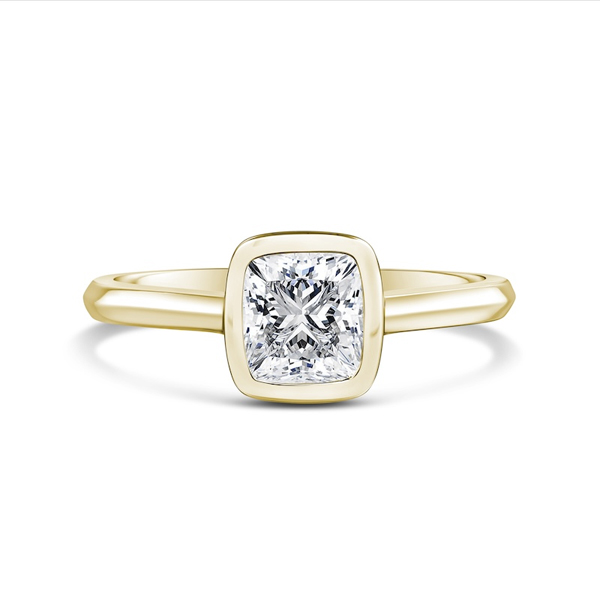
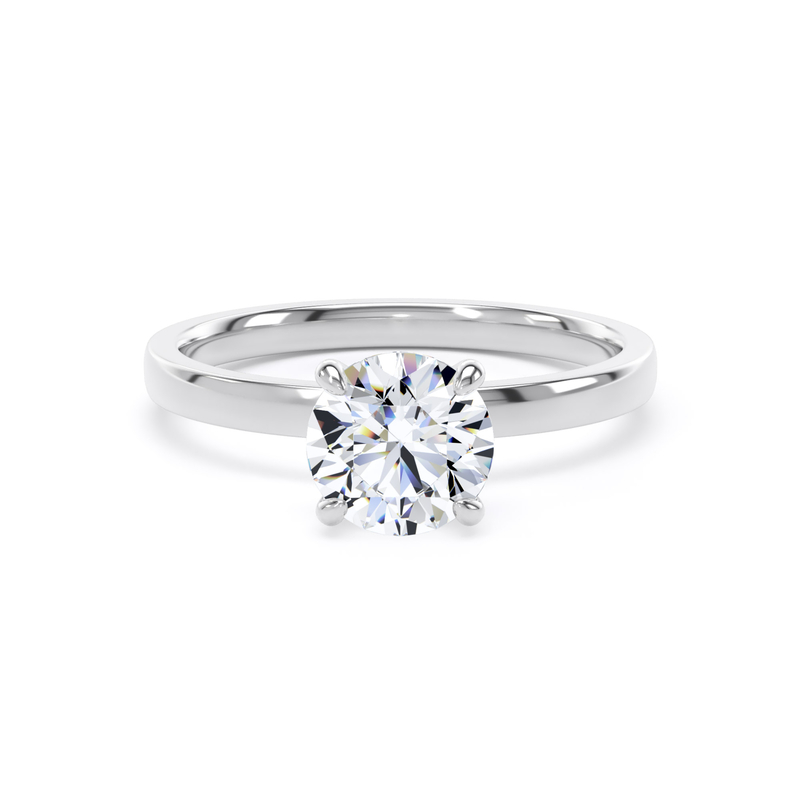
See Diamond Setting Detail Up Close
This Kinzy setting detail shows how the surrounding metal frames the diamond while preserving the character of its outline.
Frequently Asked Questions
Is a bezel setting safer than claws?
A full bezel covers more of the girdle and can protect the edge from direct knocks. Actual security still depends on design, workmanship, wear and inspection.
Does a bezel make a diamond less sparkly?
Not automatically. Cut quality, cleanliness and the amount of crown left visible all matter. A heavy surround can look enclosed; a fine, well-made bezel can remain bright.
Do claw settings always snag?
No. Height, claw finish and the rest of the gallery affect snagging. Any projecting element should be checked if your work or clothing makes catching a concern.
Which setting is better for an active lifestyle?
A smooth, low bezel may suit many active wearers, but no fine-jewellery setting makes a diamond immune to impact. Discuss the exact activities and when the ring should be removed.
Can a bezel engagement ring sit with a straight wedding band?
Sometimes. The gallery and bridge determine clearance, not the bezel label alone. Inspect the side view and plan the wedding band before manufacture.
Choosing Between Bezel and Claw Settings
Bezel-set vs claw-set engagement rings should be compared through the diamond’s outline, the protection its edges need, the visual weight you enjoy and the maintenance you accept. A bezel creates a continuous frame; claws create selected points of contact. Both can be elegant and secure when properly engineered.
Explore the Kinzy engagement-ring collection, then book a private consultation to compare the top, side and three-quarter views around a suitable diamond.
×
BESPOKE DESIGN BRIEF
Begin with what you know so far.
A short, considered brief. Nothing needs to be certain yet.
This site is protected by reCAPTCHA and the Google Privacy Policy and Terms of Service apply.
PERSONAL BESPOKE GUIDANCE
Shape the next detail with your Kinzy jeweller.
A short design brief gives our Hatton Garden atelier a thoughtful starting point—whether you have a clear idea or are still comparing possibilities.
Related Reading
Articles
Other articles from Kinzy London.
Articles, Buying Guides, Engagement Rings, Ring Settings
Choosing an engagement ring setting this Black Friday
Articles, Buying Guides, Diamond Jewellery
Diamond studs or a solitaire pendant? A Black Friday gift guide
Articles, Jewellery Education, Precious Metals