- Engagement Rings
- Wedding Bands
Shop by style
- Classic
- Diamond Cut
- Two Colour
- Diamond Set
- Shaped
- Vintage
- Gemstone Bands
Shop by metal
- Gemstones
- Ready To WearFine jewelleryMade to be worn.
Made to last.Diamond jewellery for every day and every occasion.Shop all jewellery →Fine jewellery
Diamond earringsPendantsBraceletsRingsShop allShop by occasion
Gifts under £1,000AnniversaryBirthdayBridal jewelleryAvailable sooner
Ready to dispatchNew arrivalsBestsellersBook an appointmentFine Jewellery
- About UsMade in LondonCrafted by people you can meet.Discover the people, workshop and personal service behind every Kinzy London piece.Meet KinzyRead our story →
About Kinzy
About KinzyOur storyClient storiesMeet your sales associateCraft & care
Our workshopDesign processLifetime Atelier CareOur guaranteesMade in our London workshopCertified diamondsLifetime carePersonal guidance - Education
Learn with Kinzy Diamond guideUnderstand the details that matter→Fit & setting guideChoose comfort and proportion→Behind the craftHow your jewellery is made→Expert guidance, clearly explained.
Practical diamond, gemstone and ring guidance to help you make a confident decision.
Explore all guides →
 Round
Round Oval
Oval Heart
Heart Marquise
 Cushion
 Pear
Pear Emerald
 Asscher
 Radiant
24 September 2026
Engagement Rings for Nurses, Doctors and Healthcare Professionals: What to Consider
Choosing engagement ring settings for nurses, doctors and healthcare professionals starts somewhere less romantic but more important than setting style: the rules of the workplace. Many clinical roles require hand and wrist jewellery to be removed. A low setting or smooth metal edge does not override infection-prevention guidance, local uniform policy or a task-specific risk assessment.
Once that boundary is clear, jewellery design becomes useful. A ring can be chosen for comfortable off-duty wear, easy inspection and a practical routine of removal and storage. For people permitted to wear jewellery in some non-clinical settings, a restrained profile may also feel easier in a hands-on working life. This guide is design guidance, not clinical or occupational-safety advice.
Engagement Ring Settings for Nurses: Check Policy First
NHS England’s current National Infection Prevention and Control Manual says hand and wrist jewellery should be removed before hand hygiene, with a single plain metal finger ring permitted in the stated routine context and moved or removed during hand hygiene. It requires all hand and wrist jewellery to be removed for surgical hand antisepsis.
NHS England’s uniform and workwear guidance also makes clear that local organisations set policies and may allow a plain ring. An engagement ring with a stone should not be assumed acceptable because its setting is low, covered or described as practical.
Your Role, Setting and Task May Produce Different Rules
A doctor moving between clinic, ward and theatre may encounter different requirements. A nurse in direct patient care may have a different working day from a nurse in education or management. Dentistry, pharmacy, laboratory work, veterinary practice and allied health roles each have their own environments.
Ask your employer, infection-prevention team or line manager what applies to the actual role and task. Recheck the policy if your placement changes. The design conversation begins only after deciding when the engagement ring can genuinely be worn.
The Most Practical Answer May Be “Remove It for the Shift”
No jeweller should present an engagement-ring setting as universally suitable for clinical duties. If the policy requires removal, choose a ring you love for the rest of your life and create a dependable storage habit for working hours. That may be more satisfying than compromising every design choice in pursuit of permission a setting cannot grant.
Think about where removal happens, where the ring will be secured and how to avoid leaving it loose in a pocket, washroom or changing area. The solution should follow employer security rules. Do not move it to a necklace during work unless that jewellery is also expressly permitted and safe for the duties involved.
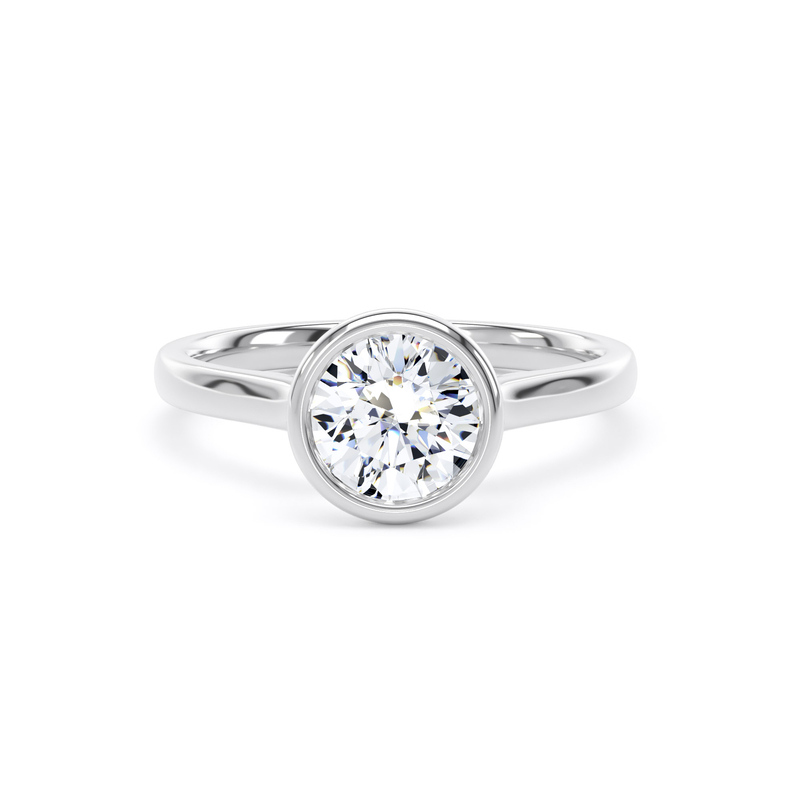
Low-Profile Settings for Life Outside Clinical Duties
A lower setting keeps the centre stone closer to the finger and reduces the vertical silhouette. Many people find that appealing for an active, hands-on life away from work. It may feel less prominent when reaching into bags, putting on knitwear or moving through a busy day.
Low is not automatically better. A very low basket may affect how a wedding band sits and can change the amount of the diamond visible from the side. Compare the complete trade-off in Kinzy’s low-set vs high-set engagement-ring guide.
Bezel and Rub-Over Settings: A Smoother Outline
A bezel, sometimes called a rub-over setting, uses a rim of metal around all or part of the stone’s edge. Its continuous outline can feel visually clean and has fewer projecting claw tips than an open prong setting. It also changes how much of the diamond’s outline is visible and gives the ring a distinctly modern frame.
The metal rim still needs inspection, and a bezel-set engagement ring is still jewellery with a stone. It must be removed wherever policy prohibits it. View Kinzy’s round bezel cathedral solitaire as a design example, not as an endorsement for clinical wear.
Claw Settings Can Still Be Practical Off Duty
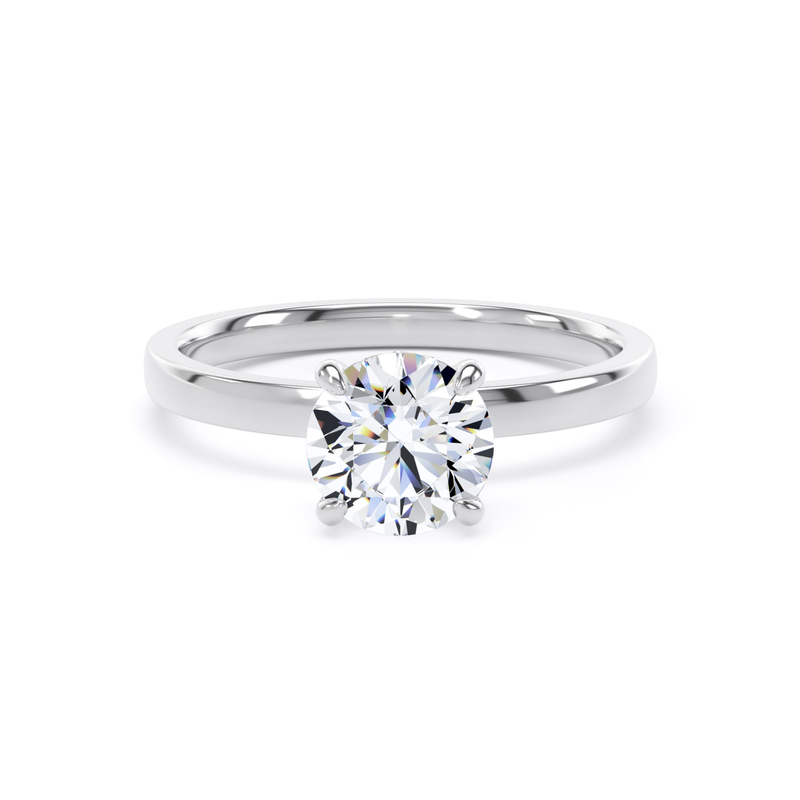
Claws expose more of the diamond’s outline and create the classic open solitaire appearance. Well-finished claws should sit neatly against the stone, but they remain individual points that require condition checks. Height, claw shape and the way the head meets the shoulders matter as much as the nominal number of claws.
Kinzy’s guide to four-claw and six-claw engagement rings explains the visual and structural comparison. If a claw begins catching when it did not before, stop wearing the ring and arrange an inspection.
Consider the Centre Stone’s Outline
Round and oval stones have continuous curves. Princess, pear and marquise shapes include corners or points that require deliberate protection in the setting. That does not make one shape universally unsuitable; it changes the perimeter and the construction questions to ask.
Compare Kinzy’s round, oval and princess-cut engagement rings. Look at each design from above and in profile, then imagine the ring in ordinary off-duty movements rather than a static presentation pose.
Plain Shoulders vs Diamond-Set Shoulders
Polished shoulders offer an uninterrupted metal surface and keep the centre as the sole point of light. Diamond-set shoulders extend sparkle across the finger but introduce more stones, edges and settings to inspect. Neither choice changes workplace permissions.
If low visual complexity is the priority, begin with solitaire engagement rings. If brightness across the band matters more, explore shoulder-set designs and discuss where the accent diamonds finish around the shank.
Halos Add Presence—and More Detail
A halo creates a broader sparkling outline around the centre. A hidden halo adds detail beneath it. Both can be beautiful for off-duty wear, yet both introduce additional settings that benefit from careful cleaning and periodic inspection.
Do not choose or reject a halo based on job title alone. Decide when the ring will be worn, then judge the aesthetic honestly. Kinzy’s hidden vs traditional halo comparison separates their face-up and profile effects.
Band Width, Edge Shape and Comfort
A very fine shank can make the centre appear prominent; a more substantial band may feel visually grounded. Comfort depends on width, depth, inner profile, finger size and the space between neighbouring fingers. A smooth transition at the shoulders can matter more than a fashionable measurement.
Try the ring in a representative size and keep it on for more than a few seconds during the appointment. Make a fist, reach into a bag and put on a jacket. These simple off-duty movements reveal more than a close-up photograph.
Metal Choice Should Follow the Actual Design
Platinum, white gold, yellow gold and rose gold create different colours and maintenance considerations. The best choice depends on setting construction, finish, personal preference and any known sensitivities discussed with an appropriate professional. A job title alone does not select the metal.
Kinzy’s platinum vs gold guide outlines the jewellery comparison. Qualifying precious-metal articles sold in the UK are subject to hallmarking requirements; the government’s hallmarking guidance explains what those marks confirm.
Design a Reliable Remove-and-Store Routine
A ring repeatedly taken off needs a consistent destination. At home, that could be a dedicated box positioned away from sinks and cleaning products. For work, use only storage allowed by your organisation, and consider whether leaving valuable jewellery at home is simpler.
Insurance terms may require particular precautions, so read the policy rather than assuming cover. Kinzy’s engagement-ring care guide offers practical protection habits, while your insurer’s own policy remains the authority on cover.
Plan the Wedding Ring Separately
NHS guidance may permit one plain metal ring in certain routine contexts, subject to local policy, but that does not mean every wedding band is permitted everywhere. Surgical hand antisepsis has stricter requirements. Confirm the rules before treating a future plain band as a work solution.
From a design perspective, the wedding band should still be considered beside the engagement ring. Use Kinzy’s wedding-band builder to explore a companion, then verify its fit and your workplace requirements independently.
A Shortlist for a Practical Off-Duty Ring
- Confirm exactly when workplace policy requires jewellery removal.
- Choose whether low profile, smooth perimeter or open diamond visibility matters most.
- Compare bezel and claw settings from the top and side.
- Inspect points, corners, shoulders and gallery edges.
- Try the ring through realistic everyday movements.
- Plan secure removal and storage before the ring enters daily life.
- Ask about appropriate inspection, servicing and insurance.
Kinzy’s bespoke design process allows these priorities to shape the complete piece. A private consultation is the right place to compare settings while keeping occupational policy clearly separate from jewellery advice.
Cleaning and Professional Inspection
Follow jewellery-specific care advice and any workplace decontamination rules separately. Do not expose a valuable ring to cleaning agents merely because they are present at work. GIA’s jewellery-care guidance explains why cleaning must account for the gems and treatments present.
The GIA’s engagement-ring protection guide advises removal for activities involving hard knocks or potentially damaging chemicals. Kinzy clients can also review current Lifetime Atelier Care information.
A Ring Designed Around Your Life
Once your workplace policy is clear, Kinzy can shape the profile, perimeter and setting around how you will wear the ring beyond clinical duties.
From Brief to Finished Ring
See how personal priorities are refined through Kinzy’s design and making process.
Frequently Asked Questions
Can nurses or doctors wear engagement rings at work?
Do not assume so. NHS England guidance restricts hand and wrist jewellery in clinical contexts, and local policies or particular tasks may be stricter. Check with the employer.
Does a bezel setting make an engagement ring clinically compliant?
No. A bezel creates a smoother jewellery outline, but it does not change infection-prevention, uniform, PPE or local workplace requirements.
Is a low-set ring best for a healthcare professional?
It can be practical for off-duty life, but the wearer may prefer another design and remove it for work. Low profile does not establish workplace permission.
Should I choose a plain band instead?
Only the wearer can decide, and even a plain band is subject to the relevant policy and task. You can also choose a full engagement-ring design for life outside clinical duties.
Can Kinzy design around my working lifestyle?
Kinzy can discuss profile, setting and removal habits as jewellery-design considerations through a private consultation. Workplace approval must come from the employer.
Start with Policy, Then Design the Ring
Your employer determines when jewellery may be worn; Kinzy shapes how the ring looks and feels beyond those restrictions. Begin with the current policy, then design honestly around your life.
Explore Kinzy engagement rings or book a consultation to compare low, bezel and claw-set options without losing sight of that boundary.
×
BESPOKE DESIGN BRIEF
Begin with what you know so far.
A short, considered brief. Nothing needs to be certain yet.
This site is protected by reCAPTCHA and the Google Privacy Policy and Terms of Service apply.
PERSONAL BESPOKE GUIDANCE
Shape the next detail with your Kinzy jeweller.
A short design brief gives our Hatton Garden atelier a thoughtful starting point—whether you have a clear idea or are still comparing possibilities.
Related Reading
Articles
Other articles from Kinzy London.
Articles, Bespoke Jewellery, Engagement Rings, Gemstones
How to Add a Hidden Birthstone or Secret Diamond to an Engagement Ring
Articles, Diamond Guides, Engagement Rings, Settings
Does a Bezel Setting Make a Diamond Look Bigger or Smaller?
Articles, Craftsmanship, Engagement Rings, Settings