- Engagement Rings
- Wedding Bands
Shop by style
- Classic
- Diamond Cut
- Two Colour
- Diamond Set
- Shaped
- Vintage
- Gemstone Bands
Shop by metal
- Gemstones
- Ready To WearFine jewelleryMade to be worn.
Made to last.Diamond jewellery for every day and every occasion.Shop all jewellery →Fine jewellery
Diamond earringsPendantsBraceletsRingsShop allShop by occasion
Gifts under £1,000AnniversaryBirthdayBridal jewelleryAvailable sooner
Ready to dispatchNew arrivalsBestsellersBook an appointmentFine Jewellery
- About UsMade in LondonCrafted by people you can meet.Discover the people, workshop and personal service behind every Kinzy London piece.Meet KinzyRead our story →
About Kinzy
About KinzyOur storyClient storiesMeet your sales associateCraft & care
Our workshopDesign processLifetime Atelier CareOur guaranteesMade in our London workshopCertified diamondsLifetime carePersonal guidance - Education
Learn with Kinzy Diamond guideUnderstand the details that matter→Fit & setting guideChoose comfort and proportion→Behind the craftHow your jewellery is made→Expert guidance, clearly explained.
Practical diamond, gemstone and ring guidance to help you make a confident decision.
Explore all guides →
 Round
Round Oval
Oval Heart
Heart Marquise
 Cushion
 Pear
Pear Emerald
 Asscher
 Radiant
19 September 2026
Cathedral vs Non-Cathedral Engagement Rings: What Changes from the Side?
A comparison of cathedral vs non-cathedral engagement rings begins where most product photographs stop: at the side of the ring. Cathedral shoulders rise from the band towards the centre setting. In a non-cathedral design, the shoulders do not form those ascending arches; the head may rise directly from a straight or gently tapering shank.
That architectural decision changes the silhouette, the amount of metal beside the centre, the view through the gallery and how the ring relates to a wedding band. It does not by itself determine setting height, security or style. Those are separate questions that must be read from the complete design.
Cathedral vs Non-Cathedral Engagement Rings: The Short Answer
- Cathedral: the band rises on both sides towards the diamond, creating slopes or arches that frame the head.
- Non-cathedral: the band remains lower as it approaches the head, which sits above or between the shoulders without those rising supports.
GIA’s guide to solitaire setting styles describes a cathedral setting through the slopes on either side of the diamond. The word refers to shoulder architecture, not to a particular claw count, diamond shape or halo.
Cathedral Is Not Another Word for High Set
Many cathedral designs are elevated because the shoulders rise towards the centre, but height varies. A cathedral can be relatively restrained, while a non-cathedral head can stand well above the band on a tall basket or trellis.
Judge vertical distance independently with Kinzy’s low-set versus high-set guide. Then return to the shoulders: do they climb towards the diamond, or does the head emerge separately from the band?
What Changes in the Side Silhouette?
Cathedral shoulders create a visual journey from shank to centre. The lines may sweep, split, taper or carry diamonds. From the side, they can make the head feel integrated into the band and give a modest diamond a more architectural presentation.
A non-cathedral design leaves more visual separation between band and head. The eye may see a simple shank beneath a basket, open gallery or individual supports. This can look pared back, delicate or deliberately mechanical depending on the proportions.
Neither outline is inherently traditional or modern. A cathedral can be clean and contemporary; a non-cathedral can reference a classic solitaire. Look at the geometry rather than the marketing adjective.
Shoulder Support and Protection
Rising shoulders can provide lateral structure beside the head and may shield parts of it from direct side contact. However, security still depends on how those shoulders connect, the gallery beneath the stone, the setting metal and the accuracy of manufacture.
A non-cathedral ring can be robust when the head, bridge and shank are well engineered. The absence of rising shoulders does not mean that the diamond is balanced on an unsupported point. Ask to see where loads travel through the design.
Kinzy’s engagement-ring settings guide helps distinguish the centre-holding method from the shoulders that lead towards it.
The View of the Diamond
Cathedral shoulders occupy some visual space beside the centre. When finely proportioned, they frame the diamond without crowding it. Broad or highly detailed arches make a stronger statement and can change how large the centre appears relative to the band.
Non-cathedral shoulders can leave the sides of the head more exposed to view. That may emphasise a sculpted basket, open trellis or hidden detail beneath the centre. The hidden halo versus solitaire comparison shows why the side view may carry detail that is almost invisible from above.
Claws, Bezels and Halos Can Use Either Architecture
A cathedral is not a method of gripping the stone. Claws or a bezel can sit above cathedral shoulders, and halos can be integrated into them. A non-cathedral design can use the same centre-holding choices.
When comparing rings, name each layer separately: centre shape, holding method, gallery, shoulder architecture and band treatment. This prevents a broad label from hiding the exact difference. Kinzy’s four-claw versus six-claw guide covers one of those independent layers.
How Diamond Shape Changes the Effect
Round diamonds
Symmetrical cathedral shoulders can reinforce the balance of a round brilliant. A non-cathedral arrangement may keep the classic head especially clear. Browse Kinzy’s round engagement rings to compare varied side profiles around the same outline.
Oval and elongated diamonds
An oval’s length already draws the eye along the finger. Cathedral shoulders can continue that movement; non-cathedral shoulders can place stronger emphasis on the floating head. Use the oval engagement-ring guide to consider ratio and bow-tie alongside architecture.
Princess and clipped-corner shapes
A princess cut can look crisp above straight, rising shoulders, while a separate basket can make the square outline more pronounced. Any pointed or vulnerable corner also needs a suitable claw or protective element independent of the shoulder decision.
Emerald cuts
Long step facets often suit an architectural side view. Cathedral lines can echo the diamond’s order; a non-cathedral head may create a cleaner distinction between geometric stone and plain band. Compare shapes in radiant versus emerald-cut engagement rings.
Hand Profile and Visual Weight
Cathedral shoulders increase visual activity near the centre. On the hand, they may make the transition from band to diamond feel broader and more continuous. Split cathedrals can add negative space while retaining that upward movement.
A non-cathedral design can keep the band line simpler. Yet the exposed head may appear taller because nothing rises beside it. Always compare the real side view at hand scale; a close-up product image can exaggerate minor differences.
Snagging and Daily Wear
Snagging depends on total height, claw finish, protruding details and the transitions between components. Cathedral shoulders can soften the route into an elevated head, but they do not eliminate projecting claws or a high centre.
A non-cathedral setting may expose more of the head to side contact, although a low, smooth basket can remain unobtrusive. GIA notes in its guide to round diamond engagement rings that high-profile settings are more likely to snag. Apply that principle to the complete ring, not to the cathedral label alone.
Wedding-Band Clearance
Rising cathedral shoulders may create a bridge through which a straight wedding band can sit close, but this is not guaranteed. The lowest point of the head and the width of the gallery determine actual clearance.
A non-cathedral head can also be raised enough for a flush band. Alternatively, a low basket may meet the wedding ring and create a deliberate gap. Use the wedding-band builder to explore the band itself, then check both rings together in a side elevation.
Kinzy’s diamond wedding-band guide adds the setting and coverage questions that matter when the neighbouring band contains stones.
Cleaning the Gallery
Cathedral shoulders can create extra junctions where polishing compound, hand cream or soap residue gathers. Split arches may also form narrow spaces. A non-cathedral head may offer more direct side access, although a dense basket can be equally intricate.
Inspect the underside and ask how to reach the pavilion safely. The engagement-ring care guide explains everyday precautions, while professional servicing should follow the ring’s actual construction.
Resizing and Future Work
Shoulders usually remain near the top half of the ring, while resizing is commonly undertaken at the lower shank. Even so, diamond-set shoulders, tapering and an all-round design can restrict the available change.
Cathedral versus non-cathedral does not provide a reliable resizing rule on its own. Ask for the anticipated range before ordering. A ring designed through a bespoke or made-to-order process should record the correct size and construction from the beginning.
Metal and Finish
Polished cathedral arches reflect light along their curves and may become a visible design feature. Satin shoulders can make the transition quieter. In a non-cathedral ring, metal colour may be concentrated in the band while a contrasting head sits above it.
Read platinum versus gold, then ask whether the head, shoulders and shank use one metal or a deliberate combination. A rendering should identify that clearly.
How to Choose
Choose cathedral shoulders when you enjoy an ascending, integrated transition and want the side architecture to frame the centre. Choose a non-cathedral setting when you prefer a clearer separation between a simple shank and the head, or want the basket itself to remain the main side-view feature.
Then test the preference against height, wedding-band clearance, cleaning access and the precise diamond. Do not approve the top view while leaving the side profile unresolved.
Questions for the CAD or Model Review
- Where do the shoulders begin to rise?
- Do they meet the head structurally or only visually?
- What is the total height from finger to table?
- Which parts of the diamond and gallery remain visible?
- Can a straight wedding band pass beneath the head?
- Are there narrow spaces that will be difficult to clean?
- How does the profile look at normal hand scale?
- What parts should be inspected during servicing?
- What resizing range is anticipated?
Compare Cathedral and Non-Cathedral Profiles
Both designs can be elevated; the defining difference is whether the shoulders rise to frame and visually connect with the head.
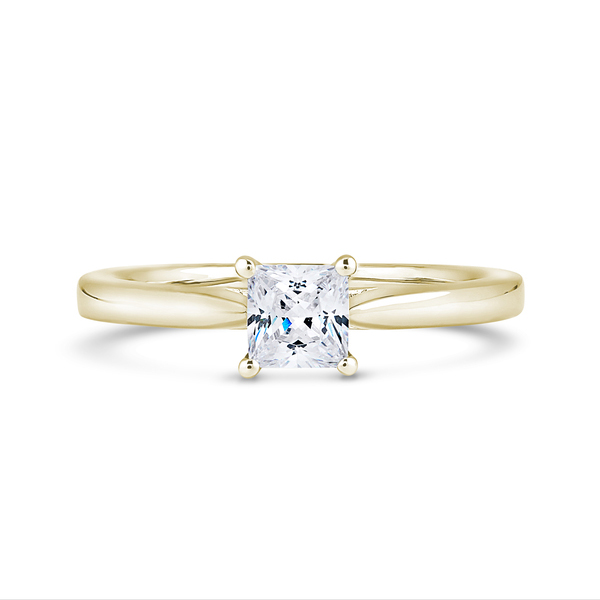
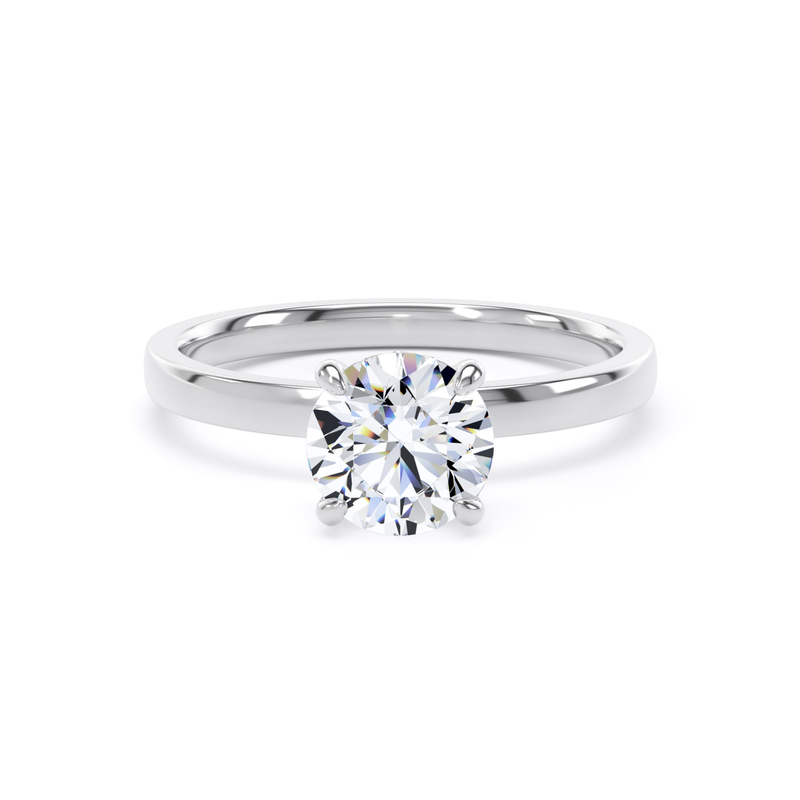
See the Side Profile Up Close
This Kinzy setting detail reveals how the band rises towards the centre and how the head is supported from the side.
Frequently Asked Questions
Is a cathedral setting always high?
No. Cathedral describes rising shoulders. Total height depends on the head, gallery and how far those shoulders climb.
Is a non-cathedral setting less secure?
Not automatically. A properly engineered basket, bridge and shank can provide strong support without cathedral shoulders.
Can a cathedral ring be a bezel?
Yes. Cathedral describes the shoulders; bezel describes how metal holds the diamond. The features can coexist.
Which setting is easier to clean?
That depends on openings and junctions in the exact gallery. A simple example of either type may be easier than an intricate example of the other.
Which sits better with a straight wedding band?
Either can, provided the bridge and head have enough clearance. Confirm with the real side profile and the intended band dimensions.
Resolve the Ring from Every Angle
Cathedral vs non-cathedral engagement rings differ most clearly in the route from the band to the centre. Rising shoulders create an integrated, arching frame; non-cathedral shoulders leave the head more visually distinct. Height, claw style and wedding-band fit still need separate answers.
Compare the live Kinzy examples above, plan a coordinating band in the wedding-band builder, then book a private consultation to resolve the side view around your diamond.
Related Reading
Articles
Other articles from Kinzy London.
Articles, Buying Guides, Engagement Rings, Ring Settings
Cathedral vs Non-Cathedral Engagement Rings: What Changes from the Side?
Articles, Buying Guides, Engagement Rings, Ring Settings
Full Bezel vs Half Bezel: Which Setting Is Right for Your Diamond?
Articles, Buying Guides, Engagement Rings, Ring Settings