- Engagement Rings
- Wedding Bands
Shop by style
- Classic
- Diamond Cut
- Two Colour
- Diamond Set
- Shaped
- Vintage
- Gemstone Bands
Shop by metal
- Gemstones
- Ready To WearFine jewelleryMade to be worn.
Made to last.Diamond jewellery for every day and every occasion.Shop all jewellery →Fine jewellery
Diamond earringsPendantsBraceletsRingsShop allShop by occasion
Gifts under £1,000AnniversaryBirthdayBridal jewelleryAvailable sooner
Ready to dispatchNew arrivalsBestsellersBook an appointmentFine Jewellery
- About UsMade in LondonCrafted by people you can meet.Discover the people, workshop and personal service behind every Kinzy London piece.Meet KinzyRead our story →
About Kinzy
About KinzyOur storyClient storiesMeet your sales associateCraft & care
Our workshopDesign processLifetime Atelier CareOur guaranteesMade in our London workshopCertified diamondsLifetime carePersonal guidance - Education
Learn with Kinzy Diamond guideUnderstand the details that matter→Fit & setting guideChoose comfort and proportion→Behind the craftHow your jewellery is made→Expert guidance, clearly explained.
Practical diamond, gemstone and ring guidance to help you make a confident decision.
Explore all guides →
 Round
Round Oval
Oval Heart
Heart Marquise
 Cushion
 Pear
Pear Emerald
 Asscher
 Radiant
16 September 2026
How Much Do Wedding Rings Cost in the UK in 2026?
If you are researching how much wedding rings cost in the UK in 2026, the honest answer is a range rather than one meaningful average. A slim plain band and a deep platinum ring are different objects; add diamonds, shaping or bespoke work and the comparison changes again.
A useful budget therefore begins with a specification. Metal, fineness, width, depth, finger size, profile, finish and stones all affect the finished quote. This guide uses current retail examples to establish scale, then shows how to compare like with like without mistaking another retailer’s price for a Kinzy quotation.
How Much Wedding Rings Cost in the UK: The Short Answer
There is no official national average that reliably describes what a UK couple will pay for wedding rings in 2026. The Office for National Statistics tracks changes in jewellery prices, but its consumer price index for jewellery is an index, not an average wedding-band receipt.
Retail snapshots checked on 15 August 2026 put selected plain 9ct gold examples at roughly £200 to £700 and selected platinum examples at roughly £500 to £2,000. Diamond-set examples in the same check began around £500 and extended beyond £2,000. Those figures are examples from particular products, sizes and retailers—not market averages, future guarantees or Kinzy prices.
A 2026 Retail Snapshot
The clearest way to understand the spread is to examine named products. At the time of checking:
- Ernest Jones listed a 2mm extra-heavy 9ct yellow-gold D-shape ring at £200 and a 3mm extra-heavy 9ct yellow-gold court ring at £330.
- The same retailer listed a 5mm super-heavy 9ct yellow-gold court ring at £700. Width and construction—not simply the word “gold”—have already moved the figure substantially.
- Goldsmiths listed a 2mm standard court platinum ring in the displayed size at £500, a 3mm version at £725 and an 8mm platinum ring at £2,000.
- For stone-set context, Ernest Jones listed a 9ct yellow-gold 0.15ct diamond ring at £500, while Goldsmiths listed a 5mm heavy 18ct white-gold diamond wedding ring at £2,250.
Retailers can change prices, promotions, size availability and product specifications. Treat this section as a dated sense check and verify every live page before relying on it.
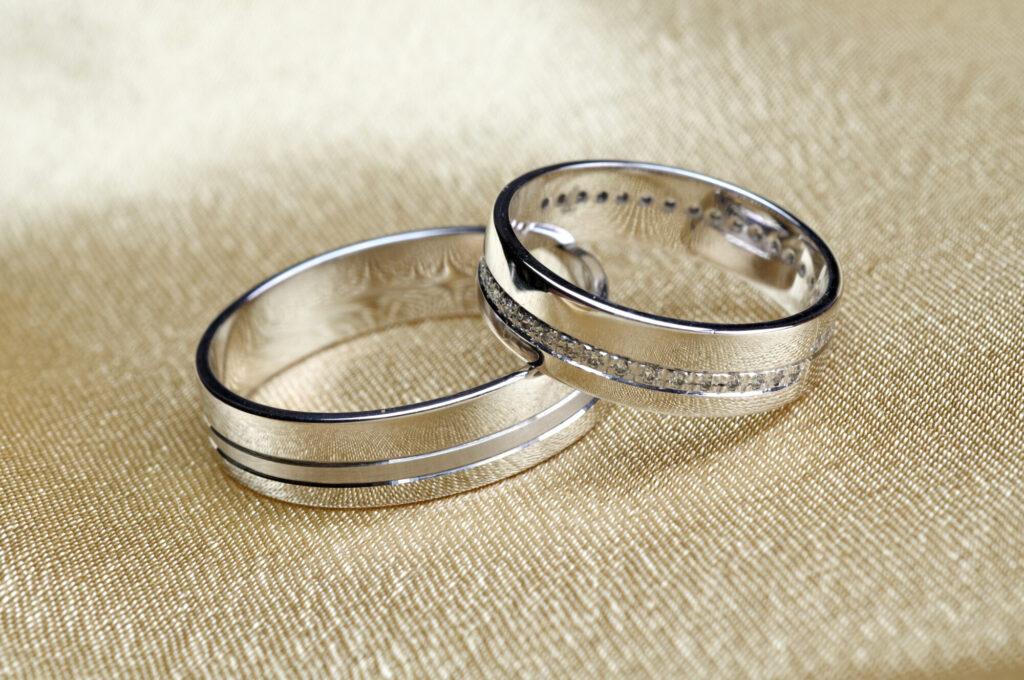
Why There Is No Single Useful Average
A headline average blends together mass-produced lightweight bands, substantial precious-metal rings, diamond-set designs and one-off commissions. It may also combine one ring with a pair. Without knowing the mix, the number cannot tell you what your preferred specification should cost.
Start with the Kinzy wedding-band builder and make one decision at a time. The live configuration is a better basis for a Kinzy enquiry than a generic national figure. If your intended combination is not shown, ask the Kinzy team rather than assuming availability or price.
Metal and Fineness Change the Starting Point
Precious-metal content is a major price driver. The World Gold Council explains that 18ct gold contains 75% gold, while 9ct contains 37.5%. A like-for-like 18ct band usually contains more valuable gold than its 9ct counterpart, but the finished price also includes alloy, manufacture and retail services.
Platinum follows a different material and density calculation. Comparing an 18ct ring with a platinum ring by width alone is incomplete because the finished weights may differ. Read the detailed platinum versus gold guide, then request matched dimensions before judging the quotation.
Width, Depth and Finger Size Affect Weight
A wider ring uses more metal. A deeper or “heavier” version of the same outline also uses more metal. A larger finger size requires a longer circumference, which may alter the finished weight and quote. These factors explain why two plain bands in the same alloy can sit far apart in price.
Compare widths and depths in the live wedding-band builder, then use a conversation with a Kinzy sales associate to understand how the chosen dimensions affect feel and price. Do not reduce depth merely to chase a headline saving without understanding the effect on presence and long-term wear.
Profile and Finish Influence Work as Well as Appearance
Court, D-shape, flat court and flat rings distribute metal differently. A profile may also require a different starting section or finishing process. Kinzy’s overview of craftsmanship gives context for why the details beneath a simple-looking surface matter.
A polished, satin, brushed or hammered finish can change the labour and maintenance conversation. Some textures are more involved to create or restore. Explore handcrafted jewellery at Kinzy and ask what refinishing would preserve the intended character.
Diamond-Set Bands Need a Fuller Specification
“Diamond wedding ring” is not a price category. Cost changes with total diamond weight, stone count, quality, origin, matching, setting style and how far the diamonds continue around the band. Setting many small stones accurately also adds skilled work.
Use the diamond wedding bands guide to decide whether a stone-set design suits you. Then ask for the number of stones, total carat weight, setting coverage and grading description. A very low diamond total can still belong to a substantial, labour-intensive ring, so carat weight alone does not explain the finished price.
Shaped, Fitted and Bespoke Rings
An engagement ring with a low gallery or projecting setting may not accept a straight band. Kinzy’s engagement-ring settings guide helps you identify the structure, while a bespoke fitted ring may be developed around the exact engagement ring.
That work can involve measuring, design time, CAD, a model and extra finishing. Read the distinction between bespoke and made-to-order rings. If a flush set matters, compare low-set and high-set engagement rings before allocating the budget.
Engraving, Hallmarking and the Final Specification
Engraving may be included, optional or limited by the ring’s width and internal shape. Confirm the wording, type style, character limit and whether later resizing could affect it. Never assume two quotations include the same personalisation.
UK hallmarking is a legal precious-metal control subject to weight exemptions. Government hallmarking guidance states that gold articles above 1g and platinum articles above 0.5g must be hallmarked when described and sold as those metals. A hallmark verifies fineness; it does not independently grade craftsmanship. Kinzy’s wider jewellery education hub can support the rest of your research.
Budget for a Pair Without Forcing a Match
Two wedding rings do not need identical widths, metals or prices. One partner may prefer a slim diamond-set band while the other chooses a broad plain band. Set a comfortable combined ceiling, then specify each ring independently.
Kinzy’s look at gold wedding-band style shows how apparently simple rings can carry distinct proportions. You can create a connection through finish, engraving or metal without making both people wear the same construction.
What Should a Proper Quote Include?
- Metal, colour and fineness.
- Ring size, width, depth and profile.
- Approximate finished weight where supplied.
- Finish and engraving details.
- For diamonds: stone count, total weight, quality description and setting coverage.
- Whether design, CAD, model, fitting and hallmarking are included.
- Payment stages, estimated completion and applicable terms.
- The stated warranty, servicing and resizing position.
Use the questions in Kinzy’s Hatton Garden jeweller guide as a starting checklist. A cheaper-looking figure may simply omit information that another retailer has stated.
Do Not Spend the Entire Budget on the Purchase Day
Allow for insurance where appropriate, future resizing, refinishing and routine checks if the ring contains stones. These are not reasons to buy unnecessary add-ons; they are reasons to understand ownership beyond collection day.
Read the applicable purchase terms and Kinzy’s published lifetime atelier care. The stated scope, exclusions and service schedule matter more than a vague promise of “aftercare”. Kinzy’s services overview provides a second live reference before you enquire.
How to Build a Realistic Wedding-Ring Budget
- Choose one comfortable total for one ring or the pair.
- Decide whether diamonds are essential, optional or unwanted.
- Compare metals using the same width, depth, profile and size.
- Try widths and profiles on the hand before finalising them.
- Check the engagement-ring geometry if the bands will sit together.
- Add engraving or bespoke shaping only after the structural choices are clear.
- Ask for a written, aligned specification and current quote.
This sequence prevents the budget from being consumed by a metal name or diamond headline before comfort and construction are settled.
Build a Precise Wedding-Ring Brief
Use the builder to define metal, profile, width and finish; a Kinzy consultation can then turn those choices into a current, itemised quote.
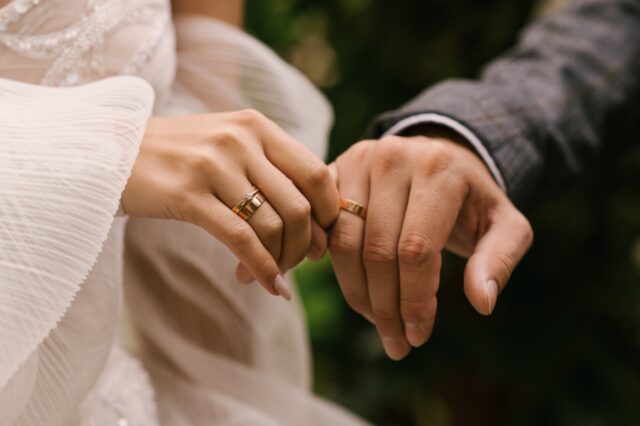
See Wedding-Band Proportion on the Hand
This Kinzy wedding-band detail helps you compare metal, finish and visual weight before discussing your own specification.
Frequently Asked Questions
What is the average cost of a wedding ring in the UK?
No single official average captures the range of metals, weights, diamonds and bespoke work. Use dated retail examples for scale, then compare quotations for the same specification.
Are platinum wedding rings always more expensive than gold?
Not in every comparison. Fineness, density, finished weight, dimensions and design all matter. Align the specification before comparing.
Why does ring size change the price?
A larger circumference can require more metal. Retailers handle size pricing differently, so confirm the exact size included in a displayed or quoted price.
How much should we budget for two wedding rings?
Set a combined limit you can afford, then specify each ring separately. A pair need not match in construction or price.
Does Kinzy have a fixed wedding-ring price list?
Use the live wedding-band builder for current displayed configurations and contact Kinzy for a confirmed quotation. This guide does not state fixed Kinzy prices.
From Budget to a Precise Quote
What wedding rings cost in the UK depends on metal, fineness, width, depth, profile, size, finish and stones—not an isolated national average. Dated retail snapshots show the scale of possible prices, while a matched written specification explains why your figure sits where it does.
Begin with the Kinzy wedding-band builder, then book a private consultation to confirm comfort, construction and a current quote.
×
WEDDING RING CONSULTATION
Tell us what you are considering.
A short, considered brief. Nothing needs to be certain yet.
This site is protected by reCAPTCHA and the Google Privacy Policy and Terms of Service apply.
WEDDING RING CONSULTATION
Choose a wedding ring that feels entirely yours.
From proportion and comfort to finish and fit, a short brief lets your Kinzy jeweller prepare considered options before your consultation.
Related Reading
Articles
Other articles from Kinzy London.
Articles, Buying Guides, Engagement Rings, Ring Settings
Pavé vs Channel-Set Diamond Shoulders: Sparkle, Security and Resizing Compared
Articles, Buying Guides, Engagement Rings, Ring Settings
Cathedral vs Non-Cathedral Engagement Rings: What Changes from the Side?
Articles, Buying Guides, Engagement Rings, Ring Settings