- Engagement Rings
- Wedding Bands
Shop by style
- Classic
- Diamond Cut
- Two Colour
- Diamond Set
- Shaped
- Vintage
- Gemstone Bands
Shop by metal
- Gemstones
- Fine Jewellery
Fine Jewellery
- About Us
- Education
27 August 2026
UK Jewellery Hallmarks Explained: What Every Buyer Should Check
UK jewellery hallmarks provide independent evidence about precious-metal fineness. On a qualifying modern article, look for three compulsory elements: the sponsor’s mark, the millesimal fineness mark and the assay office mark.
A hallmark does not grade a diamond, prove where every manufacturing stage occurred or guarantee workmanship. It answers a narrower and important question: has an authorised assay office verified the precious metal represented by the mark?
Why UK Jewellery Hallmarks Exist
Precious metals are rarely used in completely pure form. Gold, silver, platinum and palladium are alloyed to achieve useful colour and working properties. The difference cannot be established reliably by appearance alone.
UK hallmarking law protects descriptions of precious-metal articles. The government’s Hallmarking is the Law summary explains that items described as precious metal must carry an approved hallmark unless an exemption applies.
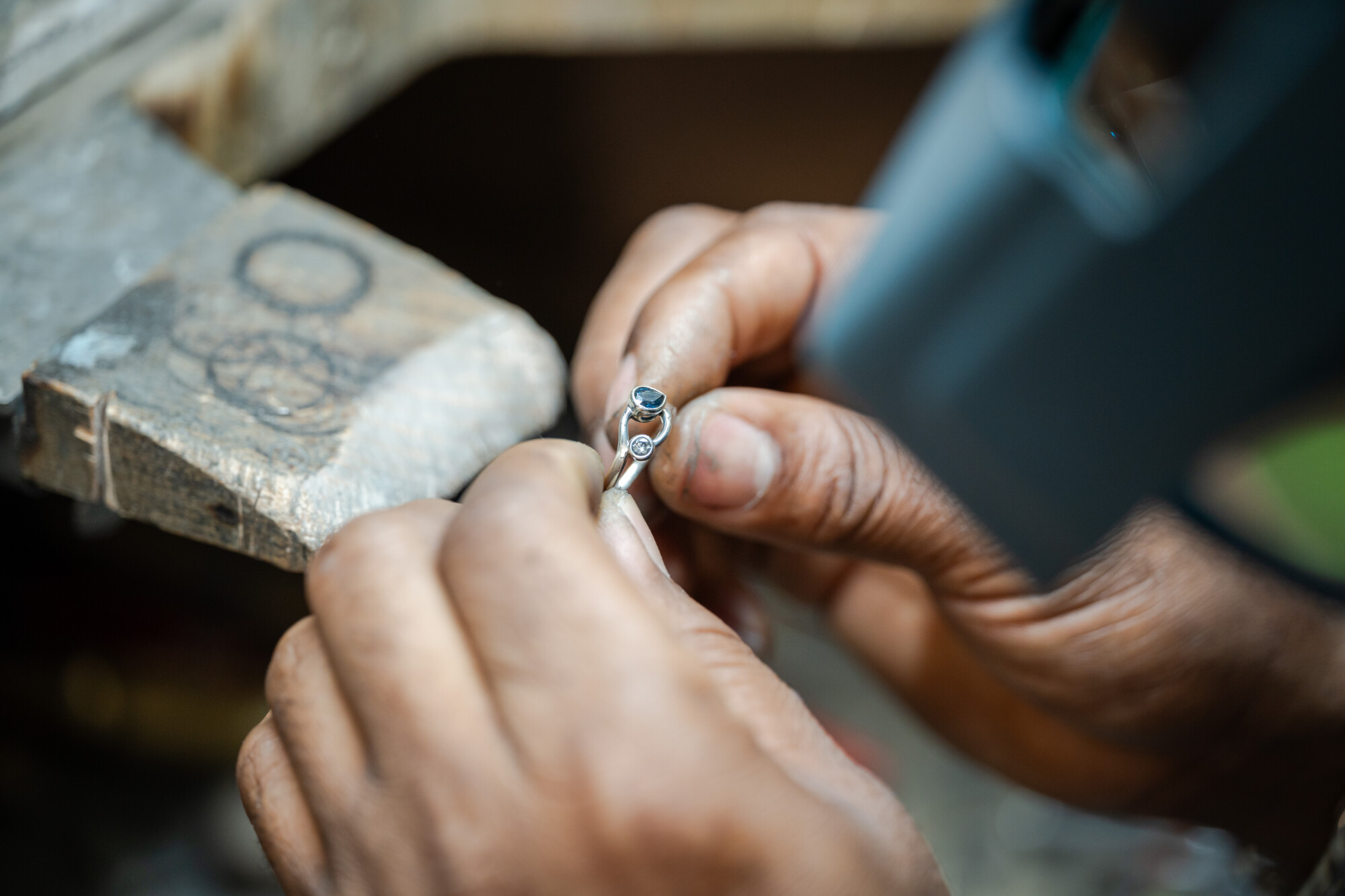
The Sponsor’s Mark
The sponsor’s mark identifies the person or business that submitted the article for hallmarking. It normally combines letters within a distinctive shield shape. Historically, people often called it a maker’s mark, but the sponsor is not necessarily the individual who physically made the piece.
This mark creates traceability to the registered sponsor. Ask the jeweller to show it, especially when the symbols are too small to read without magnification.
The Millesimal Fineness Mark
The number expresses precious-metal content in parts per thousand. For example, 750 gold contains 750 parts of gold per thousand, or 75 per cent. Platinum marked 950 meets a 950-parts-per-thousand standard.
The number appears within a metal-specific shape. Common marks include 375 and 750 for gold, 925 for silver, 950 for platinum and several recognised palladium standards. Do not rely on the number alone when examining an unfamiliar stamp; read it as part of the complete hallmark.
The Assay Office Mark
The assay office symbol shows which authorised office tested and marked the article. The leopard’s head represents London. Other current UK office symbols identify Birmingham, Sheffield and Edinburgh.
The London Assay Office guide illustrates the compulsory marks and optional additions. Its independent role is why a genuine hallmark carries more weight than a retailer’s description alone.
What Are the Hallmarking Weight Exemptions?
An article can be exempt when its precious-metal weight falls below the statutory threshold. The current thresholds are 0.5 grams for platinum, 1 gram for gold, 1 gram for palladium and 7.78 grams for silver.
The relevant weight is the precious-metal content under the rules, not necessarily the total weight shown on a product page. Most substantial engagement and wedding rings exceed the applicable threshold, but small components may not.
Is the Date Letter Compulsory?
No. The date letter became optional in 1999. When present, it identifies the hallmarking year through a cycle of letters and typefaces. It can support dating, but its absence from a modern piece is not evidence of a problem.
Commemorative marks may also appear for special occasions. These are optional and sit alongside, rather than replace, the compulsory elements.
What Is a Traditional Fineness Symbol?
Optional traditional symbols can identify the metal, such as a crown for gold or an orb for platinum. They add visual information but are not needed for a valid modern hallmark when the compulsory marks are present.
Because stamps are tiny, symbols may look incomplete after wear or polishing. A jeweller or assay office can help interpret an unclear sequence.
What Is the Convention Common Control Mark?
The Common Control Mark, often called the CCM, allows an article marked by an authorised office in a participating country to circulate under the international convention rules. It combines a balance-scale symbol with metal and fineness information.
International marks require careful interpretation. A number such as “750” stamped alone may describe fineness in another system, but it is not automatically a full UK hallmark.
Where Should You Look for a Hallmark?
On a ring, the marks commonly appear inside the shank. A jeweller may place them where they are protected yet accessible. On earrings, pendants or bracelets, the location depends on construction and available space.
Use magnification and good light. Photograph the symbols for your records before years of wear soften them. During annual atelier servicing, ask whether polishing could affect a shallow mark.
A Hallmark Is Not a Diamond Certificate
The hallmark concerns precious metal. A GIA or IGI grading report concerns a particular loose diamond’s recorded characteristics. Neither document replaces the other.
Kinzy’s GIA versus IGI guide explains the role and limitations of diamond reports. Keep the report, invoice, valuation and hallmark photographs together.
A Hallmark Is Not a Valuation
A valuation estimates value for a stated purpose and date. It may describe metal, gemstones and construction. The hallmark independently supports the metal fineness, but it does not state replacement cost.
After collecting a bespoke ring, confirm what documentation your insurer requires. Our engagement-ring care guide also explains why paperwork and maintenance should continue after purchase.
How Are Mixed-Metal Pieces Marked?
Mixed precious metals must be described and marked under specific rules. Each precious-metal component may need an appropriate mark when it is large enough and practical to mark. The construction must make the different metals distinguishable under the applicable guidance.
Do not assume the colour of a component proves its metal. White gold, platinum, silver and plated surfaces can look similar when new.
What About Antique or Foreign Jewellery?
Older British hallmarks can contain different combinations and historic assay-office symbols. Foreign articles may carry marks recognised under UK law, convention marks or their country’s domestic system. Age-related exemptions and special categories can also apply.
A missing modern-style hallmark does not automatically prove that an antique is fake. It means the piece needs expert interpretation based on age, origin, construction and marks.
Can a Hallmark Be Fake?
Any small stamp can be imitated, altered or confused with a non-official mark. Read the complete sequence, shield shapes and assay symbol rather than trusting one familiar number.
If the metal or value is material to the purchase, ask an authorised assay office or qualified independent professional for help. Avoid destructive home tests on finished jewellery.
Hallmarking and a Bespoke Kinzy Ring
Metal choice begins during the brief. The platinum versus gold guide compares colour, wear and maintenance. After manufacture, a qualifying ring receives the appropriate independent hallmark before handover.
At collection, ask to see the mark and compare the metal description with the final paperwork. This small check belongs beside inspecting the finish, stone security and fit.
A Buyer’s Hallmark Checklist
- Find the sponsor’s mark.
- Read the millesimal fineness number and its shield.
- Identify the assay office symbol.
- Remember that the date letter is optional on modern pieces.
- Check whether a weight exemption could apply.
- Match the metal to the invoice or valuation.
- Keep a clear photograph with the purchase documents.
- Seek expert interpretation for antique or foreign marks.
Check the Dealer’s Hallmarking Notice
UK dealers supplying precious-metal articles must display the statutory hallmarking notice in the prescribed circumstances. It shows the approved marks and helps buyers compare a tiny stamp with an official reference.
If you cannot read the ring yourself, ask the jeweller to identify each compulsory element under magnification rather than pointing only to a fineness number.
How Kinzy Approaches Hallmarking
Every eligible Kinzy piece is submitted for independent UK hallmarking. The hallmark verifies the precious-metal fineness through an Assay Office; it is separate from the design and making process carried out by our Hatton Garden team.
When you collect your jewellery, your personal jeweller can help you identify the sponsor’s mark, fineness mark and Assay Office mark. Explore Kinzy handcrafted jewellery or contact the showroom if you would like guidance on a particular piece.
Precious Metal, Independently Verified
Kinzy examples in platinum and yellow gold provide relevant finished pieces while the article explains statutory hallmark information.
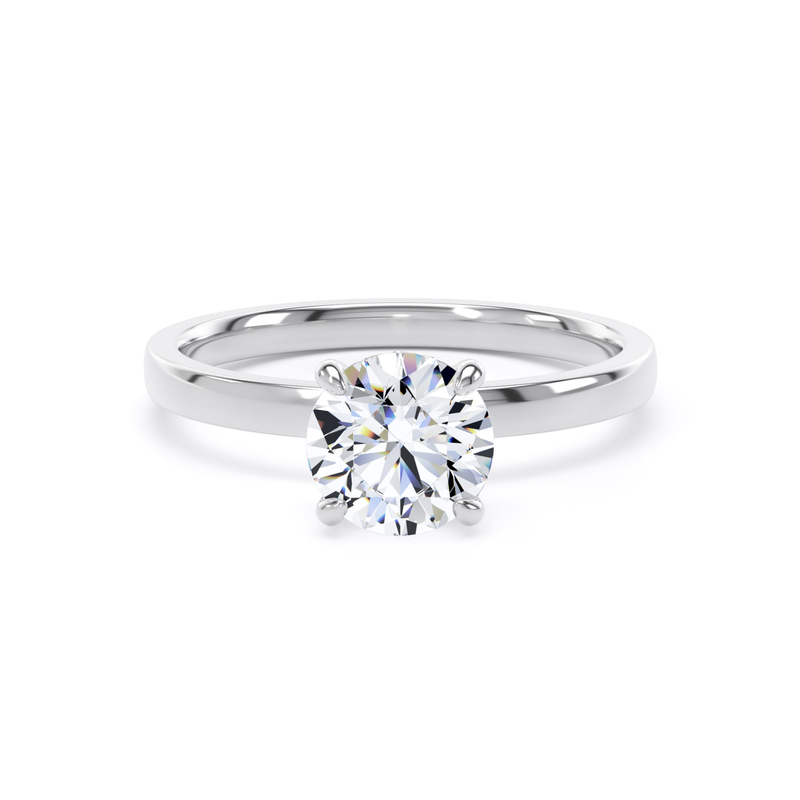
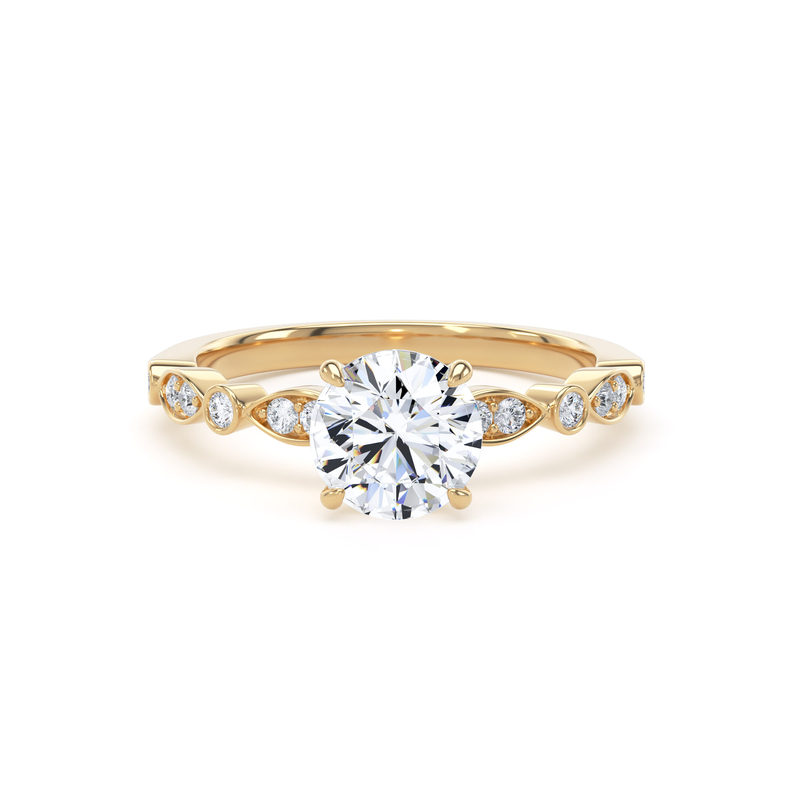
Made in Hatton Garden. Hallmarked in the UK.
Discover how Kinzy craftsmanship and independent hallmarking come together in a finished piece.
Frequently Asked Questions
Does 750 mean 18-carat gold?
It indicates 750 parts of gold per thousand, equivalent to 18 carats. In the UK, read it within the complete hallmark.
Does platinum always have a 950 mark?
950 is common for platinum jewellery, but interpret the number with its metal-specific shield and other hallmark elements.
Why does my ring have no date letter?
The date letter has been optional since 1999, so many valid modern hallmarks omit it.
Is a small gold item allowed without a hallmark?
It may be exempt when its precious-metal weight does not exceed the legal threshold. Other rules still govern accurate description.
Does a hallmark prove a ring was made in London?
No. A London leopard’s-head mark shows that the London Assay Office hallmarked it, not that every production stage happened in London.
Final Thoughts on UK Jewellery Hallmarks
UK jewellery hallmarks are compact evidence, not decoration. Check sponsor, fineness and assay office together, then keep the result with the ring’s other documents.
To examine metals and designs in person, arrange a private Kinzy Hatton Garden consultation.
Related Reading
Articles
Other articles from Kinzy London.
Articles, Bespoke Jewellery, Engagement Rings, Gemstones
How to Add a Hidden Birthstone or Secret Diamond to an Engagement Ring
Articles, Diamond Guides, Engagement Rings, Settings
Does a Bezel Setting Make a Diamond Look Bigger or Smaller?
Articles, Craftsmanship, Engagement Rings, Settings