- Engagement Rings
- Wedding Bands
Shop by style
- Classic
- Diamond Cut
- Two Colour
- Diamond Set
- Shaped
- Vintage
- Gemstone Bands
Shop by metal
- Gemstones
- Fine Jewellery
Fine Jewellery
- About Us
- Education
25 August 2026
What ‘Made In-House’ Really Means in Fine Jewellery
Made in-house jewellery should mean that a jeweller retains meaningful control over the design, manufacture, setting, finishing and quality of a piece. It does not necessarily mean one person completes every specialist task, nor does the phrase alone prove superior quality.
The useful question is not simply, “Is this made in-house?” Ask where each important stage happens, who is responsible for it and how the jeweller checks the result. Clear answers reveal far more than a workshop label.
There Is No Single Definition of Made In-House Jewellery
Fine jewellery businesses use the phrase in different ways. One may design locally but commission production elsewhere. Another may cast externally and complete setting and polishing in its own workshop. A third may manage almost every stage within one atelier.
None of those models is automatically wrong. Specialist collaboration has a long place in jewellery. However, the description should match the reality, especially when local manufacture forms part of the price or brand promise.
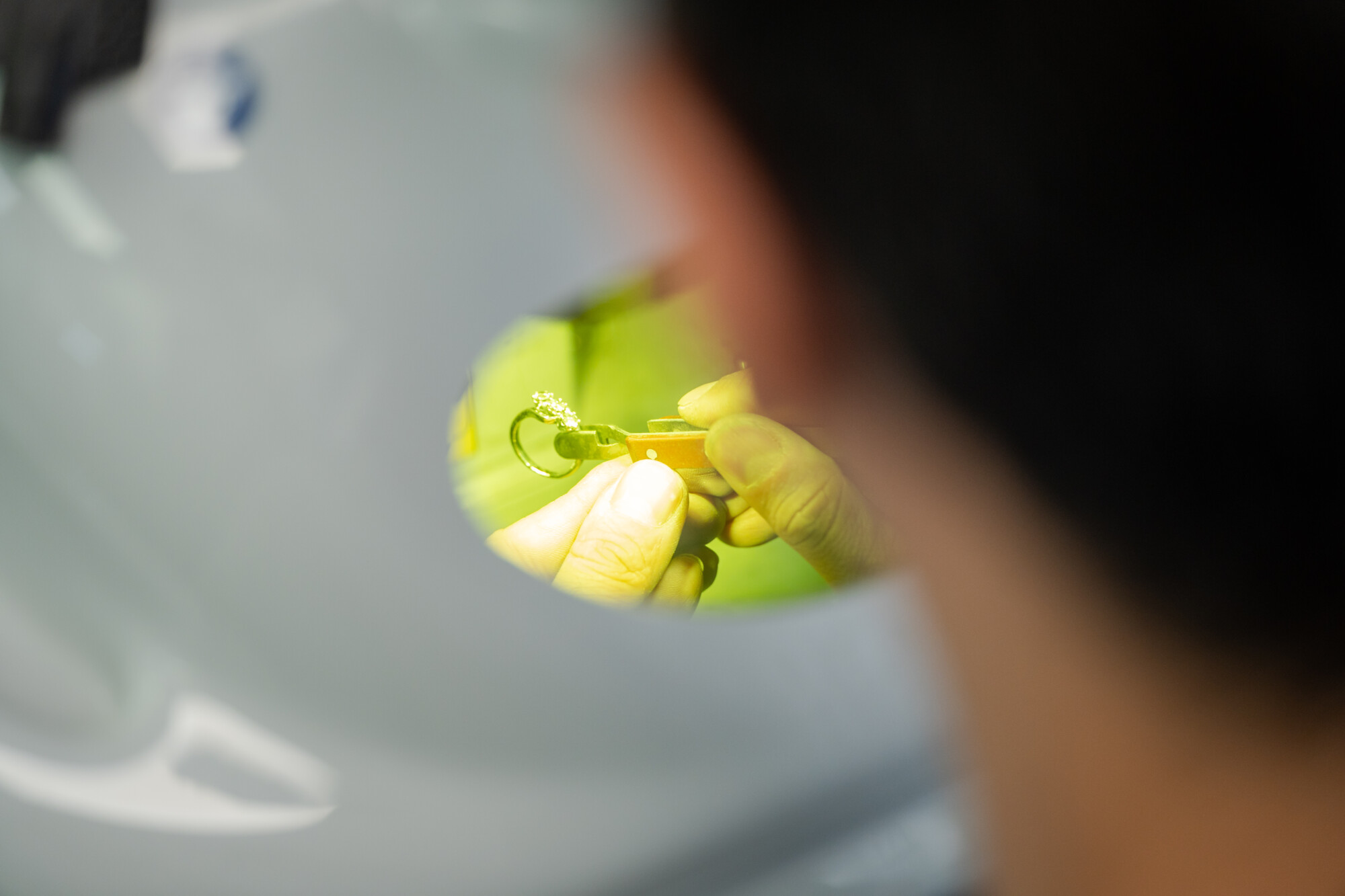
Design Control Comes Before the Bench
In-house responsibility starts with the brief. The designer should understand how the ring will be worn, which proportions matter and what the chosen stone requires. A sketch or attractive reference image is only the beginning.
During the Kinzy bespoke journey, the centre stone, setting, band and wedding-ring relationship are considered as one design. That continuity helps prevent a sales promise from becoming disconnected from workshop reality.
CAD Is a Manufacturing Tool, Not Only a Sales Image
A proper CAD model records geometry. It can define claw position, gallery height, band width and the relationship between stones. When the same team that will make the ring can question the CAD, impractical details are more likely to be corrected before metal is committed.
Clients should receive more than one attractive angle. The Kinzy design process includes multiple CAD views and, where useful, a complimentary wax model. Those stages turn approval into an informed decision.
Does Everything Have to Happen Under One Roof?
No. Casting, laser work, engraving, stone cutting and hallmarking can involve highly specialised equipment or independent experts. The London Assay Office, for example, applies an independent hallmark rather than allowing a jeweller to mark its own article without oversight.
The issue is accountability. The jeweller should know who performs each stage, inspect the work when it returns and remain responsible to the client. Outsourcing becomes concerning when the retailer cannot explain the supply chain or resolve a problem.
Ask Where the Ring Is Actually Made
“Designed in London” and “made in London” describe different things. If origin matters to you, ask where the design, casting or fabrication, setting and finishing take place, and how those stages are connected.
Kinzy describes its work as designed and created through an in-house Hatton Garden atelier. You can see how that making process connects with the wider Kinzy experience, including aftercare long after collection.
Setting Requires Exact Responsibility
The setter creates seats that hold each stone. Too little support can risk movement; too much metal can obscure the diamond or make the design heavy. Pointed shapes require particular protection, while pavé work depends on consistent spacing and secure shared metal.
An in-house team can compare the finished setting with the approved brief and the actual centre stone. Read the engagement-ring settings guide to understand why setting style affects both appearance and wear.
Finishing Is Part of Construction
Polishing should refine the surfaces without softening claws, engraving or crisp edges. Internal areas also matter. A ring that looks bright from above may still have rough galleries, uneven joins or inaccessible residues beneath the stones.
Final inspection should include alignment, stone security, surface finish, hallmark and the agreed dimensions. The Kinzy care guide explains why strong construction still needs sensible wear and periodic checks.
Made In-House Is Not the Same as Handmade
Handmade often suggests traditional fabrication from sheet, wire or other worked components. In-house jewellery may instead combine CAD, casting, laser technology and hand finishing. Modern tools do not remove craftsmanship; they change where judgement is applied.
Ask which method suits your design. A precise geometric ring may benefit from CAD and casting, while a particular texture or restoration may call for hand fabrication. The best method is the one chosen deliberately and executed well.
Made In-House Does Not Guarantee a Unique Design
A workshop can manufacture a repeated catalogue model in-house. Conversely, a bespoke jeweller can create a genuinely individual design while using an outside casting specialist. Production location and design originality are separate facts.
If individuality matters, ask how the brief changes the model. Kinzy’s bespoke engagement-ring service develops the setting around the selected stone and the client’s preferences rather than relying only on a stock image.
Traceability Should Continue Through Approval
A well-managed commission has decision points: written brief, stone confirmation, CAD approval, optional wax review and final sign-off. Each stage should connect to the same job rather than depending on verbal memory.
Ask how revisions are recorded and whether the final piece is compared with the approved dimensions. This matters when a change to height, band width or claw number affects the rest of the design.
Hallmarking Provides Independent Metal Verification
A UK hallmark identifies the sponsor, precious-metal fineness and assay office on qualifying articles. It does not grade workmanship or certify that every manufacturing stage happened locally. Still, it gives independent evidence about the metal.
The London Assay Office hallmark guide explains the compulsory marks. Check the hallmark at collection and make sure the paperwork describes the metal accurately.
Aftercare Tests the Meaning of Accountability
The most revealing moment may come years after purchase. Can the jeweller inspect the exact construction, tighten claws, refinish the surfaces and explain what has worn? A business with close workshop knowledge can often diagnose the piece more confidently.
Kinzy includes complimentary annual atelier care, covering cleaning, polishing, claw tightening and structural assessment. Insurance remains separate, but planned servicing supports long-term wear.
Questions to Ask Before Commissioning
- Which stages will take place in your own atelier?
- Which specialists or external facilities will be involved?
- Who approves the CAD for manufacture?
- Will the setting use the exact centre-stone measurements?
- Can I review a wax model or life-size representation?
- Where will the article be hallmarked?
- Who performs the final quality-control inspection?
- What servicing is available after collection?
Warning Signs Behind a Vague Workshop Claim
Be cautious when answers shift between “our workshop”, “our makers” and “our supplier” without explaining the relationship. Also question a quotation that cannot identify metal fineness, centre-stone dimensions or the approval process.
Transparency does not require disclosing every trade secret. It does require enough detail for you to know what you are buying and who accepts responsibility.
What to Expect from an In-House Process
A genuinely connected making process should feel consistent from the first brief to the final polish. Your personal jeweller should be able to explain how each decision moves through design, CAD, wax, setting and finishing, as well as where an independent step such as hallmarking sits within the journey.
Kinzy pieces are designed, made, set and finished in our Hatton Garden atelier. See the process in our atelier reel, explore Kinzy craftsmanship or reserve a private consultation.
Made in Hatton Garden
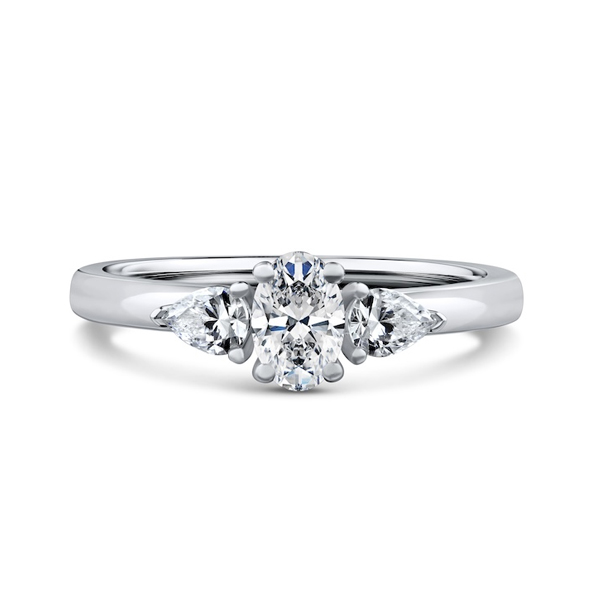
The Kinzy workshop embed and completed trilogy ring connect the phrase made in-house with visible stages and outcomes.
Inside Kinzy’s Hatton Garden Atelier
See how a Kinzy piece develops from CAD through making, setting and hand finishing under one connected team.
Frequently Asked Questions
Does made in-house mean one jeweller makes the whole ring?
Not necessarily. Designers, setters, polishers and hallmarking specialists may contribute. The important points are control, communication and accountability.
Is in-house jewellery always handmade?
No. It can combine CAD, casting, laser work, traditional bench skills and hand finishing.
Is jewellery made in-house automatically better?
No. Quality depends on design judgement, material, execution and inspection. The phrase should prompt useful questions, not replace them.
Can a jeweller use external specialists and still be transparent?
Yes. Specialist collaboration is normal when the jeweller explains it and remains responsible for the result.
How can I verify the precious metal?
Check the UK hallmark on a qualifying article and compare it with the invoice or valuation.
Final Thoughts on Made In-House Jewellery
Made in-house jewellery has value when the phrase describes real oversight from brief to aftercare. Look beyond the label and ask how design decisions, specialist work and quality checks remain connected.
Visit the Kinzy Hatton Garden atelier or arrange a private consultation to discuss how your piece will be developed and made.
×
BESPOKE DESIGN BRIEF
Begin with what you know so far.
A short, considered brief. Nothing needs to be certain yet.
This site is protected by reCAPTCHA and the Google Privacy Policy and Terms of Service apply.
PERSONAL BESPOKE GUIDANCE
Shape the next detail with your Kinzy jeweller.
A short design brief gives our Hatton Garden atelier a thoughtful starting point—whether you have a clear idea or are still comparing possibilities.
Related Reading
Articles
Other articles from Kinzy London.
Articles, Bespoke Jewellery, Engagement Rings, Gemstones
How to Add a Hidden Birthstone or Secret Diamond to an Engagement Ring
Articles, Diamond Guides, Engagement Rings, Settings
Does a Bezel Setting Make a Diamond Look Bigger or Smaller?
Articles, Craftsmanship, Engagement Rings, Settings