- Engagement Rings
- Wedding Bands
Shop by style
- Classic
- Diamond Cut
- Two Colour
- Diamond Set
- Shaped
- Vintage
- Gemstone Bands
Shop by metal
- Gemstones
- Ready To WearFine jewelleryMade to be worn.
Made to last.Diamond jewellery for every day and every occasion.Shop all jewellery →Fine jewellery
Diamond earringsPendantsBraceletsRingsShop allShop by occasion
Gifts under £1,000AnniversaryBirthdayBridal jewelleryAvailable sooner
Ready to dispatchNew arrivalsBestsellersBook an appointmentFine Jewellery
- About UsMade in LondonCrafted by people you can meet.Discover the people, workshop and personal service behind every Kinzy London piece.Meet KinzyRead our story →
About Kinzy
About KinzyOur storyClient storiesMeet your sales associateCraft & care
Our workshopDesign processLifetime Atelier CareOur guaranteesMade in our London workshopCertified diamondsLifetime carePersonal guidance - Education
Learn with Kinzy Diamond guideUnderstand the details that matter→Fit & setting guideChoose comfort and proportion→Behind the craftHow your jewellery is made→Expert guidance, clearly explained.
Practical diamond, gemstone and ring guidance to help you make a confident decision.
Explore all guides →
 Round
Round Oval
Oval Heart
Heart Marquise
 Cushion
 Pear
Pear Emerald
 Asscher
 Radiant
12 September 2026
9ct vs 18ct Gold Wedding Rings: Purity, Colour, Durability and Price
The decision between 9ct vs 18ct gold wedding rings is not a contest with one universal winner. In the UK, both are recognised gold standards. They differ in gold content, alloy composition, colour, material value and the way a particular ring behaves in wear.
The useful question is not “Which carat is strongest?” It is “Which precisely specified ring gives me the colour, construction, budget and long-term care I want?”
The Short Answer
9ct gold is 37.5% gold and carries a 375 fineness mark. 18ct gold is 75% gold and carries a 750 mark. Eighteen-carat yellow gold often looks richer because more of the alloy is gold, while 9ct can appear lighter; however, the remaining metals and the maker’s alloy recipe also influence colour and working properties.
Eighteen-carat normally has a higher material cost for a comparable ring because it contains twice the proportion of gold. The finished price still depends on weight, width, depth, design, finish, manufacture and any stones.
What 9ct and 18ct Actually Mean
Caratage measures the proportion of pure gold in a gold alloy. The World Gold Council’s gold-jewellery guide confirms that 18ct contains 75% gold and that 9ct is the lowest caratage permitted to be called gold in the UK. Pure 24ct gold is alloyed with other metals to produce colours and properties suitable for different jewellery.
- 9ct gold: 375 parts gold per thousand, with 625 parts other alloying metals.
- 18ct gold: 750 parts gold per thousand, with 250 parts other alloying metals.
Those numbers describe purity, not the complete recipe. Two 18ct yellow-gold alloys can vary slightly in hue and hardness. The same is true of two 9ct alloys.
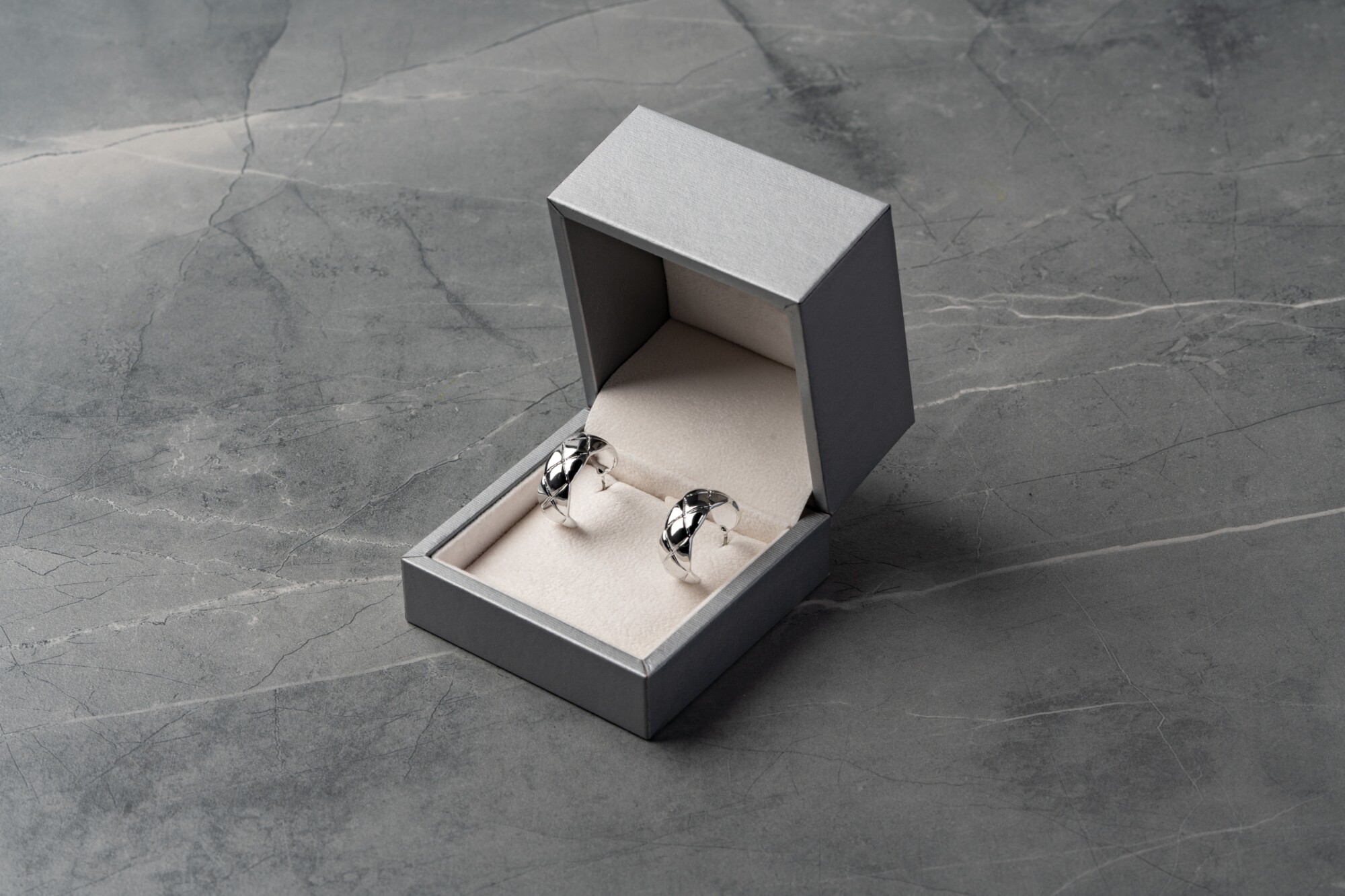
Purity: What You Are Paying For
With an 18ct ring, three quarters of the alloy by weight is gold. With a 9ct ring, just over one third is gold. That difference affects intrinsic precious-metal content, but it does not tell you whether the ring is well proportioned or carefully finished.
A lightweight 18ct band and a more substantial 9ct band are not like-for-like objects. When comparing quotations, align the metal, approximate weight, width, profile, depth and manufacturing method. Kinzy’s guide to bespoke and made-to-order rings explains why the production route also belongs in a proper comparison.
Colour: Caratage Is Only Part of the Story
Yellow gold
18ct yellow gold commonly has a deeper, more saturated yellow appearance. 9ct yellow gold may look paler because a larger portion consists of other metals. Yet alloy recipes vary, so compare samples from the maker who will produce the ring rather than relying on a generic photograph.
White gold
Both 9ct and 18ct white gold are created by alloying gold with whiter metals. White gold is also commonly rhodium plated to give a bright white surface. Ask what lies beneath the plating, which alloy is used and how refinishing is handled. If you are deciding between white gold and a naturally white metal, read platinum vs gold.
Rose gold
Copper-rich alloying contributes rose colour. Caratage changes the amount of room available for other metals, but the exact tone still depends on the recipe. View the proposed wedding ring beside any existing rose-gold jewellery you want it to echo.
Durability: Avoid the “9ct Is Harder” Shortcut
You may hear that 9ct is automatically more durable because it contains more non-gold metal. That compresses several different properties into one word. Hardness, toughness, ductility, scratch behaviour and resistance to deformation are not identical, and all depend on the specific alloy and how it has been worked.
Design also matters. A sufficiently substantial plain band may tolerate daily life better than an overly fine ring in a nominally “harder” alloy. Sharp edges, deep grooves, stone settings and a very thin lower shank introduce different wear considerations.
Both 9ct and 18ct gold will scratch. A polished ring records wear more visibly at first; a textured finish changes in another way. Compare the profile, width and internal fit as part of the durability decision.
Price: Compare the Whole Ring
For two genuinely comparable bands, 18ct normally costs more because its gold content is higher. Gold price moves, though, and a final retail quote includes much more than raw material. A wider, deeper or more intricate 9ct ring may cost more than a slim, simple 18ct band.
Use the Kinzy wedding-band builder to view the metals and configurations currently offered. Do not assume every caratage is available in every combination. If a specific option is not shown, ask through the contact page before building a budget around it.
Hallmarks: Look for 375 or 750
UK hallmarking exists because precious-metal content cannot be judged reliably by sight or touch. Current government hallmarking guidance explains that a full hallmark includes a sponsor’s mark, millesimal fineness mark and Assay Office mark. Weight exemptions apply under the law.
On gold, 375 indicates 9ct and 750 indicates 18ct. The stamp does not grade workmanship, comfort or design quality. Use it to verify precious-metal fineness, then assess the ring itself. Kinzy’s gold and platinum comparison helps place that fineness decision in a wider metal choice.
Match the Wedding Ring to the Engagement Ring
If the rings touch during wear, discuss whether the same alloy and caratage would create the most predictable relationship. Different metals can coexist beautifully, but they may differ in colour, hardness and surface wear. It is a design choice that deserves an explicit conversation.
Look at the set from the side and check whether a straight band can sit comfortably. The guides to diamond wedding bands, engagement-ring settings and bespoke design show why the neighbouring ring and setting geometry matter.
Skin Sensitivity and Alloy Questions
“Gold” does not name every metal in the alloy. If you have a known sensitivity, ask for the full alloy information and explain your history before ordering. Do not rely on caratage alone as a guarantee that a ring will suit your skin.
White-gold formulations deserve particular clarity because the surface plating and underlying alloy are separate considerations. A consultation should record the specification, not simply the colour description.
Care and Refinishing
GIA advises that chemicals can damage or discolour precious metals and that chlorine bleach can pit or damage gold alloys. Its jewellery-care guidance recommends removing fine jewellery before chlorinated pools or household cleaning.
Keep your ring separately protected when it is off the hand. Ask before using an ultrasonic cleaner, particularly if the band contains stones. For a Kinzy creation, review the current scope of lifetime atelier care and follow the service schedule connected to the warranty.
Which Gold Should You Choose?
Choose 18ct if its higher gold content and often richer colour are meaningful to you and sit comfortably within the total budget. Choose 9ct if that available alloy, colour and quoted construction better fit your priorities. Neither label rescues a poorly specified ring.
If you want to compare physical samples, read why buyers use a specialist Hatton Garden jeweller and see how your Kinzy sales associate can help turn colour, fit and budget priorities into a precise brief.
A first-time wearer should compare the fit options in the live wedding-band builder. Someone seeking diamonds should review diamond wedding bands before attributing the whole price difference to gold purity.
Questions to Ask Before Ordering
- Is the ring 375 or 750 gold, and what colour alloy is used?
- Is white gold rhodium plated?
- What width, profile and depth are included in the quote?
- Is the comparison based on similar finished weights?
- How will this alloy look beside my engagement ring?
- How does the design allow for future sizing?
- What hallmark should I expect?
- What care and refinishing may be required?
- What is the current manufacturing estimate for this specification?
Compare Gold Colour and Proportion
Begin with the options available in the live builder, then compare the relevant metal samples and finishes in the showroom before requesting a precise quote.
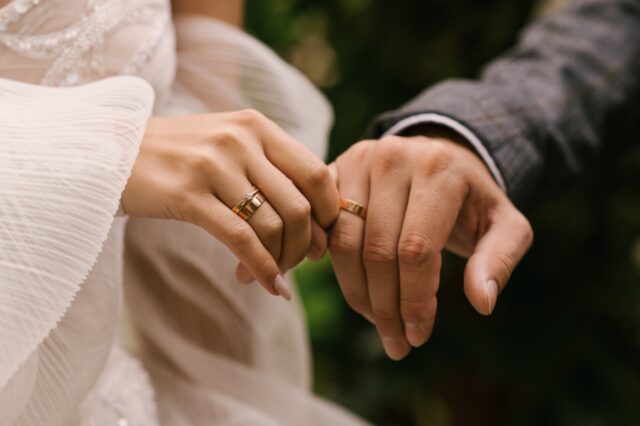
See Gold Colour and Finish on the Hand
This Kinzy wedding-band detail helps you compare warmth, finish and proportion at the scale the ring will be worn.
Frequently Asked Questions
Is 18ct gold exactly twice as pure as 9ct?
Yes in proportional terms: 18ct is 750 parts gold per thousand, while 9ct is 375. Finished-ring prices are not simply doubled because design, weight and labour also contribute.
Is 9ct gold always harder than 18ct?
No reliable buying decision should rest on that blanket claim. Alloy recipe, processing, dimensions and ring design all affect how a band behaves.
Does 18ct yellow gold look more yellow?
It often looks richer because it contains more gold, but exact tone varies by alloy. Compare the maker’s physical samples.
Can I wear a 9ct wedding ring beside an 18ct engagement ring?
You can choose different caratages, but discuss colour, contact and wear with the maker so the combination is deliberate.
Does the Kinzy builder offer both 9ct and 18ct?
Use the live builder for the options currently displayed. If your preferred caratage is not shown, contact Kinzy rather than assuming availability.
Choosing Between 9ct and 18ct Gold
Comparing 9ct vs 18ct gold wedding rings begins with 375 versus 750 purity, but it should end with the whole specification. Colour, alloy, dimensions, finish, hallmark, care and the neighbouring engagement ring all matter.
Check current configurations in the wedding-band builder, then book a Kinzy consultation to compare real samples and a properly aligned quote.
×
WEDDING RING CONSULTATION
Tell us what you are considering.
A short, considered brief. Nothing needs to be certain yet.
This site is protected by reCAPTCHA and the Google Privacy Policy and Terms of Service apply.
WEDDING RING CONSULTATION
Choose a wedding ring that feels entirely yours.
From proportion and comfort to finish and fit, a short brief lets your Kinzy jeweller prepare considered options before your consultation.
Related Reading
Articles
Other articles from Kinzy London.
Articles, Buying Guides, Engagement Rings, Ring Settings
Cathedral vs Non-Cathedral Engagement Rings: What Changes from the Side?
Articles, Buying Guides, Engagement Rings, Ring Settings
Full Bezel vs Half Bezel: Which Setting Is Right for Your Diamond?
Articles, Buying Guides, Engagement Rings, Ring Settings