- Engagement Rings
- Wedding Bands
Shop by style
- Classic
- Diamond Cut
- Two Colour
- Diamond Set
- Shaped
- Vintage
- Gemstone Bands
Shop by metal
- Gemstones
- Fine Jewellery
Fine Jewellery
- About Us
- Education
19 August 2026
Should You Propose with a Temporary Ring and Design the Engagement Ring Together?
To propose with a temporary ring can be a thoughtful choice when you want the proposal to remain a surprise but do not want to guess the final diamond, metal or setting. After the proposal, you design the permanent engagement ring together.
This route is not less romantic than presenting the finished ring. It separates two moments: the private decision to propose and the collaborative creation of a piece intended for daily wear. The right choice depends on how strongly the wearer has expressed their taste and how much they would value participating.
Kinzy does not currently supply a temporary or presentation ring. We can help you plan the proposal and prepare a couples’ design appointment for the permanent ring.
Propose with a Temporary Ring: The Short Answer
A temporary or holding ring makes sense when:
- The wearer has strong taste but has not chosen a design.
- Natural versus laboratory-grown origin is uncertain.
- Ring size is difficult to establish discreetly.
- A family diamond or old jewellery needs assessment.
- The final ring will involve CAD, wax and personal approvals.
- The proposal date comes before a realistic bespoke-production window.
A finished surprise ring may be better when the wearer has shared clear preferences and would value one complete reveal. Read how Kinzy creates bespoke engagement rings before deciding which moment should carry the design choice.
What Is a Temporary Proposal Ring?
A temporary proposal ring is a modest ring used for the proposal while the permanent engagement ring is still to be chosen or made. It may be a simple symbolic band, an inexpensive dress ring or a jeweller’s holding design.
It should never be represented as a diamond or precious metal that it is not. The purpose is symbolism and flexibility, not imitation. Decide in advance whether it will later be kept as a travel ring, worn on another finger or preserved with the proposal memories.
Ask the jeweller whether any holding-ring programme exists and what its written terms are. Do not assume its cost will be credited towards the final commission.
Why Designing Together Can Improve the Final Ring
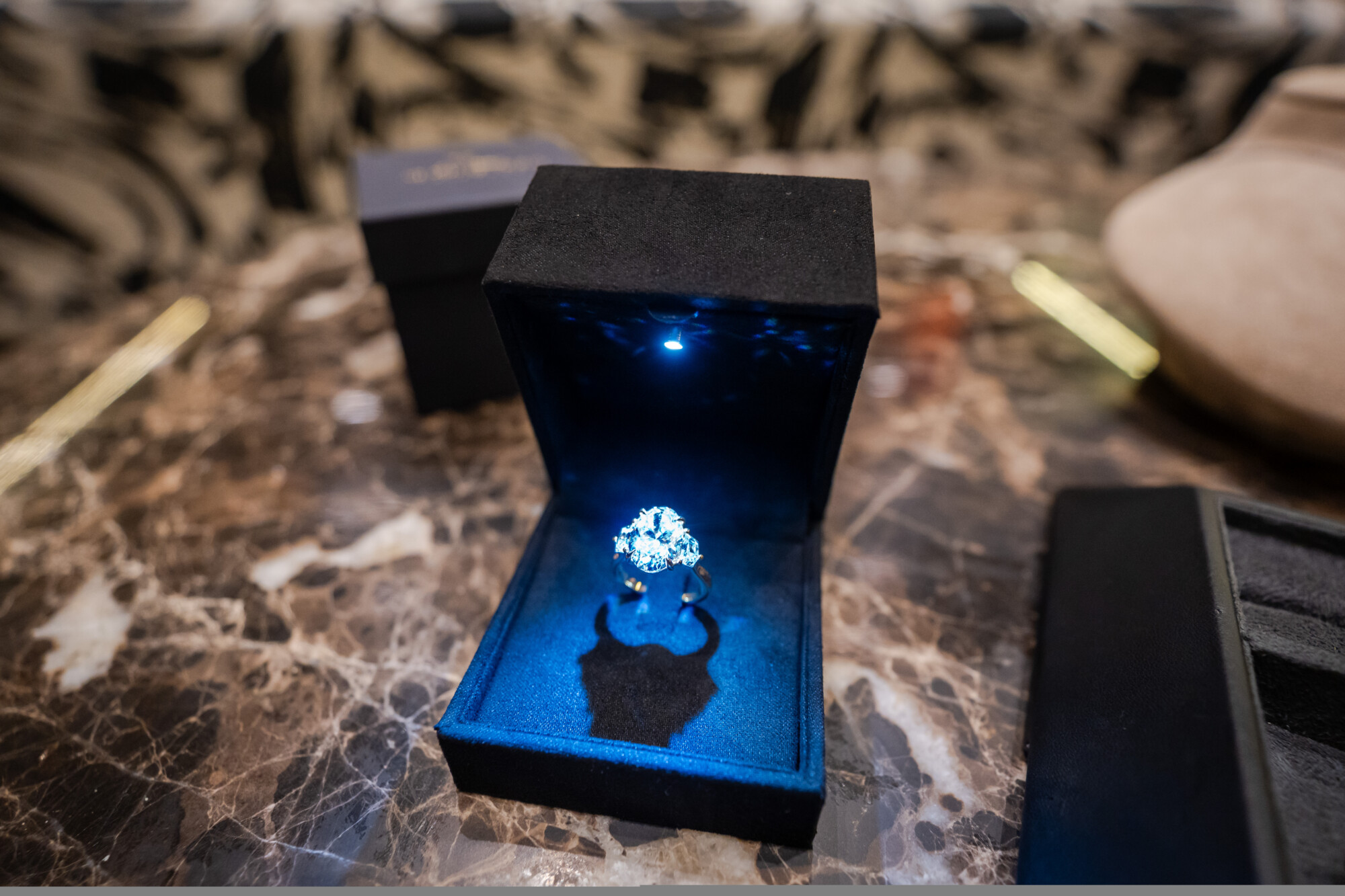
The wearer can compare shapes on their own hand, feel different band widths and explain how they use their hands. They can also decide whether they prefer a clean solitaire, diamond shoulders, a hidden halo or a lower setting.
These details are difficult to infer from a saved photograph. An oval may look elegant online but feel too elongated on the hand. A high gallery may appear dramatic yet conflict with work or childcare. Compare diamond shapes and engagement-ring settings together.
Participation also lets the wearer judge natural and laboratory-grown diamonds without the proposer trying to predict their values. The natural versus lab-grown guide explains why the decision is more than size.
When a Finished Surprise Ring Is Still the Better Choice
Some people want the ring to arrive with the proposal and would find a second design stage anticlimactic. A surprise can work beautifully when the wearer has identified a shape, metal and style or when a trusted person can verify those choices.
The proposer should still protect flexibility. Confirm the resizing policy, realistic production time and what happens if the design needs a material change. Our guide to common engagement-ring mistakes helps avoid relying on ring size or trend assumptions.
OPTION 1
Choose the final ring in secret
Work privately with your Kinzy jeweller to plan the diamond, setting, size and timing before the proposal.
OPTION 2
Keep the proposal secret, choose the ring together
Plan the proposal now, then return together to select the diamond and create the permanent ring.
The Emotional Question: Choice or One Complete Reveal?
Neither preference is more sophisticated. Some wearers experience participation as part of the love story. Others value the knowledge that their partner chose every detail alone.
Look for prior behaviour. Does the wearer carefully select jewellery and return items that are almost right? Have they spoken about wanting to choose their own diamond? Or do they treasure objects chosen for them because of the giver’s intention?
A temporary ring is strongest when it honours the person rather than reducing the proposer’s risk.
How Much Should You Spend on the Temporary Ring?
Spend only what makes sense for an object that is not the final engagement ring. A symbolic band can be beautifully presented without consuming the design budget. The permanent piece should remain the priority unless the temporary ring has an intended life of its own.
Be careful with return windows and personalised items. Engraving may make a ring non-returnable. Read the written terms before the proposal and keep the receipt discreetly.
Use the engagement-ring spending guide to set the complete budget first.
What Happens After the Proposal?
- Celebrate before turning the evening into a shopping appointment.
- Explain that the temporary ring protects their role in the final design.
- Agree a total budget privately and honestly.
- Collect a small set of inspiration images.
- Book a consultation and compare shapes, stones and metals.
- Approve the centre stone before the final CAD.
- Review CAD, wax and the wedding-band relationship.
- Confirm the production schedule and collection plan.
The Kinzy design process explains the route from first conversation to finished jewellery.
How Kinzy Supports Collaborative Design
Kinzy’s bespoke process gives clients the opportunity to review CAD, see a wax model and personally select their diamond or gemstones. Designing the permanent ring together allows the wearer to take part in those meaningful choices.
Kinzy’s approach is calm and collaborative. The client-review post describes requested alterations being accommodated before the design moved forward.
A Supported, Unpressured Appointment
Kinzy consultations give couples time, clear options and personal guidance while selecting the diamond and planning the permanent ring.
The purpose is to give each couple a considered route from the first appointment to the finished piece, without pressure to decide every detail at once.
Ring Size and the Temporary-Ring Advantage
A proposal ring can be chosen in an adjustable or forgiving format, provided it remains secure and comfortable. The permanent ring can then be sized properly after the proposal.
Do not force a ring that is too small or wear one that could slip off. Finger size changes with temperature and time of day. A wide final band may also fit differently from a narrow temporary ring.
For long-term ownership, read the Kinzy engagement-ring care guide.
Using a Family Diamond After the Proposal
A temporary ring is particularly useful when an heirloom diamond has not yet been inspected. The sentimental gesture can happen without rushing a stone assessment or dismantling old jewellery before consent is clear.
The family stone should be measured, checked for damage and discussed in relation to origin documentation and insurance. If the design changes, preserve records and photographs. Kinzy’s client stories can provide inspiration without substituting for the family’s own decisions.
Planning the Wedding Band at the Same Time
Designing after the proposal gives the couple an opportunity to consider the wedding band before the engagement-ring gallery is fixed. A straight band, fitted contour or intentional gap can be planned through CAD.
This can prevent abrasion and avoid discovering later that the preferred band will not sit safely. Explore diamond wedding bands and bespoke designs as one bridal system.
A Decision Checklist
- Has the wearer clearly named a shape, metal and setting?
- Would they enjoy comparing diamonds and approving CAD?
- Is exact ring size known?
- Does the proposal date allow enough production time?
- Will the temporary ring have a purpose afterwards?
- Are all return, credit and engraving terms written down?
- Can the total budget accommodate both rings comfortably?
To discuss either route without pressure, book a complimentary Kinzy consultation at the Greville Street showroom.
Featured Kinzy Pieces and Services
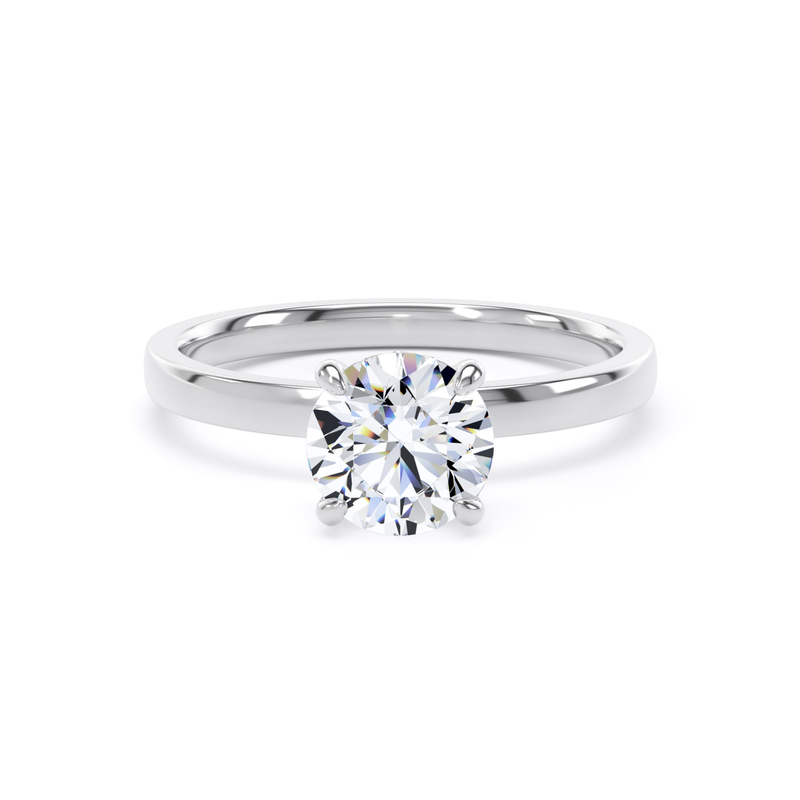
A classic Kinzy solitaire offers a clear starting point when a couple plans the permanent ring together after proposing.
Related Reading and Services
- Round engagement rings.
- Engagement rings.
- Create your own ring.
- Bespoke jewellery service.
- Kinzy design process.
- Book a private consultation.
- High-Set Traditional Round Engagement Ring in Platinum.
A Solitaire Reference to Discuss Together
This Kinzy Instagram post offers a clear visual reference for solitaire proportions and setting details when discussing the final ring together.
Frequently Asked Questions
Is it acceptable to propose with a temporary ring?
Yes. Explain the intention clearly and choose a symbolic ring that does not pretend to be the finished piece.
Does a temporary proposal ring make the proposal less special?
Not when it reflects the wearer. It can create a second meaningful experience: designing the permanent ring together.
Can I propose without any ring?
Yes. A proposal is not legally or emotionally dependent on jewellery. You can arrange the design journey afterwards.
How soon should we book the design consultation?
Whenever you are ready to make decisions. Discuss any wedding or travel deadline at the first appointment so the schedule is realistic.
Can the temporary ring become a wedding ring?
Possibly, if its metal, structure and meaning suit that purpose. Confirm practicality before relying on the idea.
Final Thoughts: Should You Propose with a Temporary Ring?
To propose with a temporary ring is an elegant solution when the commitment is certain but the final design should be shared. It preserves surprise without turning style, sizing and diamond origin into guesses.
If the wearer has already expressed a precise vision, a finished surprise ring may be equally right. Choose the route that respects how they make meaningful decisions.
Related Reading
Articles
Other articles from Kinzy London.
Articles, Bespoke Jewellery, Engagement Rings, Gemstones
How to Add a Hidden Birthstone or Secret Diamond to an Engagement Ring
Articles, Diamond Guides, Engagement Rings, Settings
Does a Bezel Setting Make a Diamond Look Bigger or Smaller?
Articles, Craftsmanship, Engagement Rings, Settings