- Engagement Rings
- Wedding Bands
Shop by style
- Classic
- Diamond Cut
- Two Colour
- Diamond Set
- Shaped
- Vintage
- Gemstone Bands
Shop by metal
- Gemstones
- Fine Jewellery
Fine Jewellery
- About Us
- Education
18 August 2026
How to Design an Engagement Ring as a Surprise
Designing an engagement ring as a surprise asks you to make personal decisions without the wearer in the room. The safest approach is not to guess every detail boldly. It is to separate what you know, what you can research discreetly and what the design should leave adjustable.
A thoughtful surprise can still feel deeply specific. Style clues, daily jewellery, lifestyle and a trusted confidant often reveal enough to create a strong direction while protecting the proposal.
PRIVATE PROPOSAL CONCIERGE
Planning the proposal in secret?
Your Kinzy jeweller can help you narrow the design, diamond and ring size discreetly before you visit.
Decide What the Surprise Actually Includes
Some people want the entire ring to be a surprise. Others prefer a surprise proposal followed by choosing or designing the permanent ring together. Kinzy can help you plan either route privately, without supplying a temporary or presentation ring.
None is more romantic by default. Think about how your partner makes important aesthetic decisions. Someone who researches every purchase may value participation. Someone who has repeatedly shown one exact style may enjoy a complete reveal.
Build a Quiet Style Profile
Look at the jewellery your partner already wears. Note metal colour, scale, symmetry and whether the pieces feel minimal or decorative. Daily behaviour is more reliable than one image saved years ago.
Then review any shared comments. Have they admired oval diamonds, yellow gold or antique details? Do they dislike halos or high settings? Record direct evidence separately from your interpretation.
Our guide to choosing an engagement-ring diamond shape can help translate those clues into practical options.
Choose One Trusted Confidant
A close friend or sibling may know preferences that have never reached you. Choose someone discreet who can distinguish their own taste from your partner’s. Too many helpers create leaks and contradictory advice.
Give the confidant specific questions. Ask about metal colour, diamond shape, simple versus detailed design and whether the wearer expects to choose the ring. Avoid sending them into a direct interrogation that reveals the plan.
Research Ring Size Without Creating False Certainty
The most reliable size comes from professional measurement of the correct finger. Secret methods are estimates. A ring borrowed from another finger may differ, and temperature or band width can alter fit.
GIA’s ring-size guidance warns against relying on string or paper and suggests using a ring that fits or asking someone close. If you borrow a ring, note which hand and finger it belongs to.
Tell the jeweller that the size is uncertain. The construction can then avoid features that make later resizing unusually difficult.
Unsure of their size? Get discreet sizing guidance →
Set a Budget Before the Secret Search Expands
A private maximum keeps the project grounded. Decide whether the figure includes engraving, insurance, wedding-band planning and possible resizing. Do not let secrecy prevent you from asking for an itemised quotation.
Our article on engagement-ring spending in the UK rejects salary formulas in favour of personal affordability.
Select the Centre Stone Through Visual Evidence
If your partner has named a shape, preserve that preference unless a serious practical concern appears. Then compare suitable diamonds for outline, light, measurements and value. A certificate supports the decision but does not choose for you.
For elongated diamonds, inspect ratio and bow tie. For step cuts, clarity and transparency become more visible. Review the Kinzy diamond-certification guide before comparing grades.
Use Lifestyle as a Design Filter
A person who works with their hands may benefit from a lower, protected setting. Gloves, sport, childcare and clinical work can all influence height and claw exposure. The goal is not to remove beauty but to choose a beauty that belongs in daily life.
The engagement-ring settings guide explains how solitaire, halo, trilogy and other structures affect the profile.
Choose a Design with a Clear Centre of Gravity
When evidence is limited, avoid combining every attractive idea. Choose one confident principle: a graceful oval solitaire, a refined trilogy or a low bezel around a meaningful stone. Additional detail can live in the gallery or engraving.
A coherent ring is easier to love and easier to adjust. Trends can support the brief, but they should not replace what your partner already wears.
Think About the Wedding Band Before Approval
A surprise ring may create a second surprise if no wedding band sits beside it. Ask whether a straight band can fit, whether an intentional gap will appear or whether a shaped band is likely.
Kinzy’s diamond wedding-band guide shows how width, height and setting style affect the pair. You do not need to order both now, but the engagement-ring gallery should preserve the intended option.
Use CAD to Test the Assumptions
CAD can expose whether the centre looks too large for the band, whether the shoulders feel heavy or whether the gallery sits higher than expected. Review the top, side and three-quarter views.
A wax model adds physical scale. You can compare it with a ring your partner wears or with a correctly sized sample. The Kinzy CAD and wax process allows important proportions to be refined before precious-metal work begins.
Have an idea already? Start a private design brief →
Plan the Reveal and the Adjustment Conversation
Present the ring as a considered choice, not a test your partner must pass. Make it clear that fit can be corrected and honest design feedback is welcome. The meaning of the proposal is not diminished by a practical adjustment.
Keep the paperwork, grading report and aftercare information safe. Avoid planning an immediate holiday activity that exposes a loose ring to water or loss before the fit is confirmed.
Protect the Secret Without Hiding Commercial Terms
Use a private email address if necessary and agree how the jeweller may contact you. Store CADs and receipts outside shared devices. However, do not let secrecy stop you reading the terms, checking the report number or understanding the warranty.
Kinzy can manage a discreet Hatton Garden consultation and discuss which decisions should remain flexible.
Surprise-Ring Mistakes to Avoid
- Assuming one social-media post defines permanent taste.
- Measuring a ring without knowing which finger it fits.
- Choosing maximum carat weight at the expense of outline or light.
- Filling the entire band with diamonds before size is confirmed.
- Ignoring the side profile and future wedding band.
- Inviting too many people into the secret.
- Using a deadline to skip CAD or quality control.
- Expecting the wearer to hide discomfort to protect your feelings.
Build Resizing into the Surprise Plan
Even careful detective work can produce the wrong size. Ask which parts of the proposed ring make adjustment easier or harder. A plain lower shank usually offers more flexibility than diamonds, engraving or complex patterning around the full circumference.
Confirm the jeweller’s resizing terms before collection and avoid forcing a tight ring over the knuckle during the proposal. If the ring is loose, use a temporary, jeweller-approved solution and arrange assessment promptly rather than altering it elsewhere.
How Kinzy Supports a Discreet Bespoke Journey
Kinzy’s bespoke journey includes personal stone selection, CAD approval and a wax model. For a surprise commission, decide early who will approve each stage: the proposer can complete them discreetly, involve the recipient selectively or reserve some design choices until after the proposal.
Kinzy clients often value the time, choice and unpressured guidance offered during a commission. Those same principles are especially useful when planning a proposal discreetly.
Use the design process to decide which approvals can remain confidential, review the ring care and sizing guidance, and tell Kinzy the proposal date before production begins. Discretion should never require guessing away every meaningful preference.
Featured Kinzy Pieces and Services
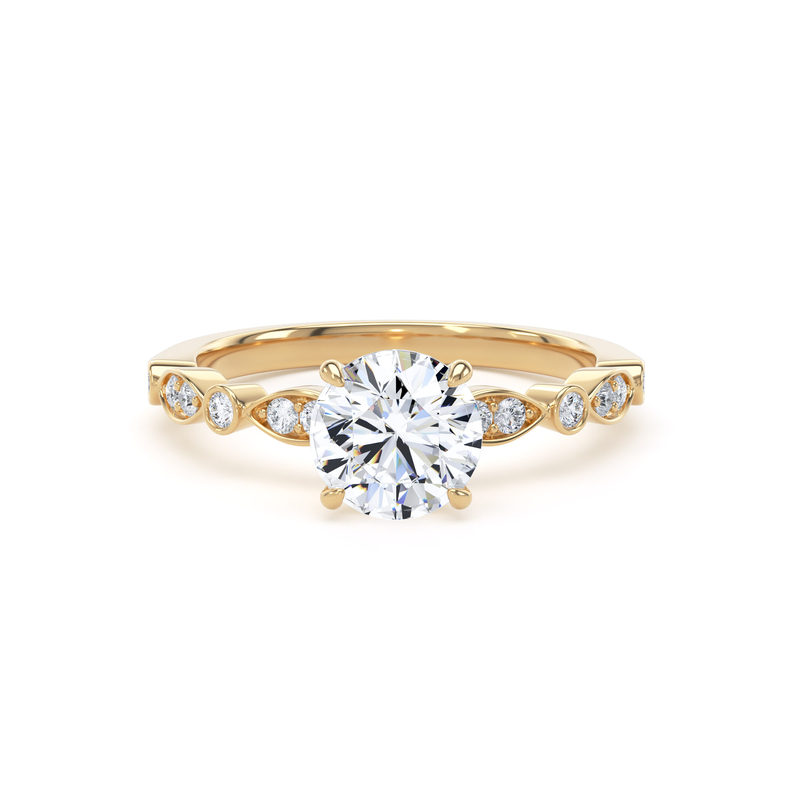
This detailed Kinzy ring is a useful prompt for discreet conversations about taste, metal colour and decorative character.
Related Reading and Services
- Round engagement rings.
- Yellow-gold engagement rings.
- Engagement rings.
- Bespoke jewellery service.
- Kinzy design process.
- Book a private consultation.
- Round Vintage-Style Engagement Ring in Yellow Gold.
A Vintage-Inspired Design Reference
This Kinzy reel offers a visual reference for vintage-inspired yellow-gold details and the craftsmanship that can inform a discreet bespoke brief.
Frequently Asked Questions
How can I find a ring size secretly?
Use a ring worn on the correct finger or ask one trusted person. Treat the result as an estimate and choose a design that permits sensible resizing.
Should I choose a natural or lab-grown diamond?
Follow your partner’s known values and preferences. If these are unknown, discuss the difference with the jeweller rather than assuming price alone settles it.
What is the safest surprise setting?
There is no universal answer. A refined solitaire in a resizable band often leaves flexibility, but lifestyle and diamond shape still matter.
Can the design change after the proposal?
Resizing and minor adjustments may be possible. A complete redesign depends on the order terms and whether manufacture has finished, so discuss flexibility before approval.
Can I propose before the permanent ring is ready?
Yes. You can propose with another meaningful object, then return together for a couples’ design appointment. Kinzy can help plan the consultation but does not currently supply a temporary or presentation ring.
Final Thoughts on an Engagement Ring as a Surprise
An engagement ring as a surprise succeeds through observation, restraint and honest planning. You do not need perfect information; you need a design that honours what you know and manages what you do not.
Explore bespoke engagement rings in London and arrange a private Kinzy appointment to plan the proposal discreetly.
PRIVATE CONSULTATION
Ready to plan the proposal?
Tell us what you know so far. Your Kinzy jeweller can prepare the most relevant options before you visit.
Related Reading
Articles
Other articles from Kinzy London.
Articles, Bespoke Jewellery, Engagement Rings, Gemstones
How to Add a Hidden Birthstone or Secret Diamond to an Engagement Ring
Articles, Diamond Guides, Engagement Rings, Settings
Does a Bezel Setting Make a Diamond Look Bigger or Smaller?
Articles, Craftsmanship, Engagement Rings, Settings