- Engagement Rings
- Wedding Bands
Shop by style
- Classic
- Diamond Cut
- Two Colour
- Diamond Set
- Shaped
- Vintage
- Gemstone Bands
Shop by metal
- Gemstones
- Ready To WearFine jewelleryMade to be worn.
Made to last.Diamond jewellery for every day and every occasion.Shop all jewellery →Fine jewellery
Diamond earringsPendantsBraceletsRingsShop allShop by occasion
Gifts under £1,000AnniversaryBirthdayBridal jewelleryAvailable sooner
Ready to dispatchNew arrivalsBestsellersBook an appointmentFine Jewellery
- About UsMade in LondonCrafted by people you can meet.Discover the people, workshop and personal service behind every Kinzy London piece.Meet KinzyRead our story →
About Kinzy
About KinzyOur storyClient storiesMeet your sales associateCraft & care
Our workshopDesign processLifetime Atelier CareOur guaranteesMade in our London workshopCertified diamondsLifetime carePersonal guidance - Education
Learn with Kinzy Diamond guideUnderstand the details that matter→Fit & setting guideChoose comfort and proportion→Behind the craftHow your jewellery is made→Expert guidance, clearly explained.
Practical diamond, gemstone and ring guidance to help you make a confident decision.
Explore all guides →
 Round
Round Oval
Oval Heart
Heart Marquise
 Cushion
 Pear
Pear Emerald
 Asscher
 Radiant
20 September 2026
Pavé vs Channel-Set Diamond Shoulders: Sparkle, Security and Resizing Compared
Comparing pavé vs channel-set diamond shoulders is not simply “more sparkle” versus “more security”. The two methods hold small diamonds with different metal structures. Pavé uses beads raised from the surrounding metal; channel setting secures a row between opposing walls.
Those structures change the visible metal, the stone shapes available, the feel at the edge of the band, what happens if the shank distorts and how much plain sizing space remains. The decision should be made together with band width, coverage and future wedding-ring contact.
Pavé vs Channel-Set Diamond Shoulders: The Core Difference
GIA’s technical overview of melee setting styles describes pavé as rows of small stones held with hand-raised beads. In channel setting, stones sit between two opposing walls with supports beneath and no beads or prongs securing each stone from above.
- Pavé shoulders: small diamonds appear closely spread across the surface, with tiny metal beads between or around them.
- Channel-set shoulders: stones form an ordered row inside two visible rails of metal.
Terms such as micro-pavé, bead-and-bright and shared-prong are sometimes used loosely in retail descriptions. Ask for the exact setting method, not only a broad style name.
How the Sparkle Looks
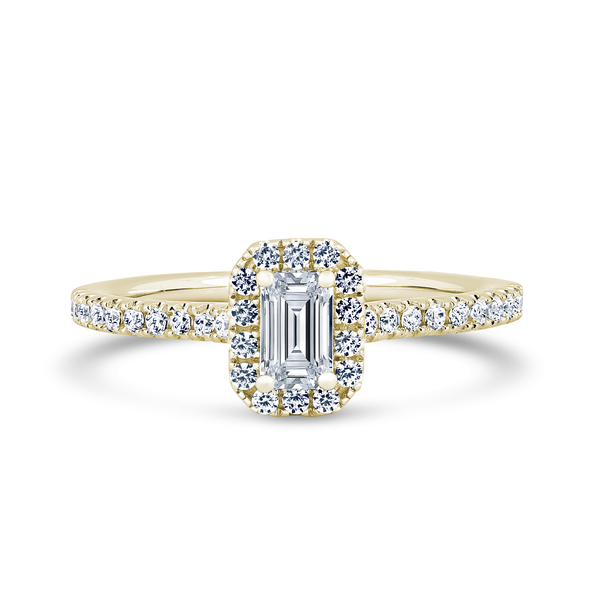
Pavé can create a fine field of scintillation because many small round diamonds sit close together and the beads are visually restrained. One or more rows may cover much of the band’s upper surface. The effect can look delicate, textural and almost continuous.
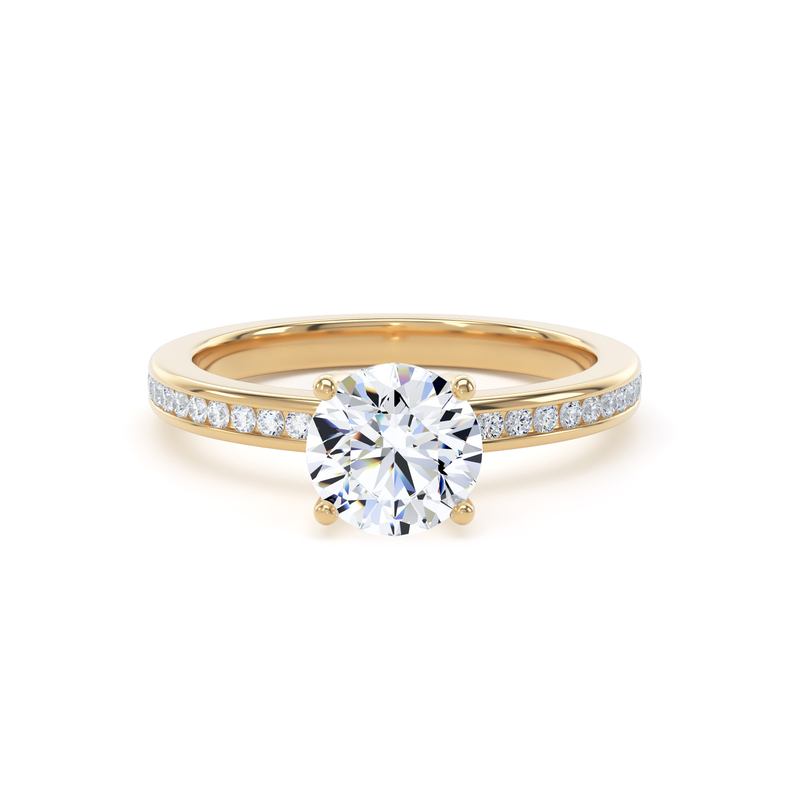
Channel setting creates a defined ribbon of stones bordered by polished metal. Round diamonds leave small metal spaces within the row; princess or baguette shapes can form a more geometric, edge-to-edge line. The side rails remain an intentional part of the design.
Neither method guarantees “more” sparkle. Total diamond weight, stone count, cutting, cleanliness and how far the setting travels around the finger all matter. Use Kinzy’s solitaire versus shoulder-set guide to decide whether any side diamonds improve the centre composition.
Visible Metal and Design Character
Pavé minimises the impression of broad metal borders, although tiny beads and bright-cut edges remain part of the surface. It often suits a ring intended to look light, intricate or softly brilliant.
Channel setting celebrates two crisp rails. Those lines can make the band feel streamlined and architectural, particularly with square stones. The channel may taper towards the centre or remain consistent in width.
Compare the overall setting language through Kinzy’s engagement-ring settings guide. Centre claws, halos and galleries still need their own decisions; shoulder setting is only one layer.
Security: Understand the Different Failure Points
In pavé, each diamond is secured by small beads of metal. Good workmanship places those beads accurately and retains enough surrounding metal to support the pattern. Wear, a hard knock or work performed elsewhere on the shank can affect individual contacts.
In a channel, the side walls secure the row. GIA’s guide to side-stone settings notes that channel-set gemstones are protected and the style can suit daily wear. Yet a distorted or worn wall may affect more than one neighbouring stone, so the rails and stone movement must be checked.
Neither system makes an engagement ring impact-proof. Remove fine jewellery for activities likely to strike, crush or sharply flex the band.
Snagging and the Feel of the Band
A well-finished channel has a smooth outer rail and no bead tips over individual stones. This often creates a streamlined edge. The channel can still feel broad or deep if larger stones and substantial walls are used.
Fine pavé beads should sit securely against the stones without sharp projections. Multiple rows or diamonds extending down the sides may introduce more texture where the ring meets adjacent fingers. Try the ring at normal hand scale and move the fingers rather than judging a magnified image.
Round, Princess and Baguette Side Diamonds
Pavé most commonly uses small round melee because the stones and beads can create a closely packed surface. The precise pattern—one row, several rows or graduating stones—changes both appearance and required metal.
Channel setting can use round, princess or baguette diamonds. GIA’s guide to building an engagement-ring setting explains that stones of the same size are placed edge to edge between parallel walls. Calibration matters: the row relies on closely matched dimensions and accurate seats.
The side-stone shape should support the centre. Princess-channel shoulders may echo an emerald or radiant diamond’s geometry; round pavé can soften an angular centre. Kinzy’s radiant versus emerald-cut guide helps distinguish the centre shapes before you coordinate the band.
Band Width and Metal Margins
Both methods need enough metal for their structure. Pavé requires sound material around the holes and beads. A channel needs two continuous side walls and support beneath the stones. Making the shank visually fine must not remove the metal that allows the setting to function.
Ask for the finished width and depth at the diamond-set shoulder and at the plain lower shank. A taper may be attractive, but the narrowest structural point should be intentional. Kinzy’s published craftsmanship approach gives useful context for discussing proportion rather than surface style alone.
Half, Three-Quarter or Full Coverage
“Diamond shoulders” does not say how far the stones continue. Half coverage keeps more of the lower shank plain; three-quarter coverage carries sparkle farther around the hand; full eternity-style coverage removes the plain section.
Coverage affects comfort, visibility when the ring turns and future alteration. It also changes the total stone count and setting work. Confirm the start and finish points in relation to the finger, not just a generic percentage.
Resizing: Preserve a Plain Working Area
Both pavé and channel setting can limit resizing when diamonds extend around much of the shank. Altering the circumference can disturb stone seats, bead alignment or channel-wall geometry. A plain lower section usually gives a craftsperson more options, but no universal number of sizes can be promised without inspecting the ring.
Ask for the anticipated resizing range before ordering and prioritise accurate sizing now. The bespoke versus made-to-order guide explains why developing the shank for the wearer can be preferable to planning a major later alteration.
Wedding-Band Contact
An adjacent wedding band can rub the engagement ring’s side. If pavé diamonds, bead edges or channel walls sit on that contact surface, both designs need careful spacing. The wedding band can also obscure diamonds placed too far down the shoulder.
Use Kinzy’s diamond wedding-band guide and wedding-band builder to plan the neighbouring ring. Review both bands from above and from the side before approving coverage.
Cleaning and Inspection
Pavé contains many small spaces around beads and stones. A channel collects residue inside the rails and beneath the row. Either can lose brightness when creams, soap or oils build up.
Follow the engagement-ring care guide and ask whether the chosen ring is suitable for any cleaning equipment before use. During inspection, check for stone movement, damaged beads, worn rails and distortion of the shank.
GIA’s diamond-ring protection guidance recommends regular setting checks. For Kinzy jewellery, review the current scope and terms of lifetime atelier care.
Replacing a Small Diamond
If a pavé diamond is lost, the repair must recreate a secure seat and suitable beads without weakening neighbouring settings. If a channel stone is lost, the replacement must match the row and the walls may need attention.
Do not assume tiny diamonds are interchangeable because their stated carat weights are similar. Diameter, depth, shape, colour and cut influence the match. Ask how replacement and refinishing are assessed under the applicable terms.
Metal Choice
White metals can make the setting structure visually quieter around colourless melee. Yellow or rose gold creates warmer lines between and beside the diamonds. In a channel, the rails show this contrast clearly; in pavé, small flashes of metal appear between stones.
Review platinum versus gold and view the actual metal with the selected setting. Do not expect a close-up photograph to reproduce fine colour or texture exactly.
Price and Quotation Details
Cost depends on stone count, total weight, diamond quality, matching, coverage, setting labour, metal and the remainder of the ring. A channel with fewer calibrated square stones can cost more or less than a fine pavé arrangement depending on the complete specification.
Request the setting method, stone shape, number, total carat weight, quality description, coverage and finished dimensions in writing. Compare complete quotations rather than the phrase “diamond shoulders”.
Which Should You Choose?
Choose pavé when you prefer fine, closely scattered scintillation and a surface where the metal beads visually recede. Choose channel setting when you prefer an ordered row, smooth bordering rails and a more graphic line.
Then test that preference against comfort, coverage, wedding-band contact and anticipated resizing. The best result is not the most densely set band; it is the one whose structure supports the centre diamond and the way you will wear it.
Questions to Ask Before Approval
- What exact setting method is meant by “pavé”?
- Which shape and size are the shoulder diamonds?
- How many stones and what total carat weight are quoted?
- How far does the setting continue around the shank?
- What width and depth remain beneath the stones?
- Is there a plain lower section for possible resizing?
- Will the wedding band touch stones, beads or channel walls?
- How should the setting be cleaned and inspected?
- What happens if a small stone needs replacing?
Compare Pavé and Channel-Set Shoulders
These Kinzy designs show the surface difference clearly: fine bead-set sparkle beside a more structured row held between continuous rails.
See Diamond-Set Shoulders Up Close
This Kinzy detail shows how small diamonds, setting metal and band width work together along the shoulders.
Frequently Asked Questions
Is channel setting more secure than pavé?
Channel walls protect the row and avoid individual top beads, but distortion or wear can affect the structure. Well-made pavé can also be secure. Compare the exact construction and maintain either setting.
Which setting sparkles more?
Pavé creates fine scattered scintillation; a channel creates an ordered ribbon. Stone count, total weight, cutting and cleanliness prevent a universal winner.
Which is less likely to snag?
A smooth channel is often especially streamlined. Properly finished pavé can also feel refined, but bead tips and side coverage should be checked in person.
Can a pavé or channel-set ring be resized?
Possibly, especially with a sufficient plain lower shank. Coverage and construction determine the safe range, so ask before ordering.
Can either style sit beside a diamond wedding band?
Yes, but direct contact can wear metal or stone-setting edges. Plan the pair together and decide whether a small gap is preferable.
Choosing the Right Diamond-Set Shoulder
Pavé vs channel-set diamond shoulders create a choice between beads and rails, a fine field of sparkle and an ordered ribbon. Security, comfort and resizing depend on how much metal supports the stones and how far the design travels around the shank.
Compare the Kinzy examples, plan the neighbouring band through the wedding-band builder, then book a private consultation to align setting, coverage and future wear.
×
BESPOKE DESIGN BRIEF
Begin with what you know so far.
A short, considered brief. Nothing needs to be certain yet.
This site is protected by reCAPTCHA and the Google Privacy Policy and Terms of Service apply.
PERSONAL BESPOKE GUIDANCE
Shape the next detail with your Kinzy jeweller.
A short design brief gives our Hatton Garden atelier a thoughtful starting point—whether you have a clear idea or are still comparing possibilities.
Related Reading
Articles
Other articles from Kinzy London.
Articles, Buying Guides, Engagement Rings, Ring Settings
Pavé vs Channel-Set Diamond Shoulders: Sparkle, Security and Resizing Compared
Articles, Buying Guides, Engagement Rings, Ring Settings
Cathedral vs Non-Cathedral Engagement Rings: What Changes from the Side?
Articles, Buying Guides, Engagement Rings, Ring Settings