- Engagement Rings
- Wedding Bands
Shop by style
- Classic
- Diamond Cut
- Two Colour
- Diamond Set
- Shaped
- Vintage
- Gemstone Bands
Shop by metal
- Gemstones
- Ready To WearFine jewelleryMade to be worn.
Made to last.Diamond jewellery for every day and every occasion.Shop all jewellery →Fine jewellery
Diamond earringsPendantsBraceletsRingsShop allShop by occasion
Gifts under £1,000AnniversaryBirthdayBridal jewelleryAvailable sooner
Ready to dispatchNew arrivalsBestsellersBook an appointmentFine Jewellery
- About UsMade in LondonCrafted by people you can meet.Discover the people, workshop and personal service behind every Kinzy London piece.Meet KinzyRead our story →
About Kinzy
About KinzyOur storyClient storiesMeet your sales associateCraft & care
Our workshopDesign processLifetime Atelier CareOur guaranteesMade in our London workshopCertified diamondsLifetime carePersonal guidance - Education
Learn with Kinzy Diamond guideUnderstand the details that matter→Fit & setting guideChoose comfort and proportion→Behind the craftHow your jewellery is made→Expert guidance, clearly explained.
Practical diamond, gemstone and ring guidance to help you make a confident decision.
Explore all guides →
 Round
Round Oval
Oval Heart
Heart Marquise
 Cushion
 Pear
Pear Emerald
 Asscher
 Radiant
14 September 2026
Choosing Wedding Rings for Manual Work, Sport and Active Lifestyles
The best wedding rings for manual work, sport and active lifestyles begin with an honest rule: no precious-metal band is indestructible, and no “durable” design makes a ring safe around machinery, heavy loading or every sport. Good design can reduce unnecessary projection and simplify care. It cannot remove an activity’s hazards.
Choose the ring for the hours when it can be worn, then create a dependable removal and storage routine for the hours when it cannot. That balance protects both the hand and the wedding ring.
Wedding Rings for Manual Work: Start with Safety, Not Metal
Before comparing gold and platinum, list the activities that involve rotating machinery, moving parts, heavy weights, impact, gripping, chemicals, gloves or rules on equipment. Ask your employer, safety lead, coach or governing body what applies. Their risk assessment takes priority over jewellery advice.
The UK Health and Safety Executive says rings and other jewellery should not be worn where they could get caught in machinery. Its current machinery-safety guidance specifically warns against rings near moving parts. A ring described as low profile remains a ring.
When Removal Is the Right Design Decision
Remove a wedding ring before work with rotating or moving machinery, where workplace rules require it, and whenever a competent risk assessment identifies snagging, crushing, electrical or contamination concerns. Do this before entering the work zone, not once a task has begun.
Heavy barbell or dumbbell work can force metal against the finger and mark or deform a ring. Climbing, combat and contact activity add gripping and impact. Sport rules vary and can change. In football, current IFAB Law 4 focuses on whether an item is dangerous and requires dangerous items to be removed. Check the rules for your sport and follow the competition official’s instructions before play.
Swimming brings a different combination of loose fit in cold water and exposure to chemicals. GIA’s jewellery-care guidance recommends removing fine jewellery before chlorinated pools and household cleaning.
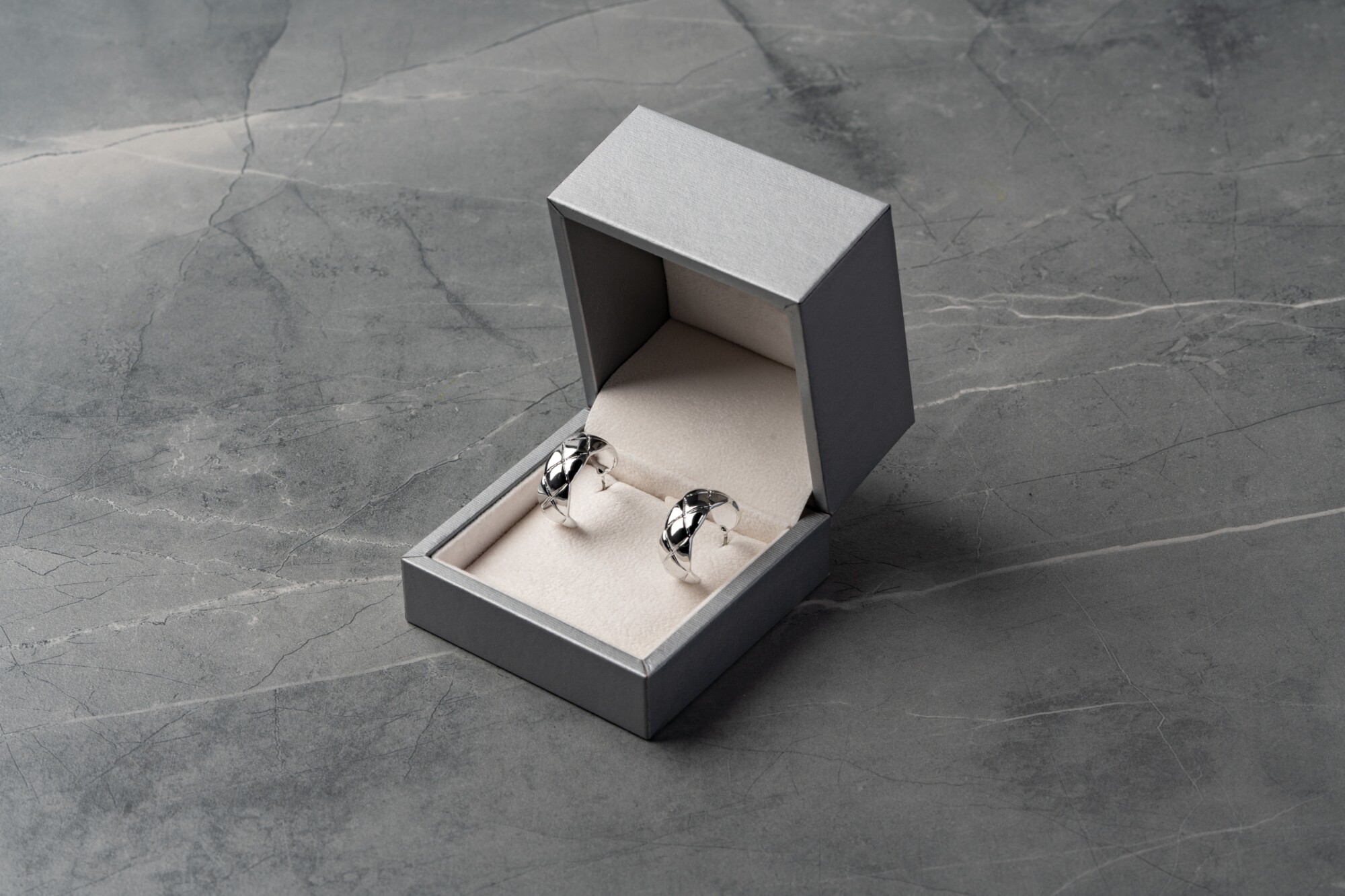
What “Durable” Should Mean in a Wedding Ring
Durability is not one property. A metal may resist one kind of marking yet behave differently under a sharp impact. A ring can remain structurally sound while its finish changes. A harder surface is not necessarily tougher in every scenario.
Ask more precise questions:
- Does the design project above the finger?
- Are there sharp edges or deep details that could catch?
- Is the lower shank substantial enough for the intended wear?
- Are any stones protected and straightforward to inspect?
- Can the finish be renewed without losing important geometry?
- Will the ring be removed for the highest-risk activities?
Simple Profiles Usually Make Sense
A plain court, softly rounded or restrained flat profile has fewer projecting details than an elaborate sculptural band. Softened edges may feel more natural during everyday gripping. That does not make them safe against entanglement, but it can make ordinary wear less intrusive.
Compare cross-sections in the live wedding-band builder. A first-time wearer can also use the Kinzy experience to prepare for an in-person comparison without relying on conventional gender rules.
Choose Width and Depth Together
A very wide ring has more presence and contact with the finger. A very narrow ring may feel unobtrusive but still needs suitable depth and proportion. Neither extreme is automatically best for an active hand.
Use the wedding-band builder to narrow the visual choice. Then ask how depth, total weight and lower-shank structure change with that width. “Substantial” should describe a measured specification, not a sales adjective.
Comfort Fit Can Help, but Fit Comes First
A gently rounded interior can reduce the feeling of a broad band, yet a comfort-fit ring can still be too tight or too loose. Finger volume changes with temperature and exercise. A ring that spins when cool may become uncomfortable after exertion.
Have the finger sized for the intended width and profile. Compare the fit choices currently shown in the Kinzy builder, but do not size a ring for the swollen state immediately after training.
Gold, White Gold or Platinum?
All precious-metal rings show wear. Platinum is naturally white and develops its characteristic surface changes. Gold’s properties depend on caratage and alloy recipe; white gold is commonly rhodium plated for a bright finish. None should be marketed as scratch-proof.
Compare actual samples and a written specification. Kinzy’s platinum versus gold guide explains why metal choice is more nuanced than “hardest wins”, while the builder shows current band options.
Polished, Brushed or Patterned Finish?
Polish reveals fine marks quickly because reflection is interrupted. Satin or brushed texture diffuses light and may make early wear feel less conspicuous, but contact areas gradually burnish smoother. A deep pattern can collect debris and may be altered by refinishing.
Choose a finish whose evolution you can accept. Ask how the Kinzy lifetime atelier care process assesses cleaning, polishing where appropriate and structural condition, and which additional work would need a quote.
Are Diamond-Set Bands Practical?
Diamonds are hard, but settings can still receive impact and need inspection. If you want stones, a restrained low-set arrangement may project less than exposed detail, while a plain section at the palm can reduce direct contact during ordinary wear. The final answer depends on setting design, band dimensions and activity.
Compare current diamond wedding-band designs. If stones are chosen, plan removal for weight training, impact sport and manual tasks rather than expecting the setting style to neutralise them.
Create a Ring-Off Routine
A ring is most vulnerable when it is removed casually and left on a sink, in a pocket or loose in a kit bag. Give it one secure, padded location at home and a second compact case for travel or training. Put the case in the same closed compartment every time.
Remove the ring before applying chalk, tape, gloves or protective equipment. Never place it on a machine, changing-room bench or car console. A consistent routine is more useful than an improvised substitute.
Silicone Rings Are a Separate Product Decision
Some people use a non-precious substitute when an organisation permits it. That does not mean it is safe for every task, and it is outside the specification of a fine-jewellery wedding band. Workplace and sporting rules still govern.
If you choose a substitute, treat it as separate equipment. Do not expect a fine jeweller’s precious-metal hallmark, care programme or material advice to apply to it.
Build for Real Life, Then Confirm the Limits
Use the Kinzy wedding-band builder to explore current profiles, widths, metals and finishes. A simple version can become the basis of a more precise consultation about work and sport.
For an in-person comparison, read why clients choose a Hatton Garden jeweller and familiarise yourself with Kinzy’s Greville Street flagship before booking.
If an option is not displayed, contact Kinzy rather than assuming it can be made. The design process, handcrafted-jewellery guide and bespoke service explain how a defined brief moves towards approval.
Active-Lifestyle Buying Checklist
- List manual tasks, sport, gym training, water and chemical exposure.
- Check employer and governing-body rules.
- Identify every situation in which the ring will be removed.
- Choose a secure storage routine before collection.
- Compare simple profiles and softened edges.
- Confirm width, depth, metal, fineness and fit.
- Assume every finish will evolve in wear.
- Avoid claims such as scratch-proof or indestructible.
- Schedule inspection if the ring receives an impact or changes shape.
- Follow the maker’s documented care and warranty conditions.
Design for the Life You Lead
Use the builder to establish a clean, considered starting point, then discuss where the ring will be worn, removed and cared for.
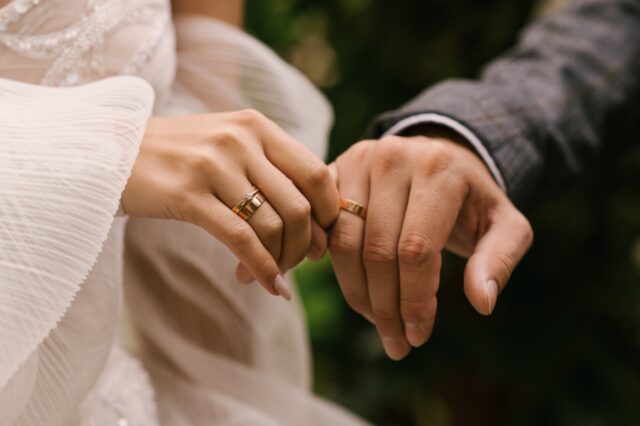
See Kinzy Craftsmanship Up Close
This Kinzy making detail shows the care given to proportion, construction and finish, even in the quietest wedding-band design.
Frequently Asked Questions
What is the best wedding ring for a manual worker?
A simple, well-proportioned band may be easier to live with, but the central safety decision is when it must be removed. Follow the workplace risk assessment and machinery guidance.
Can I wear my wedding ring at the gym?
Heavy lifting and equipment can compress, catch or mark a ring. Remove it before training and store it securely rather than relying on a metal or profile to prevent harm.
Which wedding-ring metal is scratch-proof?
None. Gold and platinum both develop surface wear. Compare colour, alloy, density, construction and care instead of buying an “indestructible” claim.
Does a brushed finish hide scratches?
It can make some early marks less visually abrupt, but the texture itself will change and become smoother in contact areas.
Should I wear a ring during football?
Check the current competition rules and the referee’s safety decision. Regulations can change and dangerous accessories must not be assumed acceptable.
Choose for the Life You Lead
The best wedding rings for manual work, sport and active lifestyles combine a clear, well-proportioned design with disciplined removal. Choose for ordinary wear, respect risk assessments and rules, and give the ring a safe place when it leaves the hand.
Start with the Kinzy wedding-band builder, then book a consultation to define the specification and discuss its care honestly.
×
WEDDING RING CONSULTATION
Tell us what you are considering.
A short, considered brief. Nothing needs to be certain yet.
This site is protected by reCAPTCHA and the Google Privacy Policy and Terms of Service apply.
WEDDING RING CONSULTATION
Choose a wedding ring that feels entirely yours.
From proportion and comfort to finish and fit, a short brief lets your Kinzy jeweller prepare considered options before your consultation.
Related Reading
Articles
Other articles from Kinzy London.
Articles, Buying Guides, Engagement Rings, Ring Settings
Pavé vs Channel-Set Diamond Shoulders: Sparkle, Security and Resizing Compared
Articles, Buying Guides, Engagement Rings, Ring Settings
Cathedral vs Non-Cathedral Engagement Rings: What Changes from the Side?
Articles, Buying Guides, Engagement Rings, Ring Settings