- Engagement Rings
- Wedding Bands
Shop by style
- Classic
- Diamond Cut
- Two Colour
- Diamond Set
- Shaped
- Vintage
- Gemstone Bands
Shop by metal
- Gemstones
- Fine Jewellery
Fine Jewellery
- About Us
- Education
23 August 2026
Why a Wax Model Can Reveal What a CAD Cannot
Wax model jewellery turns a digital design into an object you can hold, view at real scale and place against the hand. CAD shows geometry with precision, but a screen cannot reproduce physical presence. A setting that looks refined when enlarged may feel taller or wider than expected in person.
The wax stage is therefore an approval tool, not a decorative extra. It helps the client and jeweller discover proportion problems while changes remain easier than they would be in finished metal.
What Is a Jewellery Wax Model?
A wax or castable resin model is a physical version of the approved digital design. Modern production may print the model directly from CAD. It can then inform approval and, depending on the process, contribute to lost-wax casting.
GIA’s discussion of technology in jewellery design explains how CAD changes can be printed into prototypes for manufacture.
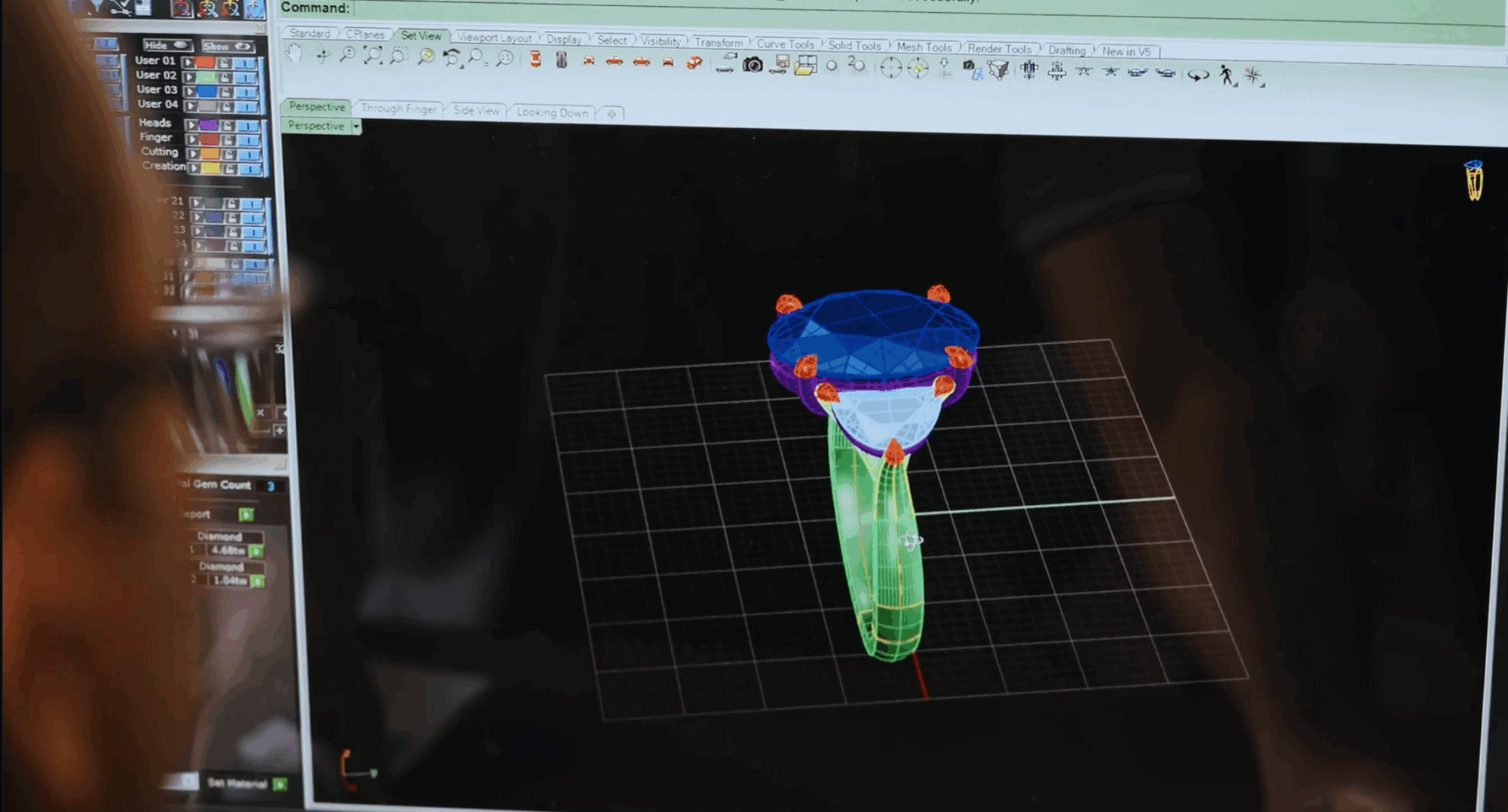
Wax Reveals True Scale
A CAD window can make a ring fill the entire screen. Without a scale reference, a 1.8-millimetre band and a 2.3-millimetre band may both appear substantial. The physical model removes that illusion.
Hold the wax beside rings you already wear. Look at it from normal conversational distance, not only close to your face. The overall silhouette should feel balanced without digital zoom.
Setting Height Becomes Immediate
Millimetres on a specification can feel abstract. The wax shows how far the centre rises above the finger and how the gallery occupies space. You can judge whether the profile suits work, gloves and daily movement.
A low setting may protect the centre but prevent a straight wedding band from sitting flush. A higher one may create the desired band fit while feeling more exposed. The Kinzy settings guide explains these structural trade-offs.
Finger Coverage Changes with Hand Proportion
The same ring can look different on short, long, narrow or broad fingers. A halo may feel elegant on one hand and visually dense on another. Elongated stones can create flattering length, but large side stones may spread too far across a small finger.
Wax lets the client judge coverage before diamonds and polished metal distract the eye. That makes it especially valuable for trilogy, cluster and statement designs.
Band Width Can Be Felt, Not Imagined
The hand notices width and depth together. A slim band may still feel substantial if it has a rounded interior. A broad band may feel comfortable when its edges and inner profile are refined.
Try the model on a correctly sized finger where the design permits it. Do not force a fragile wax over the knuckle. The jeweller should explain how the finished comfort profile may differ.
The Shoulder Transition Becomes Clear
CAD can show tapered shoulders, yet the physical model reveals whether the transition feels graceful. Sudden changes in width may look more obvious at real scale. Split shanks can also feel crowded if the negative space closes too quickly.
Inspect the ring from the top and at arm’s length. Luxury often lives in a calm line rather than extra decoration.
Wedding-Band Fit Can Be Tested Physically
Place a sample wedding band beside the model. Check whether the pieces touch, leave a gap or create a pinch point. If the future band will carry diamonds, use a sample with similar height.
Kinzy’s diamond wedding-band guide explains why the pair should be considered before the engagement ring enters production.
Wax Helps Separate Design from Sparkle
Diamonds can make almost any outline feel exciting. Wax is visually quiet. That forces the eye to judge structure, proportion and negative space.
If the ring still feels beautiful without brilliance, the design has a strong foundation. If it relies on imagined sparkle to hide a heavy gallery, the model has revealed a useful problem.
What a Wax Model Cannot Show
Wax does not reproduce the final metal colour, polish or weight. Printed stones may look opaque and claws may include extra material. Surface lines on a prototype do not necessarily predict the finished polish.
It also cannot prove final comfort with complete accuracy. Metal weight, finishing and stone setting change the experience. Treat wax as evidence of form, not a replica of every sensation.
Why Claws May Look Different in Wax
Claws can appear long because the setter needs material to cut over the real stone. Ask where the finished tips will end and how their profile will be refined.
Do not request extremely thin wax claws simply to make the model look finished. The design must preserve enough material for secure setting.
How to Review Wax Without Damaging It
Handle the model over a tray or soft surface. Avoid heat, pressure and bending. If it is not sized for your finger, hold it against the hand rather than forcing it on.
Photograph the top, side and three-quarter views beside a ruler. Then make notes immediately. The wax may return to the workshop, so your record supports the final approval.
Turn Reactions into Useful Feedback
“It feels too chunky” is a valid first reaction. Next, identify the source. Is the band too wide, the gallery too tall or the shoulders too full? Specific feedback lets the designer protect the parts you like.
If one dimension changes, ask what else it affects. Lowering the centre may change wedding-band clearance. Narrowing shoulders may require more depth for strength.
When a Second Wax Is Worthwhile
A minor adjustment may not require another model. A major change to height, centre layout or finger coverage often deserves physical confirmation. The cost and time should be understood before requesting it.
Kinzy’s bespoke journey uses review stages to refine the design rather than treating the first image as final.
Wax Approval Checklist
- Overall scale at normal viewing distance.
- Height above the finger.
- Face-up coverage across the hand.
- Band width, depth and interior feel.
- Shoulder taper and gallery balance.
- Space beside the intended wedding band.
- Claw positions and point protection.
- Engraving or hallmark space.
- Any change from the approved CAD.
The Kinzy Wax-Model Stage
Kinzy uses physical modelling to connect client approval with workshop construction. The model supports a more informed conversation about scale before the ring reaches the mounter and setter.
See the complete Kinzy design process or book a private Hatton Garden appointment to discuss a new commission.
Photograph the Wax from Consistent Angles
Take a top, side and hand-level view in neutral light, if the jeweller allows it. Compare those images with the same CAD angles. A consistent record makes later feedback clearer than impressions gathered from different mirrors and camera distances.
Do not use a wide-angle close-up to judge proportion. It can enlarge the nearest part of the model and distort the centre-to-band relationship.
When a Wax Model Adds Less Value
A straightforward repeat design with familiar dimensions may need fewer physical checks. Wax also cannot prove sparkle, final weight or the tactile quality of polished metal. Use it when scale or architecture remains uncertain, not as a ceremonial step.
See the Design at True Scale
At Kinzy, the wax model gives you a tactile way to assess a bespoke ring before production. With your personal jeweller, you can judge how the setting sits, how much of the finger it covers and whether the proportions feel as considered in person as they do on screen.
Our bespoke-process reel offers a closer look at this stage, from CAD review to the physical model.
Explore the Kinzy design process or reserve a private consultation to begin your own commission.
From Model to Finished Ring
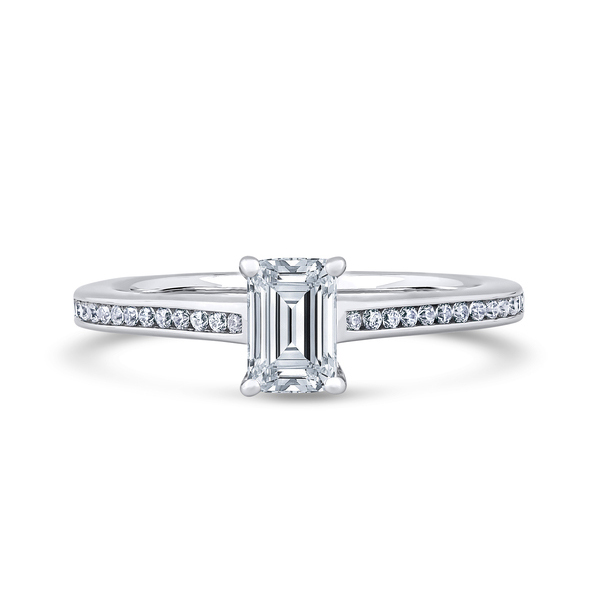
This finished Kinzy shoulder-set ring shows the proportion, finger coverage and gallery relationships that become easier to understand through a wax model.
Inside the Kinzy Bespoke Process
See how Kinzy brings each commission into focus through CAD review, a tactile wax model and considered personal guidance.
Frequently Asked Questions
Is the wax model the mould?
It may form part of a lost-wax casting route, but workshop methods vary. Ask whether your approval model is also used in production.
Will the wax have real diamonds?
Usually not. Stone forms may appear as printed placeholders. Judge their scale and placement rather than brilliance.
Can I wear the wax model?
Only carefully and with guidance. Wax and castable resin can be fragile, so never force the model over a knuckle.
Why does the wax ring look thicker than expected?
Some areas include manufacturing allowance, while screen scale may have distorted your expectation. Ask for the intended finished dimensions.
Can I change the design after wax approval?
Changes may still be possible, but they can require new CAD, another model, additional cost and a revised timeline.
Final Thoughts on Wax Model Jewellery
Wax model jewellery gives the client a rare advantage: the chance to discover how a design occupies real space before it becomes precious metal. Use that moment to judge structure calmly.
Explore bespoke engagement rings in London created through a considered CAD, wax and in-house atelier process.
×
BESPOKE DESIGN BRIEF
Begin with what you know so far.
A short, considered brief. Nothing needs to be certain yet.
This site is protected by reCAPTCHA and the Google Privacy Policy and Terms of Service apply.
PERSONAL BESPOKE GUIDANCE
Shape the next detail with your Kinzy jeweller.
A short design brief gives our Hatton Garden atelier a thoughtful starting point—whether you have a clear idea or are still comparing possibilities.
Related Reading
Articles
Other articles from Kinzy London.
Articles, Bespoke Jewellery, Engagement Rings, Gemstones
How to Add a Hidden Birthstone or Secret Diamond to an Engagement Ring
Articles, Diamond Guides, Engagement Rings, Settings
Does a Bezel Setting Make a Diamond Look Bigger or Smaller?
Articles, Craftsmanship, Engagement Rings, Settings