- Engagement Rings
- Wedding Bands
Shop by style
- Classic
- Diamond Cut
- Two Colour
- Diamond Set
- Shaped
- Vintage
- Gemstone Bands
Shop by metal
- Gemstones
- Fine Jewellery
Fine Jewellery
- About Us
- Education
7 August 2026
Four Claw vs Six Claw Engagement Rings: Security, Shape and Style Explained
Four claw vs six claw engagement rings is not a simple contest between more light and more security. Four claws expose more of the diamond and can emphasise a square or compass-like arrangement. Six claws distribute contact around the stone and often create a softer, rounder outline.
Security depends on the whole setting: claw position, metal thickness, bearing depth, gallery support, craftsmanship and maintenance. A poorly made six-claw head is not safer than a precise four-claw design built around the exact diamond.
Four Claw vs Six Claw Engagement Rings at a Glance
- Four claws: more open views of the diamond, fewer visible metal points and a crisp, modern character.
- Six claws: more points of contact, a scalloped outline and a classic association with round solitaires.
- Security: determined by engineering and condition, not the count alone.
- Maintenance: every claw needs inspection because wear can develop gradually.
The wider setting structure is explained in our complete engagement-ring settings guide.
What the Claws Actually Do
A setter cuts a seat, or bearing, into each claw so the diamond rests securely at the correct level. The claw is then brought over the crown and finished without unnecessary bulk. The aim is controlled contact, not simply pressure from above.
The gallery beneath the stone supports those claws and manages forces through the head. If the ring receives an impact, the entire geometry matters. Claws that are too fine may bend; claws that are too heavy can obscure the diamond and disturb its outline.
GIA’s guidance on engagement-ring settings identifies prongs as a widely used way to hold a centre stone while allowing it to remain visible. The individual execution still requires bench judgement.
How Four Claws Change the Diamond’s Outline
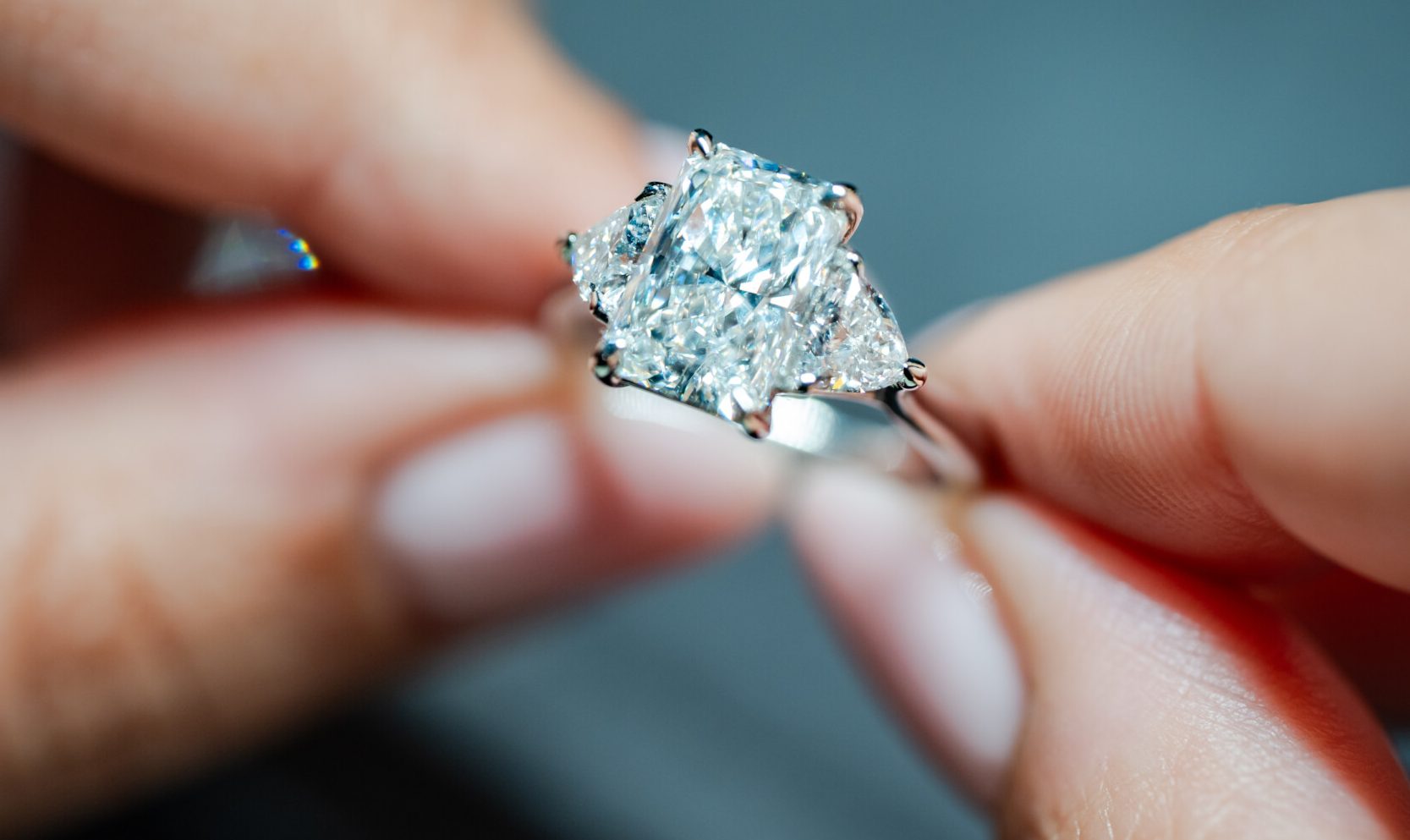
Four claws leave larger open sections around the girdle. On a round diamond, placing them at the diagonal points can produce a squarer visual impression. A north-south-east-west arrangement can feel more graphic and may make the round outline read differently.
Four claws also suit many cushion, radiant and princess-cut settings when the corners receive the correct protection. However, pointed or vulnerable corners may need V-shaped elements rather than ordinary rounded claws.
Shape comes before convention. Compare the radiant and emerald-cut guide and elongated cushion versus radiant to see why corner style affects the head.
How Six Claws Change the Diamond’s Outline
Six evenly placed claws tend to reinforce a round silhouette. They create smaller spaces between contact points and can provide a graceful crown-like rhythm. This is why six-claw round solitaires often feel traditional.
The additional claws do not guarantee that the diamond will survive every impact. They can provide redundancy if one claw is damaged, but adjacent claws may experience the same force. Regular inspection remains essential.
A six-claw head also uses more visible metal. Fine finishing keeps the arrangement elegant; excessive thickness can make the stone look smaller.
Which Is More Secure?
Six claws offer two additional contact points. All else being equal, that can improve distribution and provide greater reassurance. Yet “all else” is rarely equal. Diamond shape, girdle condition, setting height and daily use change the risk.
Four strong, correctly seated claws can be highly secure. Six undercut, worn or poorly aligned claws can be vulnerable. Ask the jeweller how the head has been designed for the individual stone and what the aftercare inspection includes.
Kinzy designs settings around the selected centre stone rather than treating the mounting as an unrelated component. The design process allows the claw positions and gallery to be reviewed before production.
Does Claw Count Affect Sparkle?
Diamonds receive most of the light that drives their appearance through the crown, not through an entirely open pavilion. Therefore, the practical difference between four and six fine claws is often smaller than marketing language suggests.
Heavy claws can block portions of the outline, while polished, well-proportioned claws recede. Cut quality, cleanliness and surrounding contrast usually have a greater influence on perceived brilliance. Learn how certificates and visual inspection work together in the GIA versus IGI guide.
Claw Count for Oval, Pear and Marquise Diamonds
Elongated shapes do not follow the same pattern as a round. An oval may use four or six claws, depending on the desired outline and support. A pear normally needs protection at its point. A marquise requires careful attention at both tips.
Kinzy’s published commentary on a marquise engagement ring states that the setting, proportions and design choices influence how the ring looks, feels and catches light. That is the useful principle: the claw arrangement must respond to the stone, not a fixed number.
Read pear versus marquise before deciding how an elongated outline should be protected.
Height, Snagging and Everyday Wear
Claws that finish smoothly and follow the diamond’s crown are less likely to catch. However, any raised ring can snag if the head is high or the tips become lifted. Six claws create more potential contact points with fine fabrics, although each may be smaller.
Choose the setting height around lifestyle, wedding-band clearance and the stone’s depth. A low head may feel protected but can limit the band fit. A high head may offer presence while increasing leverage.
How the Wedding Band Can Affect the Claws
The wedding ring should not be allowed to grind against the lower claw work or supporting basket. Diamond-set band edges are particularly hard and can abrade an engagement-ring head over time. A small visible gap may be safer than forcing two incompatible profiles together.
Review the pair from the side and ask where metal-to-metal or diamond-to-metal contact will occur. Kinzy’s guide to diamond wedding bands explains how width and setting style change the relationship. A hidden halomay also sit near the wedding ring, so its lower edge needs the same attention as the claws.
When the rings were not designed together, a fitted band or slim spacer can create deliberate clearance. The solution should be developed around the actual engagement ring rather than chosen by category name.
Maintenance: What to Check
- A claw that appears shorter, flatter or more polished than the others.
- A gap between a claw tip and the diamond.
- A clicking sound or visible movement.
- Fabric repeatedly catching in one place.
- Wear where the engagement ring touches the wedding band.
Stop wearing the ring if the centre stone moves. Do not test it repeatedly with a fingernail. Arrange a professional assessment and follow the engagement-ring care guidance.
What Kinzy’s Public Evidence Can and Cannot Prove
Instagram provides visual evidence of Kinzy’s varied settings, including a round brilliant ring with a floral-inspired gallery. It shows that the head is part of the ring’s character. A social photograph cannot prove internal bearing quality, so this article does not use imagery as a substitute for inspection.
Client feedback can help assess guidance and service, but it is not evidence of laboratory setting security. Claw count should be explained in the context of the individual diamond, setting and wearer rather than sold as a universal rule.
Choosing Four or Six Claws in a Bespoke Ring
Begin with the actual diamond. Review its outline, girdle, vulnerable points and dimensions. Next, decide whether you prefer a crisp, open frame or a more classical crown. Then inspect the side profile and wedding-band relationship.
Kinzy clients can review these decisions through bespoke design, CAD and wax modelling. Arrange a private consultation to compare real settings rather than relying on enlarged online images.
Frequently Asked Questions
Are six claws always safer than four?
No. Six claws provide more contact points, but construction, stone shape, metal condition and maintenance determine real security.
Do four claws make a diamond look bigger?
They expose more of the perimeter and may make the outline feel more open. The actual face-up size is controlled by the diamond’s measurements.
Can a round diamond have four claws?
Yes. The placement will influence whether the outline looks round, square or compass-like, so review the design from above.
How often should claws be checked?
Arrange periodic professional inspection and seek help immediately after a hard impact or if you notice movement, catching or a changed claw.
Can claws be repaired?
Often, worn claws can be re-tipped or rebuilt. The correct repair depends on the remaining metal, diamond and condition of the head.
Final Thoughts on Four Claw vs Six Claw Engagement Rings
Four claw vs six claw engagement rings compares two ways of framing and supporting a diamond. Four claws create openness and a cleaner perimeter. Six claws add contact points and often reinforce a round, traditional outline.
Choose through engineering, shape and lifestyle. The number is visible; the quality of the seat, gallery and finish is what makes it dependable.
Related Reading
Articles
Other articles from Kinzy London.
Articles, Bespoke Jewellery, Engagement Rings, Gemstones
How to Add a Hidden Birthstone or Secret Diamond to an Engagement Ring
Articles, Diamond Guides, Engagement Rings, Settings
Does a Bezel Setting Make a Diamond Look Bigger or Smaller?
Articles, Craftsmanship, Engagement Rings, Settings